In 1954, Jonas Salk developed a vaccine to treat the ever increasing menace of Poliomyelitis. In 1955 the first human cells were successfully cloned. Within years, the discovery of the Human Papilloma Virus (HPV) was linked to the occurrence of cervical cancer in women. On surface, these remarkable medical accomplishments seem totally unrelated. But as you may have guessed, there is indeed a correlation between them, and it is one that rarely gets the credit it deserves. All these accomplishments were a consequence of medical testing done on the tumour cells of an African American woman, Henrietta Lacks, whose cells were the first ‘immortal’ line of cells.
Back in 1950, months after having delivered her fifth child, Henrietta Lacks started experiencing excruciating pain around her cervix. She passed it off as an infection that she may have contracted from her husband David’s philandering. But when it soon turned into a hard, thick lump, leading to heavy blood loss, she rushed to John Hopkins Hospital which treated ‘coloured’ people in a separate wing. Her lump was a carcinogenic tumour. While she was undergoing examination, her doctor scraped off a portion of the tumour and sent it to George Gey, a researcher who was constantly looking for human cells to culture and test.
Within months, Henrietta’s health deteriorated as the cancer wreaked havoc on her body, diminishing her strength and spirit. With every radiation session that induced incessant vomiting, caused charring of her skin and left her too weak to even walk, Henrietta started contemplating her death. She succumbed to the cancer within months of her diagnosis. At just 31 years of age, she left behind her widowed husband David and five children, with the youngest, Joe, just 1.
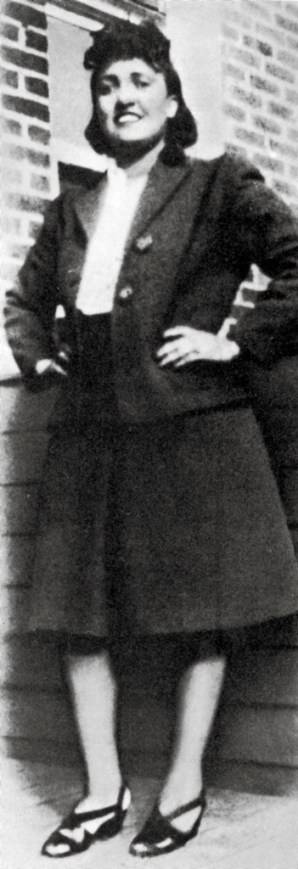
Henrietta Lacks
Credits : http://www.jax.org
Meanwhile, in George Gey’s lab, Henrietta’s tumour cells, that were expected to die just like thousands of others, continued to multiply at staggering rates. Soon, George was out of petri dishes to contain the cells. His dream of discovering an ‘immortal’ line of human cells seemed like it would become a reality incredibly soon. He conducted an autopsy on Henrietta, collecting tissue samples from her organs, while David signed the papers in the hope that it was being done so that the doctors could study the possibility of their children contracting the disease.
As Henrietta’s family started coming to terms with this loss and start their life anew, Henrietta’s cells were breathing life into the Scientific community. When the duplication showed no signs of stopping over days and weeks, Gey finally accepted he had stumbled on something revolutionary. But, being a man of Science, his primary motivation was the opportunities these cells would create for the research community and the studies that could be carried out potentially. He labelled them HeLa and started dispatching the cells to laboratories all around the world, in the hope that the global community could benefit from this revelation.
Scientists were dumbfounded at this turn of events and soon, HeLa became a benchmark and staple for all scientific studies. Apart from aiding in the Polio vaccine and HPV, it was also integral to the discovery of the 46 chromosomes that constitute our cells , testing for AIDS and Ebola and invigorating the field of gene mapping by combining constituents from her cells with that of plants and animals. Within decades, the scientific community was churning out revelation after revelation, some even anticipating that the cure for immortality was on the horizon.
Soon, curiosity pertaining to science gave way to curiosity concerning the person behind HeLa and the media went into a frenzy trying to discover the whereabouts of ‘HeLa’. Somehow a miscommunication suggested that HeLa was a woman named Helen Lane and the media started searching far and wide for her. It was assumed that this was better for Henrietta’s family, because it would deter unnecessary probing into their life. The 1970’s were already halfway through, so poking into the family 25 years after all of this had occurred, seemed inappropriate. But soon, Henrietta’s identity was leaked and out of the blue, the Lacks family found themselves in a media storm.
The Lackses, who weren’t highly educated were bombarded with more questions than they could answer. Words like Carcinoma, Gene Mapping, Cloning etc. were thrown at them left, right and centre and they were left confused and scared. When it was revealed that Henrietta’s cells were changing the world as they spoke, they naively assumed that she was alive and kept captive in a cell, where researchers were testing on her. Needless to say, they were aghast at these developments. Soon, people around them – relatives and friends, tried to explain the nitty gritty of the entire scenario and kept on encouraging them to sue John Hopkins, patent HeLa cells and sign contracts guaranteeing profit sharing from industries that sold HeLa cells to Research Labs, of which, they understood very little.
It didn’t take long for people to realize that the Lackses were dealt the short end of the stick. People were up in arms. The Black community, in particular was extremely concerned, given the aftermath of the Tuskegee incident, where Black patients were deliberately infected with Syphilis without their consent, to study its effects on humans. The Lackses were led to believe by scamsters that they could turn into millionaires within days. Anticipating that their days of poverty would be soon over, they got excited. However, their optimism would be shattered time and again for people would knock on their doors, promising them the world, yet nobody would ever follow up on that.
Within the public spotlight, it raged another debate altogether- one on consent of patients. It was categorically mentioned that Henrietta was never asked for consent to give her tissue sample, but consent of patients in the 1950s, that too, for a sample of carcinogenic tumour, was unheard of. David Lacks claimed he was misled into signing the form for the autopsy, and that all the companies that were making profits off selling HeLa cells into small vials across the world, owed the Lackses truckloads of money. People pushed for laws wherein the patient’s consent for both, taking of body samples and for incentivising further profiting would be included. The scientific community vehemently opposed it, citing that excessive involvement of patients would introduce bureaucratic roadblocks in Scientific discoveries and take the focus away from research and make it a business. With Henrietta’s case in particular, asking consent at that stage was impossible and stopping the production of her cells would bring the research community to a standstill. At the same time, to make money from Henrietta’s cells and for her family to be the only stakeholder to entail no profit was absurd to say the least. People were in a state of flux.
What constituted a person’s property? Does death relinquish belongingness of any kind? Should people whose cells are tested on be remunerated? Even if they had no role in the actual experimentation? Should industries profit off scientific discoveries? What if patients started dictating the procedures because their cells were being used? How much information were they liable to know once they gave their tissue sample? How would any such conflict be resolved?
As years would go on, the 1980s and 1990s proved crucial as far as legislation was concerned. Keeping Henrietta’s case in perspective, landmark judgments were given, that acknowledged and allowed patenting tissue and cell lines, granted people permission to control what part of their body could be tested upon, and how the profit sharing from its potential commercialization would work. Henrietta resolved many cases. Hers, however, never found a resolution.
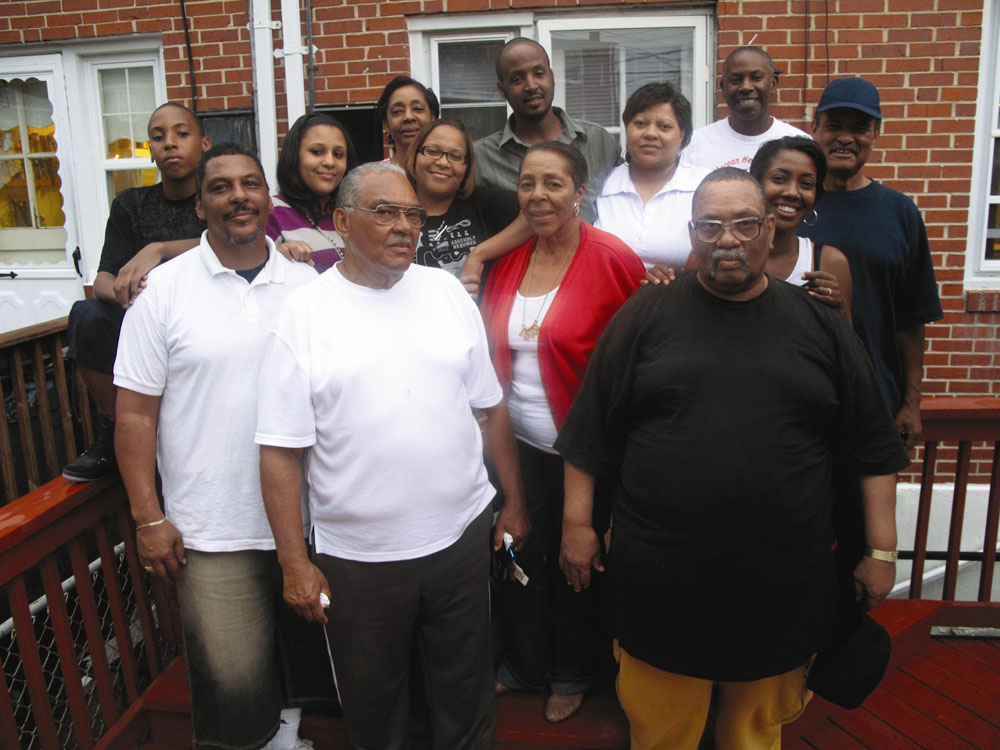
The Lacks Family
Credits: The Immortal Life of Henrietta Lacks : Rebecca Skloot
Today, the 4th of October marks her 65th death anniversary. HeLa cells have been pioneers in every sense of the word. They were the first cells sent into space by USA and USSR.They were crucial to test how Parvo Virus infects humans and dogs.They made possible, the discovery of genetic aberrations like Turner syndrome and Klinefelter syndrome .Henrietta’s family no longer seeks financial compensation. They are however, constantly striving to get her the recognition she deserves. The Lackses are inundated with people thanking their mother, for it is because of her cells, that their cancer was treated. The Lackses are pushing their mother’s story to places far and wide. They want to uncover the person behind HeLa. It’s imperative to share her story.
Had Henrietta not existed, the face of the scientific community would certainly have been much different. I won’t deny the knowledge and dexterity of the scientists who handled the cells and performed experiments that eventually led to scientific breakthroughs. But Henrietta shouldn’t be brushed under the carpet entirely, she was a significant stakeholder. Henrietta died long ago, but her cells live on to this day. She has given answers to so many people, but not without leaving questions of her own.
NOTE : IF YOU WISH TO KNOW MORE ABOUT HER, REBECCA SKLOOT’S BOOK ‘THE IMMORTAL LIFE OF HENRIETTA LACKS’ IS THE WAY TO GO.


Very nice article, totally what I needed. http://goqna.com/index.php?qa=user&qa_1=creditdry2
LikeLike