Post Number 62 : Things School Could’ve Taught Us – Shakuntala Devi

An article exploring the legacy of Mrs. Shakuntala Devi and the questions raised by women pioneers

“Human memory is not merely the repository of information in the brain. It is much more than this, and something that a machine can never be: a power, a force by which we mentally reproduce not just information but also our experiences, by which we shape our perceptions, introspect, interpret and analyse the direction our life has taken.”

Mrs. Shakuntala Devi, Super Memory: It Can Be Yours

I watched the biopic on Mrs. Shakuntala Devi, starring Vidya Balan yesterday. The movie was a good albeit overdramatic attempt at exploring the woman who was called The Human Computer. Every biopic has a narrator or point of view that serves as the ‘in’ for the story – the lens through which we are introduced to the subject. Mrs. Devi’s was her daughter and their flawed dynamic. While I liked the idea of portraying her as a complicated figure – a genius par excellence, a feminist ahead of her time, an overbearing mother, a stubborn trailblazer, I was left wondering about this emphasis on domesticity. A review on Deccan Chronicle captures my thoughts.

1594888832_untitled-design-2020-07-16t141013.700

The biopic on Mrs. Devi. Source : News18.com
Read More

Post Number 60 : Things School Could’ve Taught Us – Gambling & Probability

An article exploring the genesis of probability from socially frowned-upon gambling

“So surely as I was inordinately addicted to the chess board and the dicing table, I know that I must rather be considering deserving of the severest censure.” – Girolamo Cardano

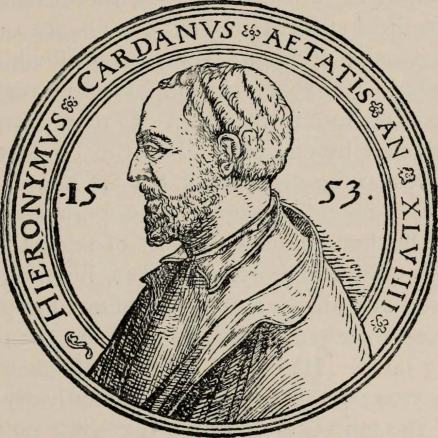
In ‘Alex’s Adventures in Numberland’, the writer Alex calls the Italian Girolamo Cardanoprobably history’s most colourful mathematician of significance”. Cardano (1501-1576) lived quite the life – professionally a doctor, he published over 100 books in his lifetime, once travelled to Scotland to treat the archbishop’s asthma, was an astrologer, claimed to determine one’s character by interpreting the irregularities on one’s face, and whose book Consolation is rumoured to be the book Hamlet reads during his ‘To be or not to be’ soliloquy. Cardano was also a controversial figure, notoriously temperamental, had a scandalous personal life – his oldest son murdered his wife, his daughter, working as a prostitute, died of syphilis, he himself was jailed for calculating Christ’s birth-chart, and was an addict & gambler. And it was his gambling that gave birth to the first scientific treatise on probability, ‘Book on Games of Chance’.

girolamo-cardano

Girolamo Cordano – Source : Britannica

Read More

Post Number 59 : Things School Could’ve Taught Us – Chaos Theory

An article exploring nature’s complexity being brought out through Chaos Theory

Think about water dripping from a tap. When you turn it on slowly, it drops in an aesthetically pleasing rhythm – an aggregate of hydrogen and oxygen coalescing into a bulbous shape, pulled by gravity, falling into the sink, followed soon by similar drops coalescing behind it. Turn up the pressure gradually and this pattern dissolves, the tip, tap, tip, tap giving way to an erratic stream that suggests that the rhythmic pattern may have been an error. Think of the smoke rising from a lit cigarette. Wisps of grey-black soot escaping from the stub and immediately dissipating into unknowable shapes in front of your eyes, never to be repeated again. How can such simple system birth such unpredictability?

Read More

Post Number 58 : Things School Could’ve Taught Us – Nikola Tesla

An article exploring Tesla’s struggle with bureaucracy, frustration with finances, and society’s vindication coming too late for most innovators.

“This letter will never get to you, Mother. I don’t know why I write it to you when you cannot read it…rest in peace Mother and please forgive me for choosing paths that had led me away from you. I cannot even be there for your funeral. I read the telegram that informed me of your death and despise people who weren’t ready to understand two years ago that electricity can be transferred without wires. Now, they have seen it but they won’t use it for centuries to come because someone burned my downtown laboratory to the ground, with all of my formulas and writings in it.”

-Fragment of Tesla’s Last Letter to His Mother

Were it not for the title of this article, could you have guessed that this grieving son writing to his then-deceased mother, was the man behind revolutionary ideas like Alternating Current, Radio, Microwaves, Radar, Computing, Robotics and scores more? It’s easy to think of ‘eccentric geniuses’ as people absorbed in their work to a fault, and there’s ample evidence that Tesla was both – eccentric and genius. His notable eccentricities included – “obsessive compulsive disorder, only inhabiting a hotel room that was divisible by the number three, pigeons, and an aversion to women wearing earrings”. Nevertheless, it’s important not to let the odd traits be the sole markers of his identity. So here’s an attempt to humanize Nikola Tesla. Read More

Post Number 55 : Things School Could’ve Taught Us – Pythagoras

An article exploring Pythagoras, the person – cult leader, eccentric vegetarian, philosopher, and curiously…murderer?

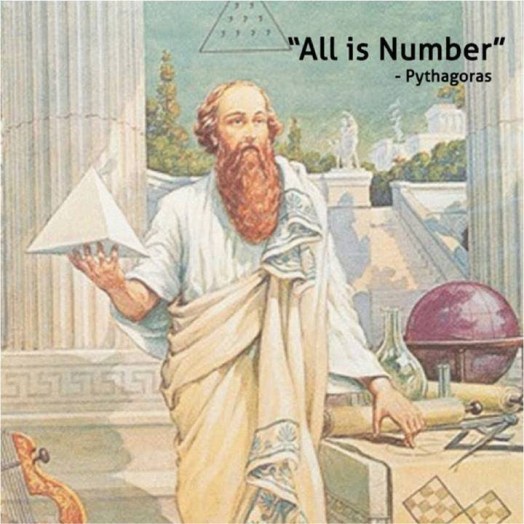
Think about Pythagoras in your head and you’re sure to have a Pavlovian response of muttering ‘a2+b2=c2’ under your breath. Him and his theorem are so ubiquitous with Mathematics globally that it is next to impossible to study the subject and NOT come across him. But did you know that beyond his work, he was an eccentric vegetarian, a cult-leader, a presumed incarnation of God, and most shockingly, a potential murderer?

maxresdefault

Read More

Post Number 54 : Things School Could’ve Taught Us – Johannes Kepler

An article exploring Kepler, the person – sci-fi novelist, dedicated son, and astute scientist.

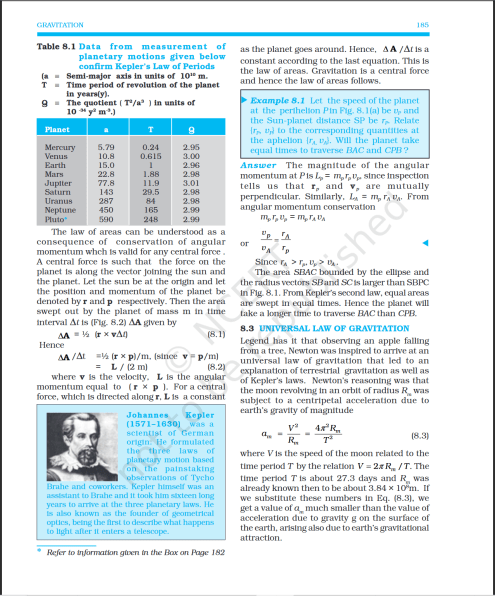
Do you remember Johannes Kepler? For those of you who had Physics in Class XI, this scientific bad boy made a cameo in the chapter on Gravitation, mentioned a page after the one which carried his three laws of planetary motion. Do you remember the laws? (Hint : Law of Orbits, Law of Areas, Law of Periods). Do you know anything else about his life? If you know next to nothing, don’t fret. I didn’t know squat either. Truth be told, I didn’t even remember the laws. But I read about him in Maria Popova’s Figuring, and she gave this visionary a backstory, a personality, a rich, vivid life, enough to make me wonder why my textbook didn’t carry any vestige of the same, and how many fascinating people and events never made it to those pages; forever hidden behind the sole accomplishment that was ascribed to their identity. So here’s an attempt to deconstruct the earthly man behind the planetary laws.

Kepler Full

Sadly, this was all the space that Kepler was given. Credits: ncert.nic.in

Read More

Post Number 37 : Reconnecting with Reading

I used to go to school in a yellow-green DTC bus that roared and wheezed as if it was seconds away from a breakdown. And many a time it did. But what I remember most from that time was the unadulterated joy I would get from reading on the 45-minute journey. The light breeze, muted chatters, and (mostly) sleeping kids made for an interesting reading environment. I would either read my textbooks or if I felt fancy, a novel that I’d take with me. It didn’t matter what others thought or said. If my eyes were in my book, chances were, my other senses were oblivious to the world outside.

Read More

Post Number 34 – The Whole Damn Bouquet : Part Deux

Candid Wallflowers came into existence during one clammy summer evening, when the two writers, in midst of their gossip sessions, thought to share their infinitely wise observations of the people around them. With the utmost humility, of course.  The very first article was an attempt at decoding the kind of people we are mostly surrounded with in college. You can read it here. With time, the old groupings have disbanded just as people keep shedding old habits and come into new ones.

Read More