An article exploring the genesis of probability from socially frowned-upon gambling
“So surely as I was inordinately addicted to the chess board and the dicing table, I know that I must rather be considering deserving of the severest censure.” – Girolamo Cardano
In ‘Alex’s Adventures in Numberland’, the writer Alex calls the Italian Girolamo Cardano “probably history’s most colourful mathematician of significance”. Cardano (1501-1576) lived quite the life – professionally a doctor, he published over 100 books in his lifetime, once travelled to Scotland to treat the archbishop’s asthma, was an astrologer, claimed to determine one’s character by interpreting the irregularities on one’s face, and whose book Consolation is rumoured to be the book Hamlet reads during his ‘To be or not to be’ soliloquy. Cardano was also a controversial figure, notoriously temperamental, had a scandalous personal life – his oldest son murdered his wife, his daughter, working as a prostitute, died of syphilis, he himself was jailed for calculating Christ’s birth-chart, and was an addict & gambler. And it was his gambling that gave birth to the first scientific treatise on probability, ‘Book on Games of Chance’.
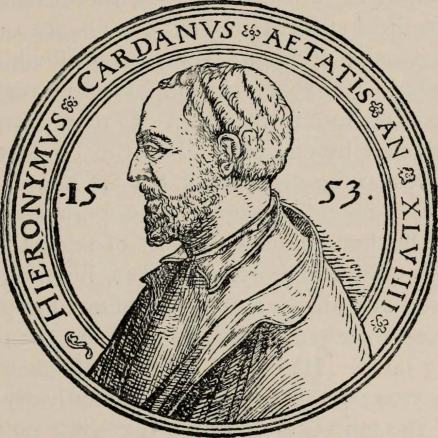
Girolamo Cordano – Source : Britannica
Cardano’s seminal treatise arose neither out of a love for math nor an intellectual awakening. It came from a desire to earn a pretty penny while gambling. The insight that if you roll a dice once, assuming all outcomes are equally likely, the probability of getting the number 2 is 1/6, comes from Cardano’s book. Greeks, Romans, and Early Indians were obsessive gamblers yet all thought of it as a mysterious phenomenon, beyond man’s control. It was Cardano who set the domino in motion that brought the magic of probability tumbling from Heavens into the hands of men that dealt Cards and Dice.
Probability and Gambling have always been interlinked. Blaise Pascal’s contribution to this field came from the request of his friend Chevalier de Mèrè who played dice in Paris. Pascal, a friend of Pierre de Fermat, asked for his assistance too. Pascal’s story took a weird turn. A few months after answering his friend’s question, he had a ‘spiritual’ experience so profound that he renounced mathematics and joined a religious sect. But not before putting up this thought experiment of using probability to answer if one should believe in God.
Pascal’s Wager
Assuming God’s existence is 50:50, then expected value derived =
(chance of God existing)x(what you win if He exists) + (chance of God not existing)x(what you win if He doesn’t exist)
Now, Pascal chose to define the quantities of one’s win as “eternal happiness” and “nothing”
Thus, 0.5 x (eternal happiness) + 0.5 x(nothing) = eternal happiness
He also proposed a corollary, if one were to assume God doesn’t exist, what would be the punishment? His formula modified to
0.5 x (eternal damnation) + 0.5 x (nothing) = eternal damnation
Conclusion – It’s better if you might as well believe in him.
I don’t know about you but I suspect it’s a skewed experiment.
The education on probability is responsible for industrializing gambling globally. Every time you spin the roulette, buy lottery, play Blackjack, and roll the slots, someone behind the scenes(not God), has calibrated the pay-offs to ensure that the House always wins. Alex’s book mentions Anthony Baerlocher, director of game design at International Game Technology. What does his company do? It ensures that the gambling machines exploit probability ‘optimally’– enough to run profits for the casinos but also pay to keep you coming back.
However, the House can also be gamed to lose. In 1992, Stefan Mandel printed out all possible combinations for a lottery and sent it. He won grand prize of $28 Million plus 135,000 secondary prizes. An investigation was launched but what could they indict him on? It was completely fair! Mandel has used different tactics and won 13 lotteries. Currently, he has ‘retired’ from gambling and lives on a tropical island.
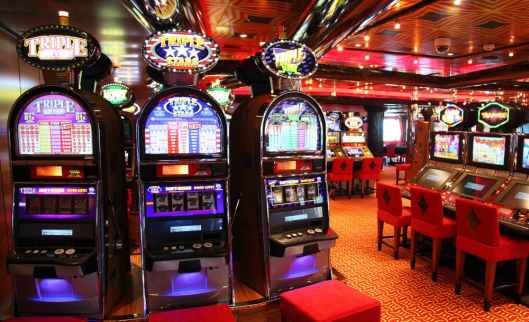
Casinos – Source : theConversation
Claude Shannon, considered father of the Information Age, on the query of his friend, Ed Thorp created a wearable computer back in the 1950s. It picked up sound from the ball rolling in the Roulette table and estimated the number where it would fall. Shannon and Thorp tried it out and it worked! Thorp has since gone on to establish a theory to beat Blackjack which was accepted by the American Mathematical System. You could learn how to no longer leave chance up to… well, chance. Thorp wrote a book called Beat The Dealer, which is considered the inspiration behind the Black-Scholes formula for pricing financial derivatives. So now you know who to hold accountable for the Lehman Brothers crisis.
I went through my math textbooks of Class XI and XII. Cardano isn’t mentioned anywhere. Fermat and Kolmogorov have their pictures on the first pages of the chapters. I can accept why a grumpy, controversial gambler might not have been the ideal posterchild for probability to be put in front of teenagers but does the notoriety of his personal demons wash away his genius? Do our idols have to be academic figures, working with a philosophical drive to uncover truths, untouched by follies of humanity? For all its attempts at sanitation of character, the textbook is full of questions on shuffling decks of cards and rolling dice. It’s because the subject arose from the murky grounds of gambling! The standard question of determining the probability of getting two 6s when a pair of dice is thrown is the question that de Mèrè asked Pascal, only now we allow ourselves to judge it in an academic light.
In the pantheon of Probability Theory, Blaise Pascal, Pierre de Fermat, A.N Kolmogorov, and Thomas Bayes are accorded the status of God. Cardano is treated as an afterthought. He didn’t help his case either. He was obsessed with attaining fame. Historians suggest he created Christ’s chart in order to get attention. He also predicted his death and died on that exact day, likely due to suicide, so he could build his legend as a philosopher-mystic. His life would’ve made for a sordid reality TV program today but in those days it was anything but. For someone who pioneered the decoding of chance, it was fitting that he ensured his legacy could not be left to it. And here we are, discussing his life nearly 450 years later!
The next time you roll a pair of dice or shuffle a deck of cards, take a minute to reflect upon the lives it built and ruined. And the men and women who went out of their way to make sense of it – whether out of the goodness of their heart, the greatness of their genius, or the greed of their wallet. And then proceed to take a chance. Or don’t.
PS : I am planning to make this a series of articles about people/things/events that were part of our syllabi in school but left out some really interesting stuff about them. If you have recommendations, please share them in the Comments below.
Sources
[1] Alex’s Adventures in Numberland – Alex Bellos
[2] https://mathshistory.st-andrews.ac.uk/Biographies/Cardan/


This is a pro stuff.. awesome!
Food for curiosity
LikeLiked by 1 person
Thank you, glad you liked it.
LikeLike