Post Number 88: What if Home is not a Solace?

(An essay on Homecoming in Marilynne Robinson’s novel ‘Home’)

More book reviews on https://www.instagram.com/abookishpursuit/

“Home. What kinder place could there be on earth, and why did it seem to them all like exile?”

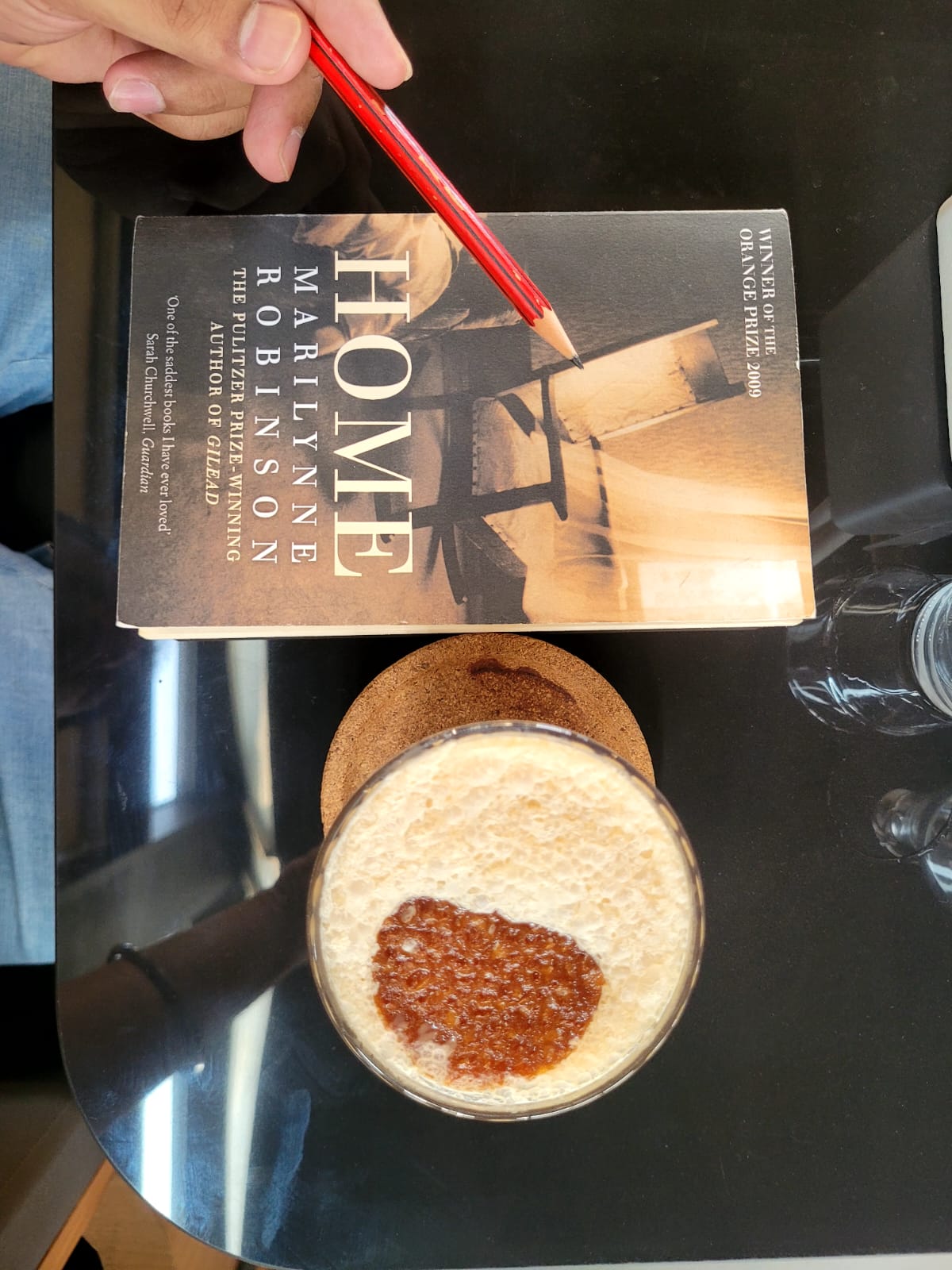
It may sound silly to say that Marilynne Robinson’s ‘Home‘, the second novel in the Gilead quartet, is about what makes a home and how people experience homecoming but that is the truth of it. The book isn’t a sequel as much as a companion novel to ‘Gilead’, a prism through which the circumstances of the first novel are refracted. Set in the same timeframe, it switches its focus onto the Boughton household and its three inhabitants – Reverend Boughton, and two of his middle-aged children, Glory and Jack. 

Rev. Boughton, ailing and in his final years, is delighted to have his home graced by the children’s presence, unaware of the disappointments that have propelled them back. Glory is escaping the embarrassment of being financially duped by her fiancé who was also likely married. Jack has returned after 20 years in self-imposed exile as a struggling alcoholic with a chequered past. 

Read More

Post Number 87: My Week In Not Paris with Deborah Levy

More book reviews on https://www.instagram.com/abookishpursuit/

I have grasped the precursor to enjoying Deborah Levy’s fiction. Problems in her characters’ lives are not to be solved but lived through. With that, I settled into her latest fiction, ‘My Year in Paris with Gertrude Stein’, which follows an unnamed narrator who is temporarily in Paris, and a divorced English woman tasked with writing an essay on Gertrude Stein.

Set in November 2024 against the aftermath of the US elections, it follows our struggling narrator as she juggles a new city, new friends, no lover, a missing cat, mice in her apartment, and an essay that is yet to transfer onto paper.

Read More

Post Number 83: Slouching Towards Mediocrity

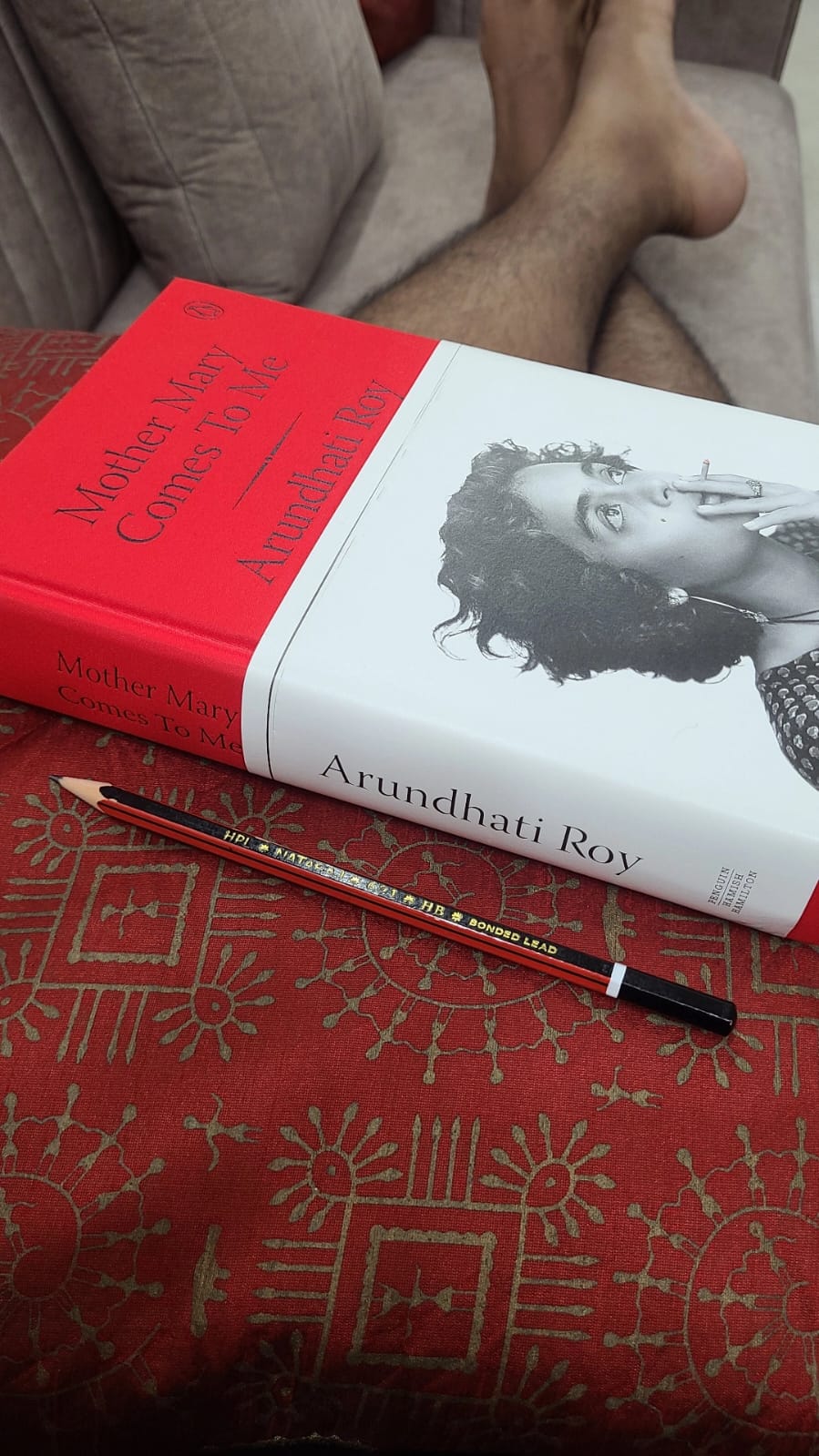
I spent the last two weeks reading Arundhati Roy’s memoir ‘Mother Mary Comes To Me’. It is a fabulous book written at the confluence of memory, identity, and literature. She captures the push-and-pull of growing up under a mercurial parent with microscopic clarity. She was raised by a firecracker of a personality in her mother (named Mary) who was an outspoken, combative, feminist divorcée in a time when it wasn’t ideal to be any of those things. I was drawn to Arundhati’s story, particularly the ages at which her milestone events occurred. Left home at 16. Married at 17. Divorced at 21. Remarried at 23. National Award at 27. Booker Prize at 36. 

I have always found it fascinating to map the age at which someone’s big moment(s) happened. For a while, it was simply an idiosyncratic fad. Now, this habit is yielding an unexpected consequence – it is behaving as a clarion call from the great beyond.

Read More

Post Number 77: Survival of the mildly competitive

1–2 minutes

Weeks ago, an Instagram ad sprung from the depths of the algorithm’s abyss splashed an invitation across my mobile screen, one for a writing competition. No theme, no holds barred, it urged its writers to be creative. It was a welcome change from all the underwear ads I had been receiving. The competition had a registration fee. I checked if it was authentic, if my money was going to vacuum into nothingness. It seemed genuine.

I was going through a dry spell creatively. I had applied myself to the competition but I was struggling to apply myself. I had been documenting my life in my journal but nothing emerged warranting the transformation of an inward reflection into an outward essay. I spent a few days reading my old pieces that I had written for this blog. All I could find were faults. Some of them had comments encouraging my writing. I was not convinced. I settled on three pieces, edited to fit the competition guidelines. There was a possibility to rank in 13 places (Top 3 and 10 Bonus awards). I ranked nowhere.

Read More

Post Number 57 : Where Do Words Go?

An essay exploring my up-and-down relationship with my mother tongue, Hindi.

Months ago, barely weeks into lockdown, I was having chai with my grandparents in the morning while they regaled me with anecdotes of their childhood. As they took turns describing what life was like in the villages and towns of India on the heels of attaining independence, they peppered their tales with rustic colloquial terms, terms I had never heard before. One was about furniture – a cross between a chaarpai and stool. Another was a technique to separate and chop strands of vermicelli noodles. They had their own tweaks on the words too, spoken differently in their families. They did their best to explain it but I couldn’t visualize it. My mother, the generational bridge between us, wasn’t home. The conversation changed its course like a river charting its own flow and it deposited the silt of those words behind.

The cousins of my grandparents have since either passed on or have no contact with them. The time they talked of has gone. The things they described aren’t here. The words they spoke were so rare that I may not hear them again. Ever.

Where do words go when people stop speaking them?


Read More

Post Number 51 : Why I stopped writing

I don’t like my writing and I never have. I find it pretentious and lacking any sort of original thought. While I have a sufficiently sized vocabulary, I fail to use it properly. Whether that is due to the incoherent way my mind works or just an inability to accurately express myself, I am not sure. I suspect it is a combination of both.

At this very moment, I have four articles that I have written in the past year, that are collecting dust. None of these articles will see the light of the day. First, I thought their premise was childish, then I thought my writing was severely lacking, and soon I realised they also lack any spark that we look for in all the articles we read. I have been searching for inspiration for a long time but I suppose it has a restraining order against me.

image courtesy – @chikinnagit (Instagram)

Read More