Post Number 90: The Burden of Untold Secrets (in Seichō Matsumoto’s ‘Point Zero’)

“Lo! Death has reared himself a throne

In a strange city lying alone

Far down within the dim West,

Where the good and the bad and the worst and the best

Have gone to their eternal rest.

There shrines and palaces and towers

(Time-eaten towers and tremble not!)

Resemble nothing that is ours.

Around, by lifting winds forgot,

Resignedly beneath the sky

The melancholy waters lie.”

-The City in the Sea, Edgar Allan Poe

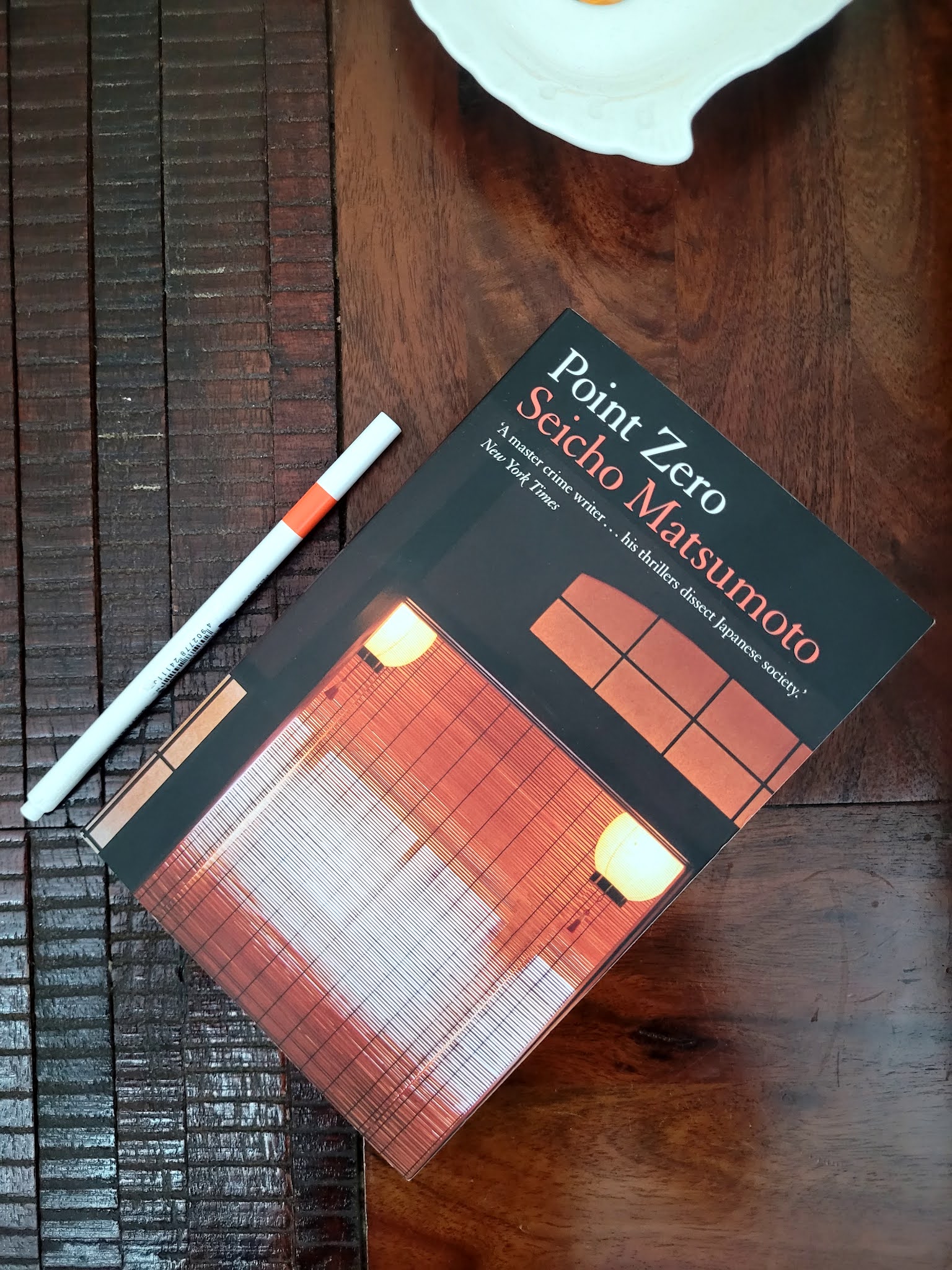
What is the future of a relationship built on a foundation of secrets? That is the question that runs through the core of Seichō Matsumoto’s ‘Point Zero’, translated from Japanese into English by Louise Heal Kawai. Set in 1958 and told through the circumstances in the life of its 26 year-old protagonist Teiko, the story follows her search for answers when her husband, 36 year-old Kenichi Uhara goes missing days after their honeymoon.

Read More

Post Number 89: The banality of perpetual niceness (in Ann Patchett’s ‘Whistler’)

“Everybody lives,” Eddie said, because the creation of narrative tension was not his objective.’

That pretty much summarises Ann Patchett’s ‘Whistler’. 

Ambling through the Metropolitan Museum of Modern Art, 53 year-old Daphne senses that a stranger is following her. When he reveals himself to be Eddie Triplett, a man who used to be briefly married to her mother, the revelation unleashes a dam of memories from her childhood.

This chance meeting, 44 years after they last saw each other, leads Daphne down a pleasant path of recollections, reconnections, and realisations. What a joy to be reminded at 53 that someone will always see you how you used to be at 9! To piece together a chapter in your history that was nearly forgotten to the ebb and flow of time. 

Eddie Triplett is written to be a dream character. He’s kind, tender, well-read, easygoing, and charming to no end. Who wouldn’t enjoy the company of such a person? He works in publishing, has stacks of books by his bed, treats the children of his (ex)wife as if they are his own, and in the wake of the divorce, when asked to vanish, simply does. This last bit, the disappearing act of a generous man, is it an act of deference or indifference? We never know because Ann Patchett shuts down all possible opportunities for uncomfortable discussions. 

Read More

Post Number 88: What if Home is not a Solace?

(An essay on Homecoming in Marilynne Robinson’s novel ‘Home’)

More book reviews on https://www.instagram.com/abookishpursuit/

“Home. What kinder place could there be on earth, and why did it seem to them all like exile?”

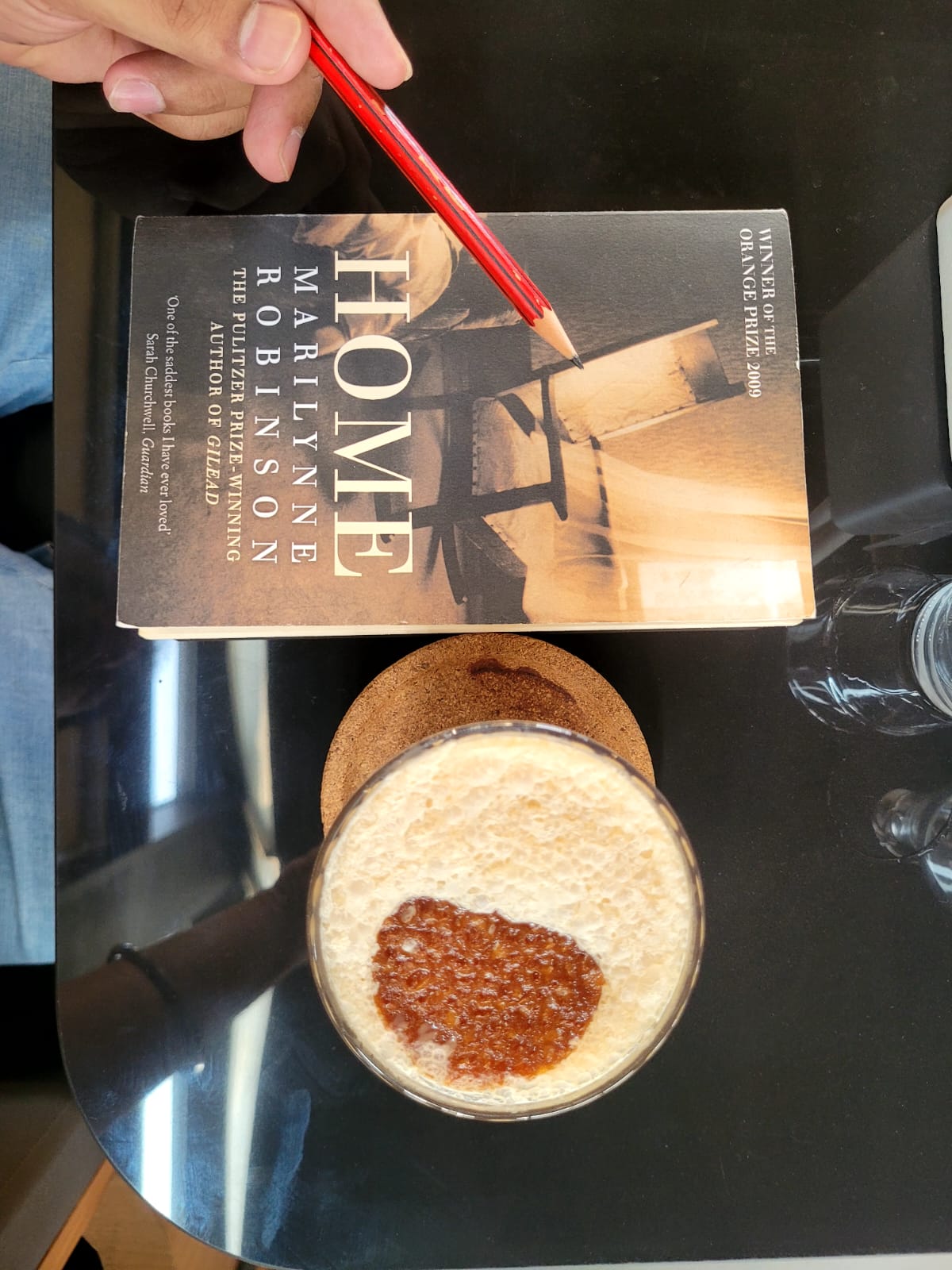
It may sound silly to say that Marilynne Robinson’s ‘Home‘, the second novel in the Gilead quartet, is about what makes a home and how people experience homecoming but that is the truth of it. The book isn’t a sequel as much as a companion novel to ‘Gilead’, a prism through which the circumstances of the first novel are refracted. Set in the same timeframe, it switches its focus onto the Boughton household and its three inhabitants – Reverend Boughton, and two of his middle-aged children, Glory and Jack. 

Rev. Boughton, ailing and in his final years, is delighted to have his home graced by the children’s presence, unaware of the disappointments that have propelled them back. Glory is escaping the embarrassment of being financially duped by her fiancé who was also likely married. Jack has returned after 20 years in self-imposed exile as a struggling alcoholic with a chequered past. 

Read More

Post Number 87: My Week In Not Paris with Deborah Levy

More book reviews on https://www.instagram.com/abookishpursuit/

I have grasped the precursor to enjoying Deborah Levy’s fiction. Problems in her characters’ lives are not to be solved but lived through. With that, I settled into her latest fiction, ‘My Year in Paris with Gertrude Stein’, which follows an unnamed narrator who is temporarily in Paris, and a divorced English woman tasked with writing an essay on Gertrude Stein.

Set in November 2024 against the aftermath of the US elections, it follows our struggling narrator as she juggles a new city, new friends, no lover, a missing cat, mice in her apartment, and an essay that is yet to transfer onto paper.

Read More

Post Number 85: Are You A “Real Reader” If You Jump For Free Books?

The 2026 edition of the World Book Fair in Delhi saw a footfall of two million. I contributed twice to that falling of the feet. I went twice, not that I hopped twice at the entrance to fudge the count. This is a weird start. The book fair was a success since I purchased a ton of titles and received sturdy tote bags to carry home. I also resisted the urge to eat cold junk food at the stalls by going to Pandara Road and having hot junk food there (#health).

I have gone to the book fair pretty much every year since 2010 yet every year I’m surprised at the strength. I go for the books and when I browse them, I tend to be like Bradley Cooper in ‘Limitless’. But when strangers keep crossing you every two seconds, not only does your focus suffer, you eavesdrop even when you don’t want to. You hear people pick up titles and moan that they could buy it on Amazon (so why’d you come?) or uncles who list all the stories of Chughtai they have read so they only want a book which features the rest or college students collectivizing their wallets and banishing titles five steps away from the billing counter or people on a date discussing their literary tastes (he was a Simon Sinek and self-help dude, she was an Ali Hazelwood and Korean thrillers gal.)

Read More

Post Number 78: A Year In Books

2023 was not my favourite year. I welcomed the New Year through the hallucinatory haze of a viral fever, recovering far slower than I had hoped to, missing out on friends and their life events. Barring a brief spell in February which, if I could, I would preserve in the formaldehyde of sunshine and spring, it seemed as though I could not find my footing and time kept slipping by. At many points in time that are privy to only a handful around me, I felt lost and confused, even hurt. But there is art, always, to tide you through. On days when things did not make sense, it was comforting to open a book, knock on the annals of time, and commiserate with writers and characters. These are some of the books that I read this year that healed my fragile heart, and reminded me of my place in the grand scheme of things. I will refrain from mentioning books that I re-read though I would argue there is more comfort in the certainty of an old story, like listening to anecdotes of oneself as a child. 

Read More

Post Number 66 : The Art Of Quitting A Book

For the second time in a year, I attempted to read Rachel Carson’s iconic book Silent Spring. For the second time in a year, I stopped at page 115, unable to rein in my brain from branching off to its Lala-land as Carson wrote passionately about pesticides endangering all the facets of nature. For the second time in a year, I felt the pinch that I wasn’t properly taught to deal with as a kid, the pinch of quitting something.

Out of an infinitely large collection of books and texts, what was it about this harbinger of the modern ecological movement that gnawed at me?

Read More

Post Number 61 : For Those Who Hate Reading But Love Having Read

An essay on feeling comfortable with whatever you read, and being okay with not enjoying reading too

Surfing on YouTube, I came across channels which catered to reading. One was of an astrophysicist who recommended books that shaped his scientific temperament (which is how I found about Alex’s Adventures in Numberland, a book I’ve raved about – those who follow me on Instagram and Twitter may know), another was a literature student who check-listed 100 books he read in the previous year (mostly from his curriculum), and finally one from Timothy Ferriss, the guy behind the 4-Hour Workweek, in which he gave tips to speed-read by engaging your peripheral vision. It’s this video that struck me most, not because I flinched when he physically drew lines on the paper with a pen to delineate the periphery of focus, but because in a span of 10 minutes, he had turned my hobby, my leisurely activity into a mechanically optimized task.

A friend told me whenever he suggests books to his colleagues, he gets radio silence, not so on other topics. There’s a Dorothy Parker quote that goes, “I don’t like writing. I like having written.” I suspect it’s the same here. People love ‘having read’ but abhor the effort that goes into reading. That’s where people like Timothy Ferris come in to make the process quicker, sharper, cleaner. Why read a line when your brain can take half of the sentence and fill-up the rest based on heuristics? Why read a book when you can skim through half and let your mind make up the rest? Why even read when you can see the title and let your imagination run wild?

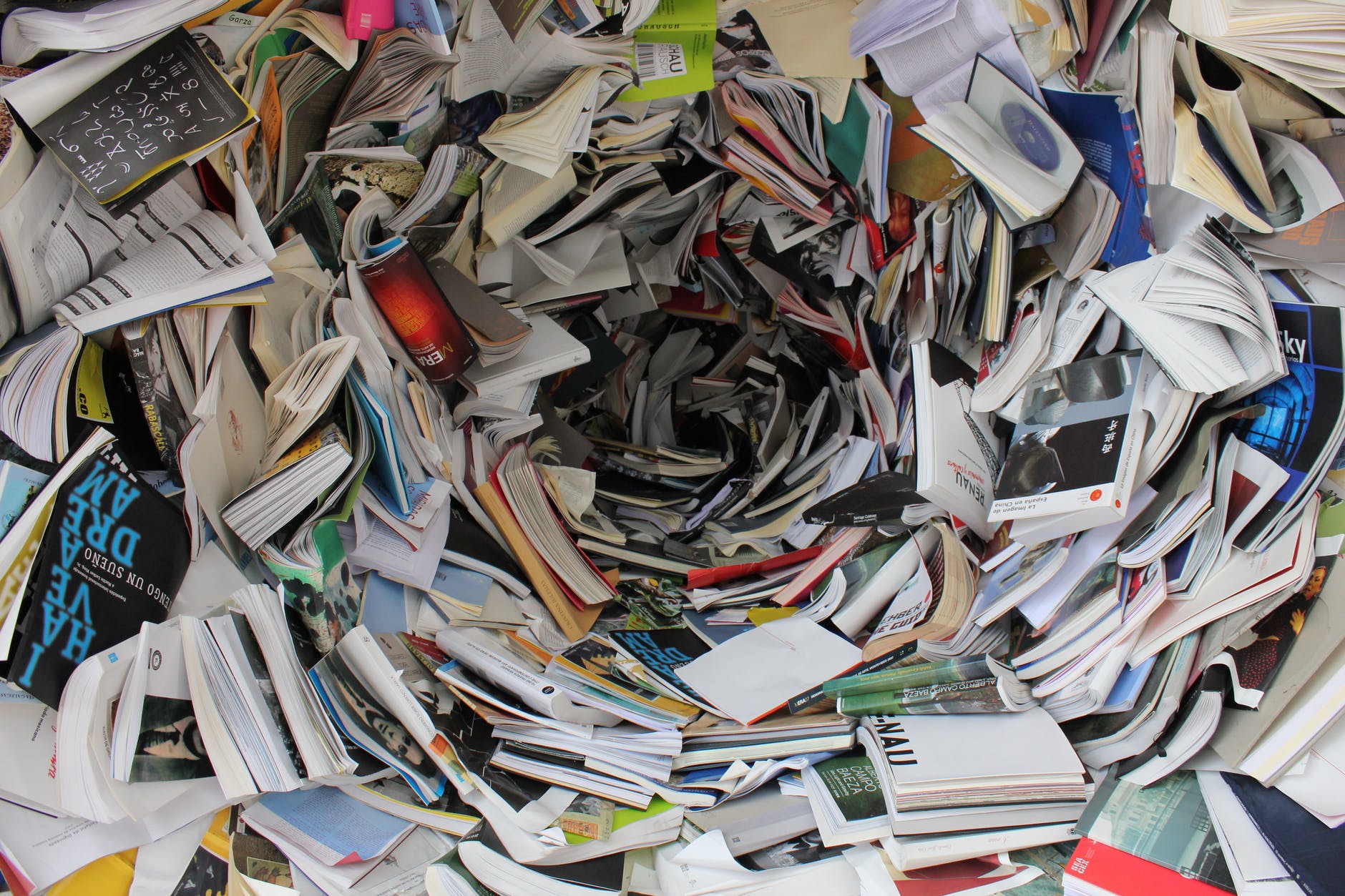
pile of covered books

Photo by Pixabay on Pexels.com

Read More

Post Number 52 : A Case For Re-Reading(And Re-Everything Basically)

An essay exploring the need to re-visit old books, and more.

Today marks a full-circle moment for me as a reader, 6+ years in the making. A sub-conscious itch has been scratched. I’ve re-read ‘The Reluctant Fundamentalist’ by Mohsin Hamid and can now claim not only to have understood it but to have liked it too. But why should you, kind reader of the blog, care? Well, you shouldn’t, to be fair. But I hope you empathize with my sentiment of achievement. Because this book ‘launched’ my ambition of reading diversely, fuelled equally by unbridled curiosity and a bruised ego.

71r0pd6zfxl

Courtesy: Amazon.in

22nd March 2014 was my last Board Exam. A rite-of-passage had been…passage-d? I came home in a mental state that was common to me then – happiness at having written the exam, with sudden pangs of panic that I’d made an error, my percentage would drop, no college, no future – the usual overthinking spiral. A string of stress inducing entrance exams were a fortnight away and nearly two years of analyzing sin θ equations, monkeys hanging from pulleys, and seeing how Cyclohexa-1,3,5-triene reacts(that’s benzene, if you recall), were to (hopefully) bear fruit. But that night I put that aside and picked up this book, having refrained from reading for recreation all this while.

Read More