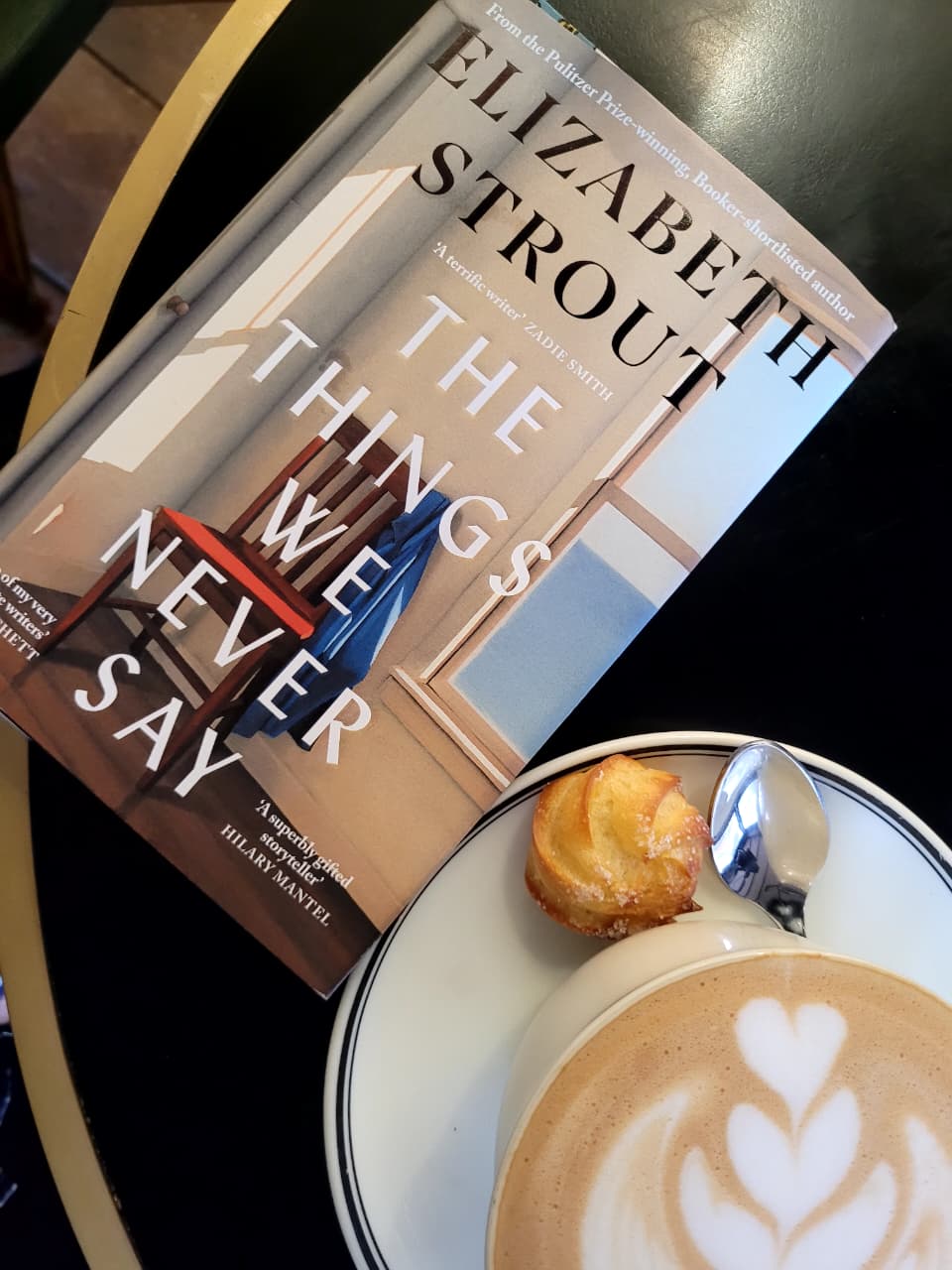
Post Number 91: The Things We Never Say by Elizabeth Strout
“So blind we humans are – so blind. To each other and to ourselves, moving through life as though through shadows, putting out a hand in the dark and thinking we have touched someone…But mostly we travel through life unsighted, grasping only the smallest details of one another’s selves, including our own. Thinking all the while that we can see.”
Reading Elizabeth Strout’s latest novel, ‘The Things We Never Say’, I found myself thinking of Deborah Levy’s memoir ‘Things I Don’t Want to Know’ which I had re-read recently. I thought it was a superficial connection which I had made due to a vague overlap in the titles but at one point, Strout herself linked the two-
“He had said something like, “Why don’t people ever say anything real?” And now he knew why. Because to say anything real was to say things that nobody wanted to know. Or if they wanted to know, they would not care in the right way. Or even understand. It was a private thing, to be alive. He understood this now.”
I finished reading the novel but this sentence rattled in my brain – “It was a private thing, to be alive.” Did it mean that it was impossible to understand someone else? Or that one could never fully articulate what it meant to be themselves? Artie Dam, Strout’s protagonist, had seemingly understood something I couldn’t fully grasp. Granted, he had almost twice the years on this planet than me, and he was entirely fictional so he could learn and un-learn things within pages. Things he didn’t want to know and things he would never say.