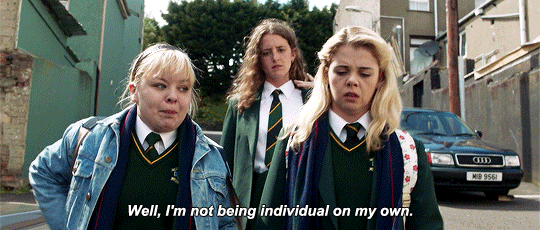
It was through a friend’s sharing of a post on Instagram that I learnt about the saga of the (alleged) solving of the Navier-Stokes equation by OpenAI. It is unclear whether this was due to the computational resources at play or something sinister, perhaps peeking into someone’s work without their consent. Before I could calibrate my opinion, I was transported to a version of the 1980s where a faded pink-and-blue denim aesthetic followed me on loop; soulless eyes staring back, rictus grins from under teased, bulky hair. What bothered me was its cyclostyled nature as all pictures merged into one. It reminded me of this cracker Claire Devlin line [1] from Derry Girls –
“So blind we humans are – so blind. To each other and to ourselves, moving through life as though through shadows, putting out a hand in the dark and thinking we have touched someone…But mostly we travel through life unsighted, grasping only the smallest details of one another’s selves, including our own. Thinking all the while that we can see.”
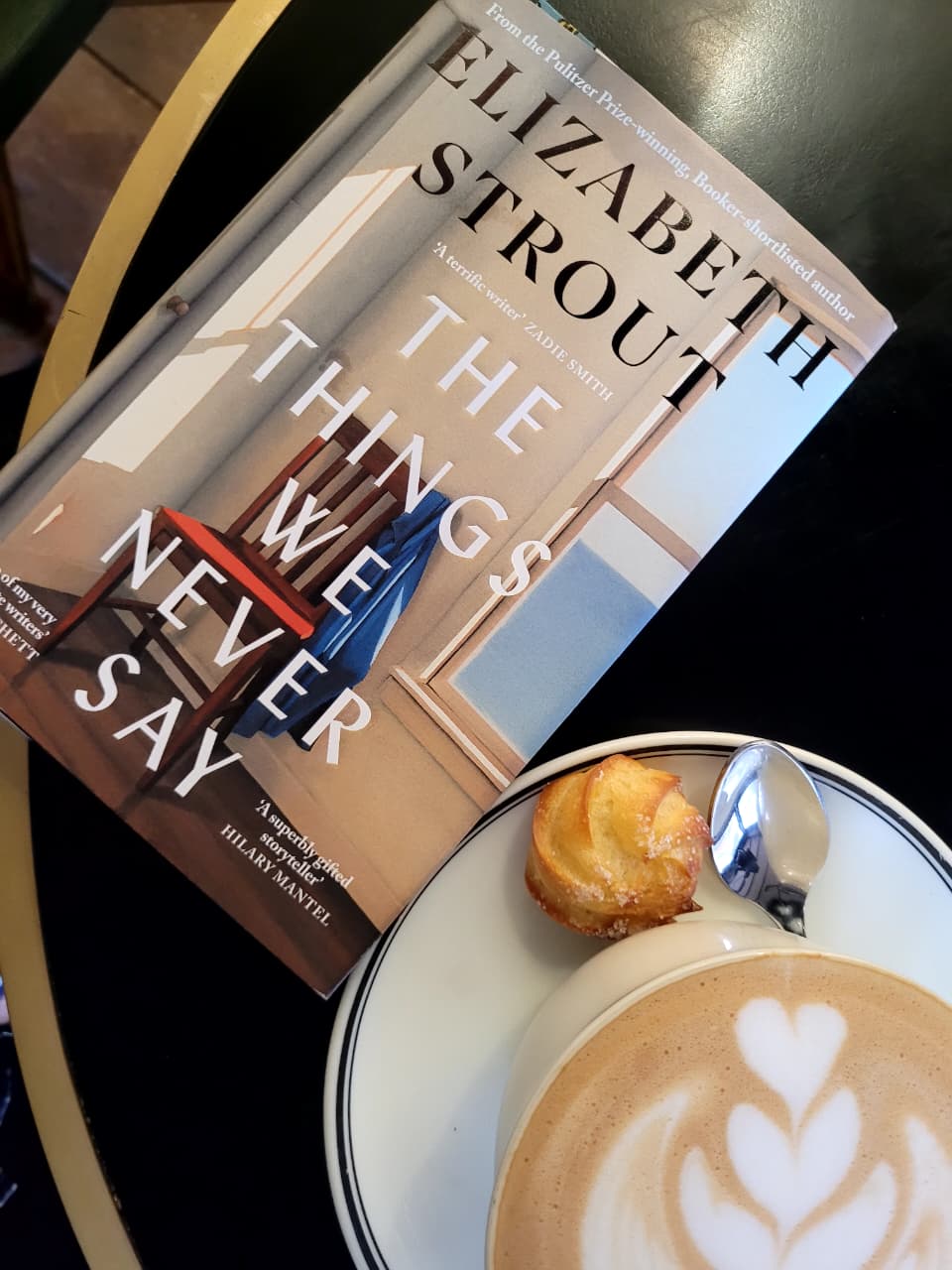
Reading Elizabeth Strout’s latest novel, ‘The Things We Never Say’, I found myself thinking of Deborah Levy’s memoir ‘Things I Don’t Want to Know’ which I had re-read recently. I thought it was a superficial connection which I had made due to a vague overlap in the titles but at one point, Strout herself linked the two-
“He had said something like, “Why don’t people ever say anything real?”And now he knew why. Because to say anything real was to saythings that nobody wanted to know. Or if they wanted to know, they would not care in the right way. Or even understand. It was a private thing, to be alive. He understood this now.”
I finished reading the novel but this sentence rattled in my brain – “It was a private thing, to be alive.” Did it mean that it was impossible to understand someone else? Or that one could never fully articulate what it meant to be themselves? Artie Dam, Strout’s protagonist, had seemingly understood something I couldn’t fully grasp. Granted, he had almost twice the years on this planet than me, and he was entirely fictional so he could learn and un-learn things within pages. Things he didn’t want to know and things he would never say.
Where the good and the bad and the worst and the best
Have gone to their eternal rest.
There shrines and palaces and towers
(Time-eaten towers and tremble not!)
Resemble nothing that is ours.
Around, by lifting winds forgot,
Resignedly beneath the sky
The melancholy waters lie.”
-The City in the Sea, Edgar Allan Poe
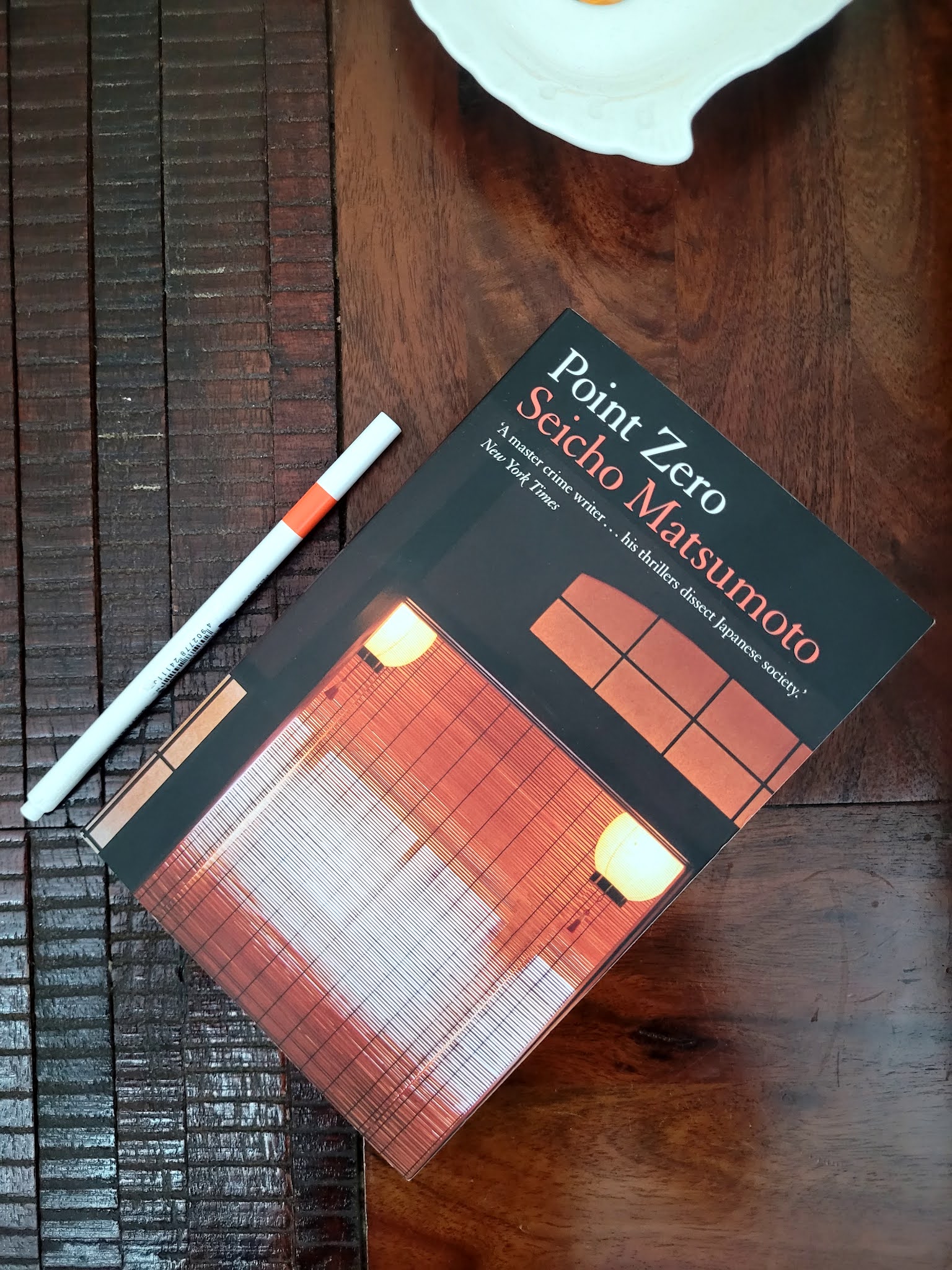
What is the future of a relationship built on a foundation of secrets? That is the question that runs through the core of Seichō Matsumoto’s ‘Point Zero’, translated from Japanese into English by Louise Heal Kawai. Set in 1958 and told through the circumstances in the life of its 26 year-old protagonist Teiko, the story follows her search for answers when her husband, 36 year-old Kenichi Uhara goes missing days after their honeymoon.
“Home. What kinder place could there be on earth, and why did it seem to them all like exile?”
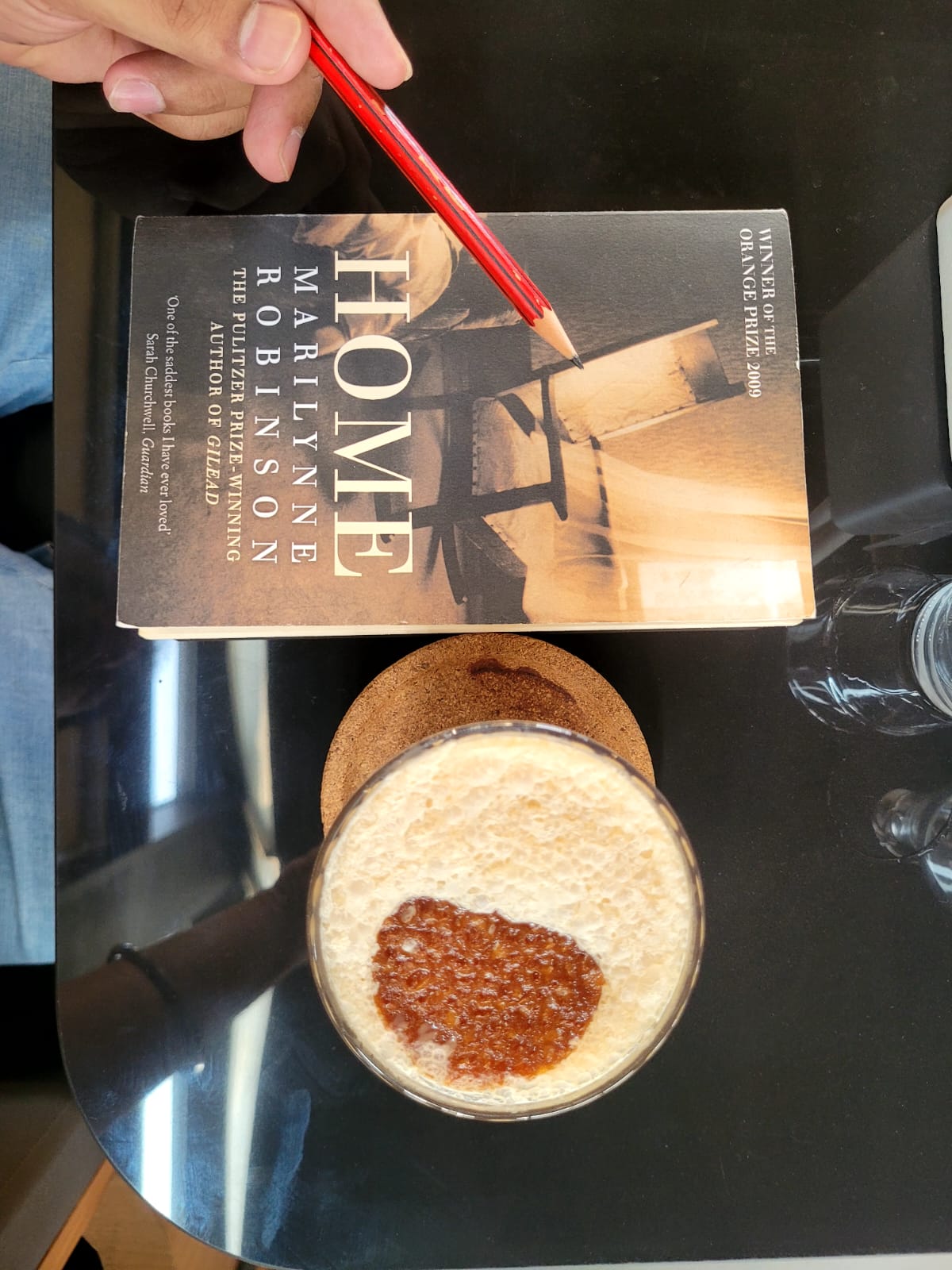
It may sound silly to say that Marilynne Robinson’s ‘Home‘, the second novel in the Gilead quartet, is about what makes a home and how people experience homecoming but that is the truth of it. The book isn’t a sequel as much as a companion novel to ‘Gilead’, a prism through which the circumstances of the first novel are refracted. Set in the same timeframe, it switches its focus onto the Boughton household and its three inhabitants – Reverend Boughton, and two of his middle-aged children, Glory and Jack.
Rev. Boughton, ailing and in his final years, is delighted to have his home graced by the children’s presence, unaware of the disappointments that have propelled them back. Glory is escaping the embarrassment of being financially duped by her fiancé who was also likely married. Jack has returned after 20 years in self-imposed exile as a struggling alcoholic with a chequered past.
“My God, I just remembered that we die.” – Clarice Lispector
Last month I read (and adored) Kaveh Akbar’s novel, Martyr! My friend and I had decided to buddy-read it. It took us longer than we had intended because jobs, travel and illness – all impeded our progress (this dash is not AI, I promise). Nevertheless, we kept peppering our Whatsapp chat with observations and voice notes, thoroughly engaged in Akbar’s fiction.
Martyr! (exclamation intentional) is the story of Cyrus Shams, a near-30, queer, Iranian poet living in Indiana, USA, recovering from addiction, and desperate to devote himself to a life that has meaning. A globalised denizen with a fleeting connection to his Iranian side, Cyrus is very much at a crossroads in his life. Still processing the senselessness of his mother’s passing in the shooting of the Iran Air Flight 655 (which I was horrified to learn was a real event), he is obsessed with death, dying, and the ideas that propel people to sacrificing themselves.
The 2026 edition of the World Book Fair in Delhi saw a footfall of two million. I contributed twice to that falling of the feet. I went twice, not that I hopped twice at the entrance to fudge the count. This is a weird start. The book fair was a success since I purchased a ton of titles and received sturdy tote bags to carry home. I also resisted the urge to eat cold junk food at the stalls by going to Pandara Road and having hot junk food there (#health).
I have gone to the book fair pretty much every year since 2010 yet every year I’m surprised at the strength. I go for the books and when I browse them, I tend to be like Bradley Cooper in ‘Limitless’. But when strangers keep crossing you every two seconds, not only does your focus suffer, you eavesdrop even when you don’t want to. You hear people pick up titles and moan that they could buy it on Amazon (so why’d you come?) or uncles who list all the stories of Chughtai they have read so they only want a book which features the rest or college students collectivizing their wallets and banishing titles five steps away from the billing counter or people on a date discussing their literary tastes (he was a Simon Sinek and self-help dude, she was an Ali Hazelwood and Korean thrillers gal.)
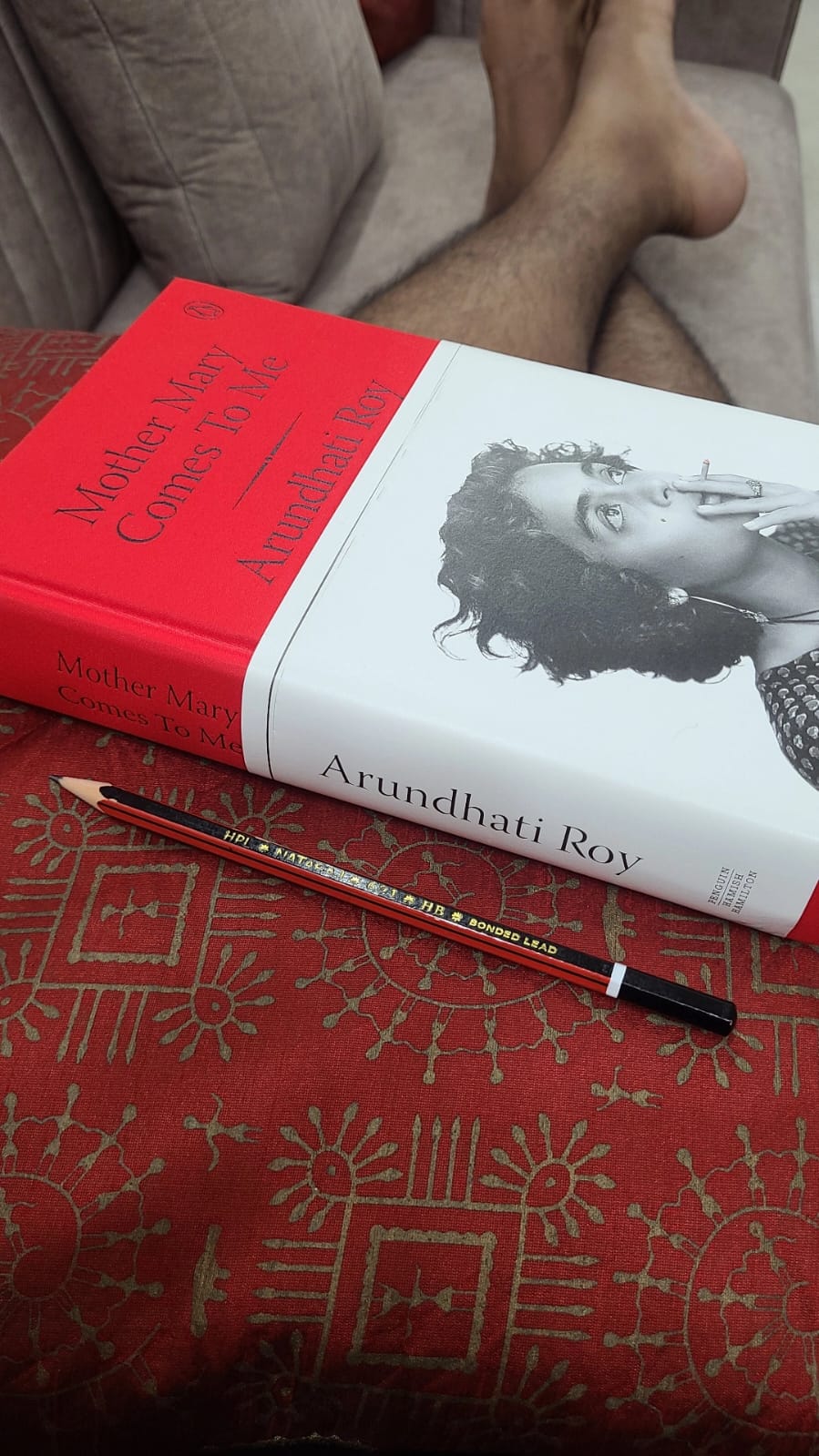
I spent the last two weeks reading Arundhati Roy’s memoir ‘Mother Mary Comes To Me’. It is a fabulous book written at the confluence of memory, identity, and literature. She captures the push-and-pull of growing up under a mercurial parent with microscopic clarity. She was raised by a firecracker of a personality in her mother (named Mary) who was an outspoken, combative, feminist divorcée in a time when it wasn’t ideal to be any of those things. I was drawn to Arundhati’s story, particularly the ages at which her milestone events occurred. Left home at 16. Married at 17. Divorced at 21. Remarried at 23. National Award at 27. Booker Prize at 36.
I have always found it fascinating to map the age at which someone’s big moment(s) happened. For a while, it was simply an idiosyncratic fad. Now, this habit is yielding an unexpected consequence – it is behaving as a clarion call from the great beyond.
Before leaving for the office, Mum points me to a pink bag propped up on the table. I look inside and see a large, framed picture of her, wearing a Safa Pagdi (Rajasthani Turban) on her head. As the head of the health services in her region, my mother regularly gets photographed in power poses these days. However, this particular photo of her struck me. Every official function she attends as a chief guest, she’s gifted a Safa to symbolize her importance, something that is typically tied to men’s traditional clothing in Rajasthan. Isn’t it funny that the only way to emphasize her authority is through male symbology? It is as if the best of a woman pales in comparison to that of a man.
Surprising.
Maybe I am noticing this especially strongly now because I have chosen to go through something where I grapple with labels every day. Unlike ever before, I feel acutely conscious of how I present. In the beginning, I believed that letting my work speak for itself is the best way forward. It partially still is, but it needs to be marketed too. Unless it is wrapped in pleasant packaging and tied with a pretty bow, it is like that tree in the forest that no one heard falling. You must be able to talk and do it well. You must be engaging, and be just the right kind of convincing, or else you could be eccentric. And you don’t want to be eccentric. Especially not an eccentric woman.
The next question is what makes the packaging and the bow pretty? My options are even more limited than my male counterparts. Be a woman of few words, and you’re reticent or underconfident. Be vociferous and you’re noisy. I am constantly teetering on the fine line between them.
I envy my female friends who have figured themselves out or at least appear to have. They don’t sweat the minor details of others’ opinions and if they don’t agree with someone, they aren’t shy about calling it out. Some carry being loud as a badge of honour (as it should be!). They have figured out the games they need to play and how much they are willing to compromise.
I wonder if men go through the same convoluted reckoning to find their voice. Do they second-guess themselves before confidently stating things — even when they’re wrong?
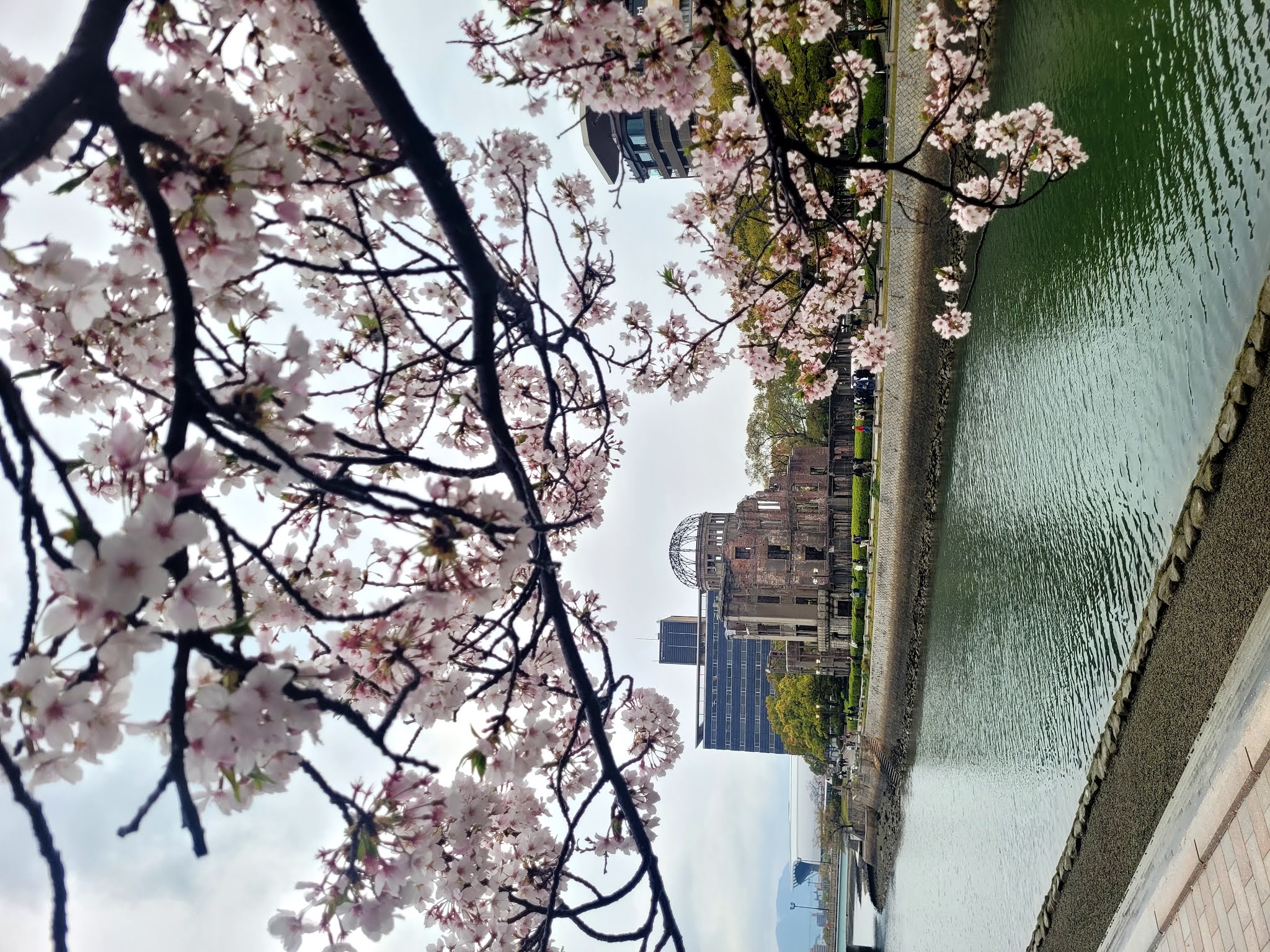
I had the opportunity to revisit Japan after nearly 2 years. My friend, Karan, and I had planned this vacation to coincide with the cherry blossom (sakura) season. Armed with past familiarity, we decided on a blend of new experiences and the comfort of previous haunts. Because we were going back as experienced tourists, we had learnt our lessons with regards to carrying luggage, walking long distances, having to rely on gestures and hands to communicate, and taking a mix of local trains, metros, and Shinkansens (bullet trains) to navigate the cities. I won’t bore you with a day-by-day breakdown, a conventional travelogue, if you will, but I do want to share fleeting thoughts I documented in my journal.
Another year is about to end. I too, am about to finish another year around the sun. And with each year, I seem to keep collecting regrets and what-ifs.
When I was younger, I had more life ahead of me than behind me. I remember staying awake the whole night as a kid, buzzing with excitement for the first swim class of the year at school. Now, there is always some music or some show playing in the background to drown out half of my thoughts.
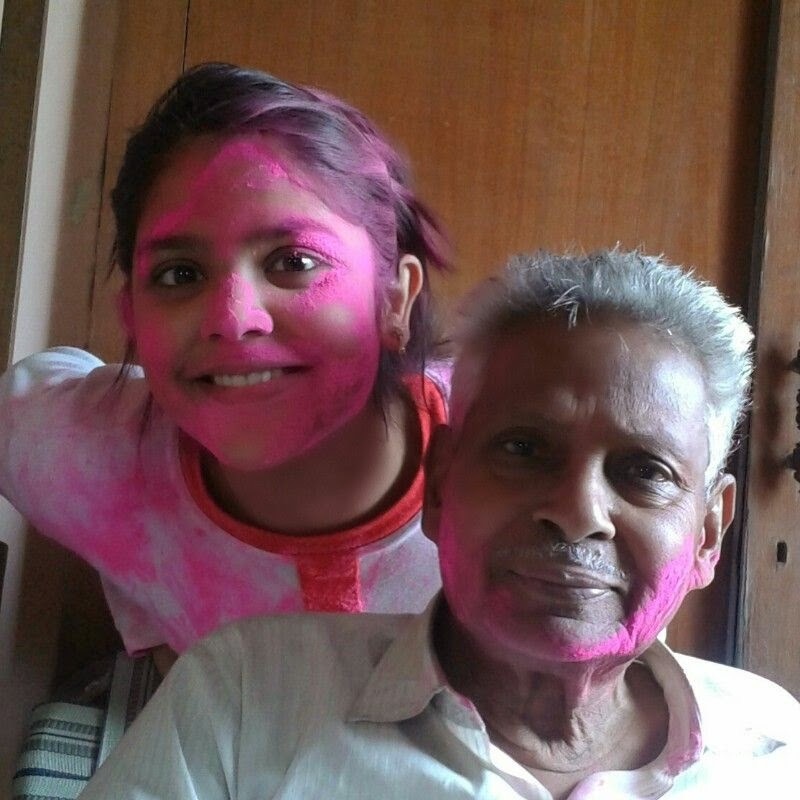
When Dadum died earlier this year, I remember remarking that my luck had finally run out. I had considered myself incredibly lucky that I got to grow with my grandparents actively present in my life. When kids and adults would mention family members passing, I would send God a quick prayer to keep everyone safe and healthy at home. That clearly worked for a while. Dadum got to see many milestones in my life, except for that PhD. That may or may never happen.
Having these fears didn’t make me cherish all my moments more. It wasn’t as poetic. When Dadum recited poems or shlokas from memory, I would get bored, but I would still listen attentively for as long as I could and he wanted me to. Many days I would naturally gravitate towards Didum, or my aunt and mum because sometimes, finding it easier to talk to them because I related to them more. This birthday would be the first one without him. Last year, around this exact time, we had almost lost him, but he miraculously came back to us for a couple of more months. It was almost as if he wanted to stay back for just another birthday.
I should have called him more often.
It’s funny saying that. I haven’t turned into a new leaf after his passing. Many days, I still don’t feel like talking. I could be calling everyone and living in the moment more often. Yet, here I am, fully aware that I should be studying for the finals coming up but choosing to ignore it in this moment. I suspect most people live outside of their moments, but to those who manage to squeeze in as much as they can into their time, I envy you and admire you.
Dadum isn’t my only what-if. I go through so many periods and events of my life daily, re-hashing everything I did or could have done. It never helps. Of course, you are sitting there reading this and thinking, just stop thinking so much! Yeah yeah, I should, and there are days when I do. And then there are days that I don’t, or I can’t. I adjust with the questions on those days. They will come, and some will go, only to be replaced with new ones. People will come, make their ripples. Some of which will die out, and some defy the laws of physics and never let the water just stay still.