Post Number 59 : Things School Could’ve Taught Us – Chaos Theory

An article exploring nature’s complexity being brought out through Chaos Theory

Think about water dripping from a tap. When you turn it on slowly, it drops in an aesthetically pleasing rhythm – an aggregate of hydrogen and oxygen coalescing into a bulbous shape, pulled by gravity, falling into the sink, followed soon by similar drops coalescing behind it. Turn up the pressure gradually and this pattern dissolves, the tip, tap, tip, tap giving way to an erratic stream that suggests that the rhythmic pattern may have been an error. Think of the smoke rising from a lit cigarette. Wisps of grey-black soot escaping from the stub and immediately dissipating into unknowable shapes in front of your eyes, never to be repeated again. How can such simple system birth such unpredictability?
Read More

Post Number 58 : Things School Could’ve Taught Us – Nikola Tesla

An article exploring Tesla’s struggle with bureaucracy, frustration with finances, and society’s vindication coming too late for most innovators.

“This letter will never get to you, Mother. I don’t know why I write it to you when you cannot read it…rest in peace Mother and please forgive me for choosing paths that had led me away from you. I cannot even be there for your funeral. I read the telegram that informed me of your death and despise people who weren’t ready to understand two years ago that electricity can be transferred without wires. Now, they have seen it but they won’t use it for centuries to come because someone burned my downtown laboratory to the ground, with all of my formulas and writings in it.”

-Fragment of Tesla’s Last Letter to His Mother

Were it not for the title of this article, could you have guessed that this grieving son writing to his then-deceased mother, was the man behind revolutionary ideas like Alternating Current, Radio, Microwaves, Radar, Computing, Robotics and scores more? It’s easy to think of ‘eccentric geniuses’ as people absorbed in their work to a fault, and there’s ample evidence that Tesla was both – eccentric and genius. His notable eccentricities included – “obsessive compulsive disorder, only inhabiting a hotel room that was divisible by the number three, pigeons, and an aversion to women wearing earrings”. Nevertheless, it’s important not to let the odd traits be the sole markers of his identity. So here’s an attempt to humanize Nikola Tesla. Read More

Post Number 54 : Things School Could’ve Taught Us – Johannes Kepler

An article exploring Kepler, the person – sci-fi novelist, dedicated son, and astute scientist.

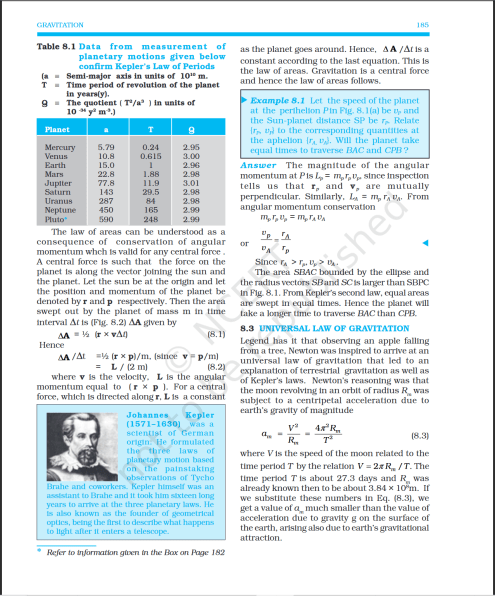
Do you remember Johannes Kepler? For those of you who had Physics in Class XI, this scientific bad boy made a cameo in the chapter on Gravitation, mentioned a page after the one which carried his three laws of planetary motion. Do you remember the laws? (Hint : Law of Orbits, Law of Areas, Law of Periods). Do you know anything else about his life? If you know next to nothing, don’t fret. I didn’t know squat either. Truth be told, I didn’t even remember the laws. But I read about him in Maria Popova’s Figuring, and she gave this visionary a backstory, a personality, a rich, vivid life, enough to make me wonder why my textbook didn’t carry any vestige of the same, and how many fascinating people and events never made it to those pages; forever hidden behind the sole accomplishment that was ascribed to their identity. So here’s an attempt to deconstruct the earthly man behind the planetary laws.

Kepler Full

Sadly, this was all the space that Kepler was given. Credits: ncert.nic.in

Read More

Post Number 45 : Figuring – Maria Popova

An article reviewing the titular book by the famed blogger and writer, Ms. Popova

“Lives interweave with other lives, and out of the tapestry arise hints at answers to questions that raze to the bone of life: What are the building blocks of character, of contentment, of lasting achievement? How does a person come into self-possession and sovereignty of mind against the tide of convention and unreasoning collectivism? Does genius suffice for happiness, does distinction, does love?”

Read More

Post Number 12 : The Price of Immortality

In 1954, Jonas Salk developed a vaccine to treat the ever increasing menace of Poliomyelitis. In 1955 the first human cells were successfully cloned. Within years, the discovery of the Human Papilloma Virus (HPV) was linked to the occurrence of cervical cancer in women. On surface, these remarkable medical accomplishments seem totally unrelated. But as you may have guessed, there is indeed a correlation between them, and it is one that rarely gets the credit it deserves. All these accomplishments were a consequence of medical testing done on the tumour cells of an African American woman, Henrietta Lacks, whose cells were the first ‘immortal’ line of cells.

Read More