“So blind we humans are – so blind. To each other and to ourselves, moving through life as though through shadows, putting out a hand in the dark and thinking we have touched someone…But mostly we travel through life unsighted, grasping only the smallest details of one another’s selves, including our own. Thinking all the while that we can see.”
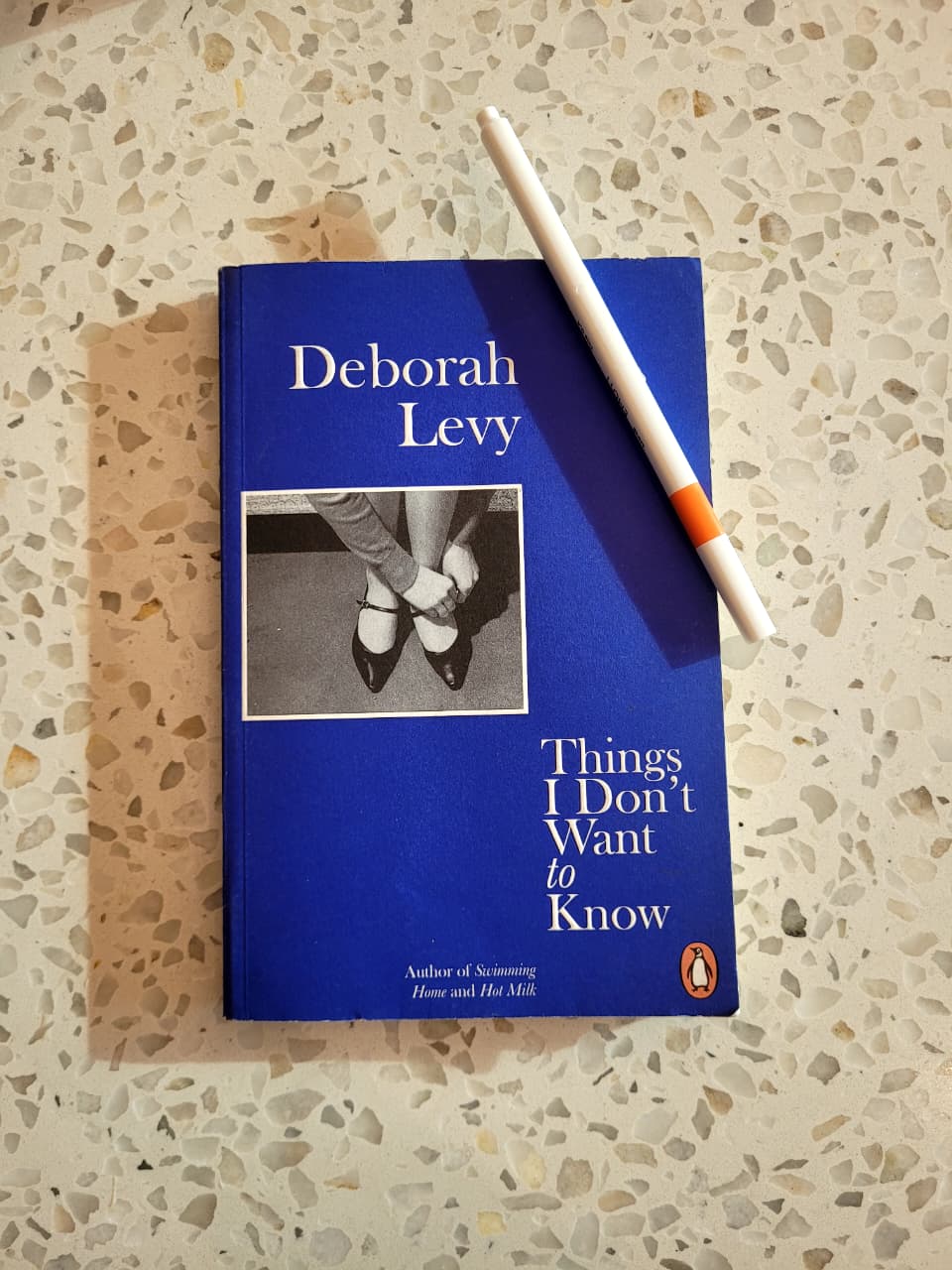
Reading Elizabeth Strout’s latest novel, ‘The Things We Never Say’, I found myself thinking of Deborah Levy’s memoir ‘Things I Don’t Want to Know’ which I had re-read recently. I thought it was a superficial connection which I had made due to a vague overlap in the titles but at one point, Strout herself linked the two-
“He had said something like, “Why don’t people ever say anything real?” And now he knew why. Because to say anything real was to say things that nobody wanted to know. Or if they wanted to know, they would not care in the right way. Or even understand. It was a private thing, to be alive. He understood this now.”
I finished reading the novel but this sentence rattled in my brain – “It was a private thing, to be alive.” Did it mean that it was impossible to understand someone else? Or that one could never fully articulate what it meant to be themselves? Artie Dam, Strout’s protagonist, had seemingly understood something I couldn’t fully grasp. Granted, he had almost twice the years on this planet than me, and he was entirely fictional so he could learn and un-learn things within pages. Things he didn’t want to know and things he would never say.
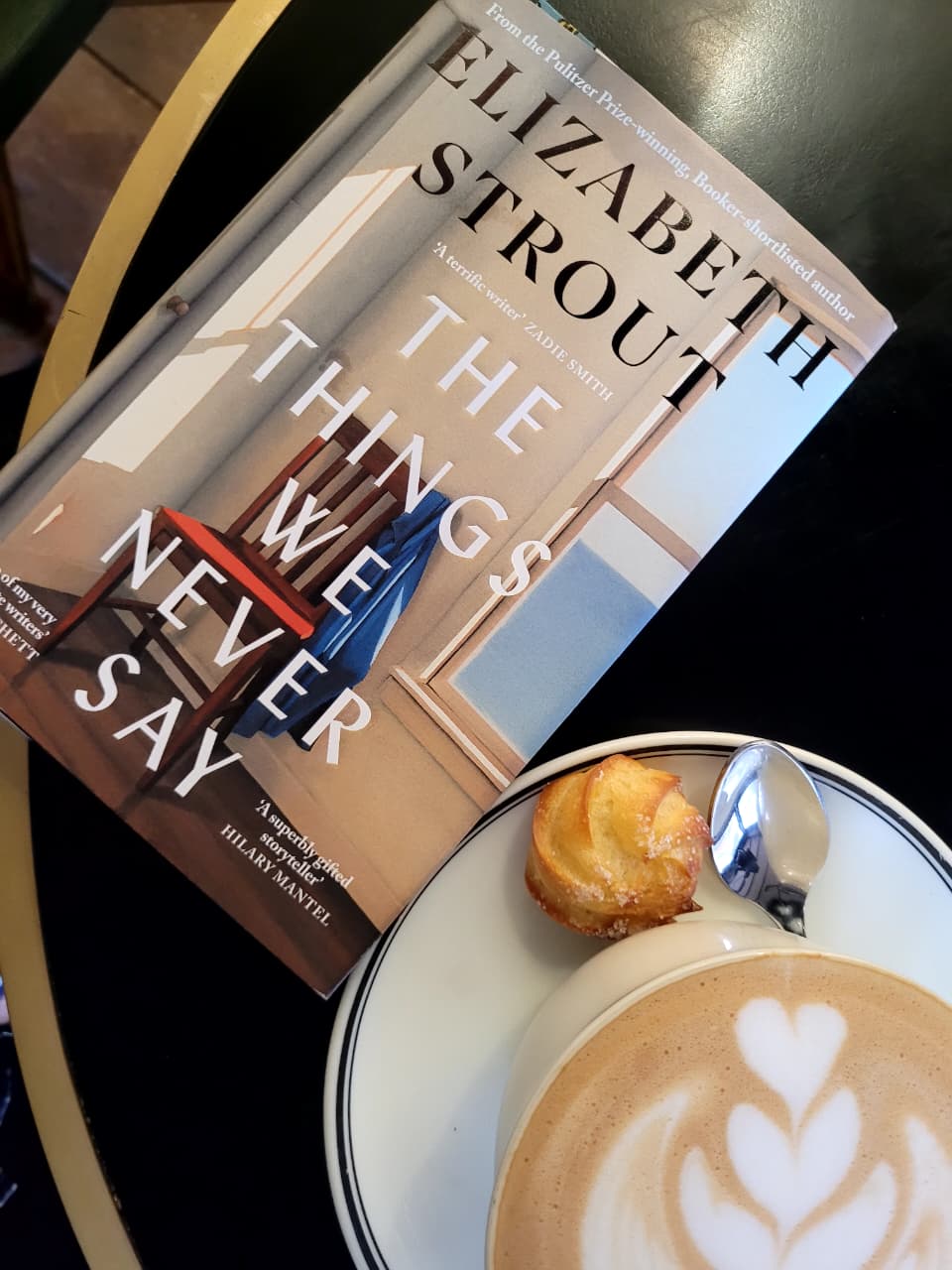
When the novel begins, what Artie, and we, the reader, know is the following:
- 57 year-old Artie Dam is a history teacher in Maine, living a quiet life with his wife, Evie, who is a family therapist
- Artie and Evie’s son, Rob, lives nearby but is no longer as close to Artie
- Things at school are changing, including the children themselves – “The students had changed. They were anxious, and not argumentative – with him or with one another – as he had known them to be in the past, when there had been lively discussions. It was often difficult now to get them even to talk.”
- The impending 2024 US elections had infused an anxious and defeatist energy in the air
- Artie no longer wants to live and he does not wish to say this to anyone
It was a private thing, to be alive. It was also a private thing to cease the act of living.
What if the decision to not say the thing that he doesn’t wish to say is not reticence but denial? In the Deborah Levy memoir, she says, “To speak up is not about speaking louder, it is about feeling entitled to voice a wish. We always hesitate when we wish for something. A hesitation is not the same as a pause. It is an attempt to defeat the wish.” Artie’s wish to not live anymore is something which cannot be spoken about plainly to others, inserted in between chat about the weather, though it is this very plainness that grants it heft. But how did he get to this point?
I thought about Artie’s life and decision in the same way that Deborah Levy structured her memoir. The memoir, for those who’ve not read it, is a response to a George Orwell essay about why a writer writes, organized under four headings:
- Historical Impulse
- Aesthetic Enthusiasm
- Political Purpose
- Sheer Egoism
Historical Impulse
How had Artie managed to live through his childhood with a mother who had mental health issues and an unloved sister who deeply craved sweetness in her life? Why, at 57, did he miss his father so much?
Artie is unsettled at the way his life has turned out. He finds himself astonished to be living in the house of his in-laws, whom he had secretly thought of as vulgar. He looks at one of his oldest friends, recently widowed, and confesses that he had always found her husband to be an ass. He looks at his son and says without thinking that he had never liked his (the son’s) wife. And he gazes at Evie – whom he had met 34 years ago while volunteering at a soup kitchen – and observes as she sits across from him on the sofa with a glass of wine that time has morphed her into a much colder woman.
Aesthetic Enthusiasm
Despite that, Artie’s life seems to be a good one. A massive home overlooking the bay, a sailboat he takes out on the weekends, a son who swings by now and then, a stable job where he is loved (“‘Damn-dam, the greatest man’, his students would sometimes say to him, their faces shining with affection”), a dependable friend circle etc.
So what if he feels a little blue?
So what if his nearly 35 year-old marriage is stagnant?
So what if his son no longer opens his heart to him?
Nothing appears egregiously off. Why scavenge for misery?
Political Purpose
Artie is disturbed by the shift in the country helmed by a divisive personality who has successfully tapped into the faultlines and emerged as an authoritative voice. The effect of that rhetoric has seeped into his classroom where, for instance, in his lesson plan on the US Civil War, he is now pressured into assigning readings from the Confederate viewpoint. The supporters of the divisive leader aren’t in some distant land but across the street and a few blocks away. Artie is a history teacher hence he is enormously impacted by the ramifications of the elections. “Every day brought something new. On and on it went. Artie watched all these things, and he slowly understood that what he had felt the day of the election was true: His country was committing suicide.”
Sheer Egoism
Beleaguered on multiple fronts, Artie decides that he’s on autopilot and his life is no longer worth the effort. He is known among his students as a kindly, compassionate teacher, and it is in this vein that he entertains how he can fulfill his desire to cease living with minimum fallout. Then, unexpectedly, a secret is revealed which threatens to unravel his life. It is something that he did not want to know but now he has to decide if it is something worth saying.
Strout’s novel is about the reach of a person’s life – how, in the grand scheme of things, nobody is important but right here, right now, all of us cast a ripple with unfathomable consequences. Artie Dam is written as an upstanding man who is dispirited but not resigned. He knows he cannot shape the course of his nation but he can encourage the diffident student sitting three rows away. He cannot understand what compels people to exhibit a poverty of spirit but he can overlook the publicly discussed mistakes of his friends. I found myself moved by Artie’s helplessness with the Big Things because he remained committed to honouring the small things in life.
Artie notices things that his discretion prevents him from saying. The heartbroken plumber, the parent who knows her daughter loathes her, the missing ex-wife whom nobody mentions, the directionless student raging at the world. He falls into repeated contemplation about free will. Is there more to us than our circumstances? He doesn’t let this thought interfere with his actions which continue to be good, minus an errant act here or there.
It is Artie’s goodness that glimmers and hopscotches across family, friends, colleagues, and students. The book is about the well-intentioned but foolhardy nature of virtue that cannot overthrow governments but can send you on a career path of helping others. It cannot bring back dead parents but it can offer a moment of grace to a shoplifter.
There may be unspeakable gaps between people where silence can settle like dust. There may be an undertow of loneliness in the most put-together people. There may be heavy, painful secrets inside the people you’ve lived with all your life. But amidst it all, there are sailboats and conversations on free will; there are daughters-in-law and piano compositions; there are trophies for a job well done and cooked food in the microwave; and there are phone calls from friends who meet you and make you laugh out loud in the middle of a restaurant, slashing through the nonsense of civility and composure.
Now, that is something you should want to know and say to others.
“As he walked slowly up to the bedroom, he thought that now, after all these years, he was finally becoming a grownup. What did he mean by that? That he was finally beginning to understand the multitudinous aspect of people. He was amazed by it, really, now that he thought about it. In his study of history, he had learned about the leaders, and the various groups involved, but he had somehow missed this fact about every single person: that they held within them a vast, unknowable universe.”


I agree with some of the comments you made. It was not well tied up in a complete story but felt like unfinished lines and thoughts.
LikeLiked by 1 person
I see. Any specific story thread/element that felt unfinished?
LikeLike