“Lo! Death has reared himself a throne
In a strange city lying alone
Far down within the dim West,
Where the good and the bad and the worst and the best
Have gone to their eternal rest.
There shrines and palaces and towers
(Time-eaten towers and tremble not!)
Resemble nothing that is ours.
Around, by lifting winds forgot,
Resignedly beneath the sky
The melancholy waters lie.”
-The City in the Sea, Edgar Allan Poe
What is the future of a relationship built on a foundation of secrets? That is the question that runs through the core of Seichō Matsumoto’s ‘Point Zero’, translated from Japanese into English by Louise Heal Kawai. Set in 1958 and told through the circumstances in the life of its 26 year-old protagonist Teiko, the story follows her search for answers when her husband, 36 year-old Kenichi Uhara goes missing days after their honeymoon.
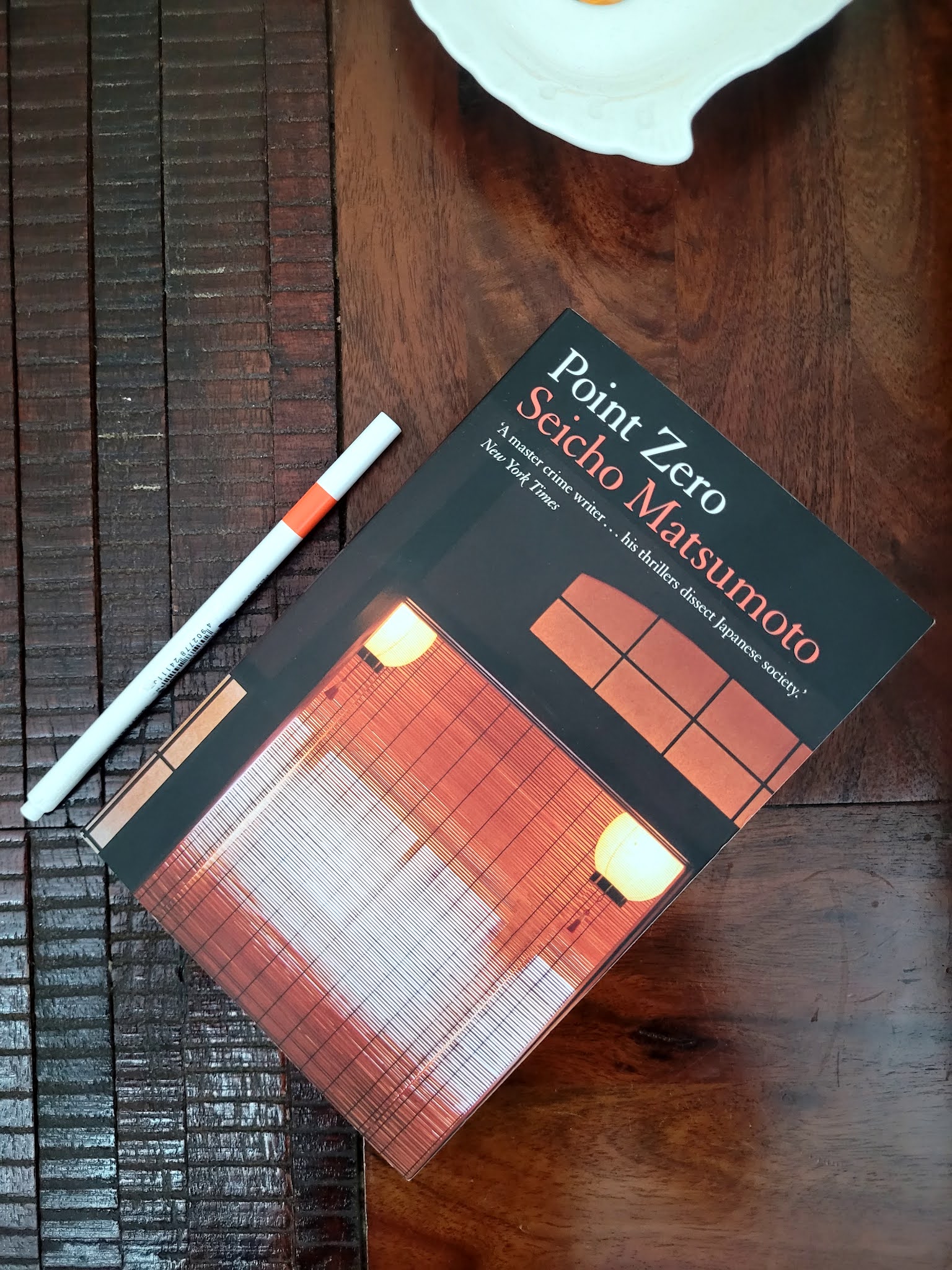
That her older husband may have a past which has affected him is something Teiko suspects from the beginning but it is upon his disappearance that she asks herself who is the man she has married. Though she is reassured by her brother-in-law and sister-in-law who seem unaffected by the developments because Kenichi was always a mysterious, solitary man, Teiko, from that point onwards, sprouts a kernel of doubt and alertness.
“Already the memories she had of him on their honeymoon were beginning to fade. His words, and his affectionate touch, were already disappearing into a void that she felt surround her.”
Kenichi was last seen in the snow-covered coastal town of Kanazawa where Teiko now finds herself temporarily staying in a ryokan, unable to calibrate her emotional cadence yet having to play the role of a beleaguered wife in a society where propriety was paramount. Is Kenichi alive? Has he absconded? Did someone kill him? Did he kill someone? New to Kanazawa, she starts the directionless process of piecing together the scattered leaves of knowledge of a man she has barely known for some months.
“Alone in a strange land – it was strange indeed – here the footsteps of her husband remained, but they were vague, and she had no sense of attachment to them. This longing for the north country that she had admired from afar on her honeymoon had been nothing but self-delusion. Her marriage to Kenichi Uhara was also unreal, nothing but a kind of optical illusion.”
If there is an element from the past that we are escaping, that we have made concerted efforts to leave behind in the rear-view mirror, do we owe it to our partners to excavate it for their appraisal? Is a new relationship a blank slate or a chain that drags the baggage of the past into the future? I was unable to make up my mind while reading this though the book is clear on this point. If the culmination of a secret is a crime, it is not worth keeping, which I agree with. I do not know if there is a white lie version of a secret.
Kenichi Uhara’s past, clouded in the murky history of the American occupation of Japan during World War II involved the “pan-pan girls”, Japanese women who were pushed into prostitution with American GIs for survival. How do you bring that up in an arranged marriage setup (which I was surprised to learn went about in the same manner as in India with a middleman vouching for the characters on both ends) when these events were more than a decade in the past? It’s not a rhetorical question, I am still contemplating.
But then, how do you have a thriller without secrets? Aren’t all novels an unveiling of secrets anyway? And what is life but a secret at the mercy of time and fate? There’s a quote from Claire Keegan’s excellent novella, ‘Foster’ that goes –
“Where there’s a secret, there’s shame – and shame is something we can do without.”
Then, is our quest to learn others’ secrets an instinct to examine their shame? Should we put ourselves in a position to do that? Do all secrets, when shared, halve their burden like sorrows?
Teiko’s fraught investigation starts to pile up the body count (not like that.) There is someone who intends to keep their share of shame unexamined. But that may not be easy in a society that values conformity and appearances. Maybe it was a plot device but everyone in this book has a razor sharp memory that slashes through attempts at concealing. In the provinces of Japan, no movement goes unobserved as the testimonies of colleagues, neighbours, registry officers, detectives, innkeepers, and even laundry managers collates who was where and when. Perhaps I am overstimulated and dissociated from my surroundings due to an over-reliance on technology because I could not tell you anything about the person sitting on the adjacent table in the cafe where I read this book.
With these cards arranged, Matsumoto makes it clear that an answer looms at the end of the story where the crime, culprit, and climax will collide. But he doesn’t give Teiko a superhuman intelligence that can run circles around the police. Matsumoto unfolds information like petals, allowing Teiko to piece it much like a work-in-progress thought. In fact, most of the “action” in the story takes place inside Teiko’s mind as she struggles to answer why and how someone would be involved with her husband, and what would be their motive. By the end, the answer reveals itself like a math problem where Matsumoto shows all his work, step-by-step.
Based on how well-versed you are with thrillers, you may not like the slow, atmospheric pace. You may guess the murderer in the first few chapters. In fairness, this book doesn’t try to mislead the reader. It follows a linear path without fuss. This is not a magician showing off his bag of tricks; this is a writer attempting a sociological dissection of post-war Japan and asking who is culpable in the collective shame of the past.
I enjoyed this murderous jaunt in the snowy, chilly lanes of coastal Japan. While reading and empathising with Teiko’s confusion about the unexplored vastness of her husband’s life – his blank stare, distant expression, quiet demeanour – I wondered about this quote from another thriller with a missing spouse, ‘Gone Girl’ by Gillian Flynn, and how it applies not only to the husband-wife duo of both these stories, but all of us, and how we ask these questions of ourselves and others, over and over again –
“What are you thinking? How are you feeling? Who are you? What have we done to each other? What will we do?”

