Post Number 89: The banality of perpetual niceness (in Ann Patchett’s ‘Whistler’)

“Everybody lives,” Eddie said, because the creation of narrative tension was not his objective.’

That pretty much summarises Ann Patchett’s ‘Whistler’. 

Ambling through the Metropolitan Museum of Modern Art, 53 year-old Daphne senses that a stranger is following her. When he reveals himself to be Eddie Triplett, a man who used to be briefly married to her mother, the revelation unleashes a dam of memories from her childhood.

This chance meeting, 44 years after they last saw each other, leads Daphne down a pleasant path of recollections, reconnections, and realisations. What a joy to be reminded at 53 that someone will always see you how you used to be at 9! To piece together a chapter in your history that was nearly forgotten to the ebb and flow of time. 

Eddie Triplett is written to be a dream character. He’s kind, tender, well-read, easygoing, and charming to no end. Who wouldn’t enjoy the company of such a person? He works in publishing, has stacks of books by his bed, treats the children of his (ex)wife as if they are his own, and in the wake of the divorce, when asked to vanish, simply does. This last bit, the disappearing act of a generous man, is it an act of deference or indifference? We never know because Ann Patchett shuts down all possible opportunities for uncomfortable discussions. 

Read More
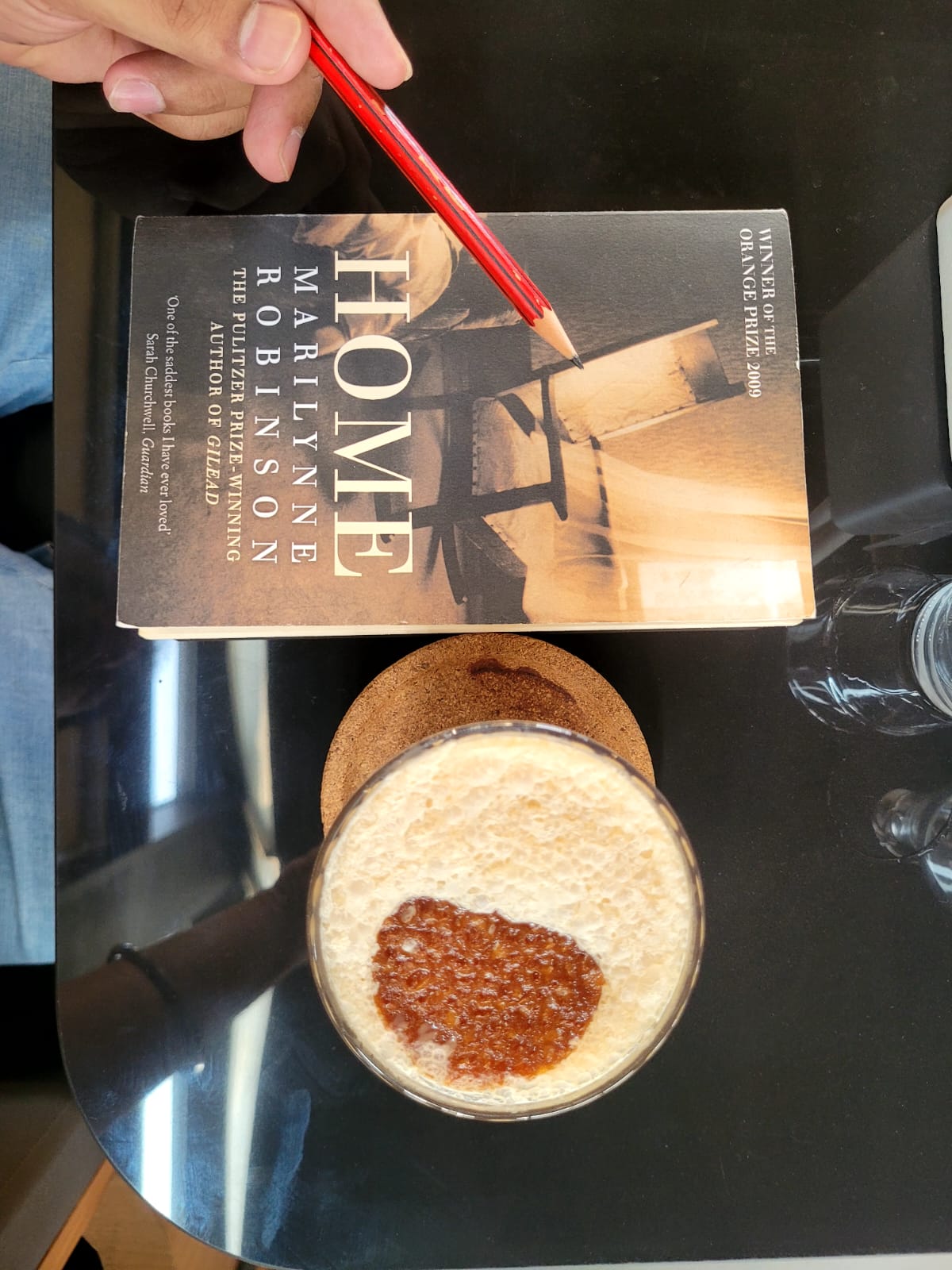
Post Number 88: What if Home is not a Solace?

(An essay on Homecoming in Marilynne Robinson’s novel ‘Home’)

More book reviews on https://www.instagram.com/abookishpursuit/

“Home. What kinder place could there be on earth, and why did it seem to them all like exile?”

It may sound silly to say that Marilynne Robinson’s ‘Home‘, the second novel in the Gilead quartet, is about what makes a home and how people experience homecoming but that is the truth of it. The book isn’t a sequel as much as a companion novel to ‘Gilead’, a prism through which the circumstances of the first novel are refracted. Set in the same timeframe, it switches its focus onto the Boughton household and its three inhabitants – Reverend Boughton, and two of his middle-aged children, Glory and Jack. 

Rev. Boughton, ailing and in his final years, is delighted to have his home graced by the children’s presence, unaware of the disappointments that have propelled them back. Glory is escaping the embarrassment of being financially duped by her fiancé who was also likely married. Jack has returned after 20 years in self-imposed exile as a struggling alcoholic with a chequered past. 

Read More

Post Number 45 : Figuring – Maria Popova

An article reviewing the titular book by the famed blogger and writer, Ms. Popova

“Lives interweave with other lives, and out of the tapestry arise hints at answers to questions that raze to the bone of life: What are the building blocks of character, of contentment, of lasting achievement? How does a person come into self-possession and sovereignty of mind against the tide of convention and unreasoning collectivism? Does genius suffice for happiness, does distinction, does love?”

Read More