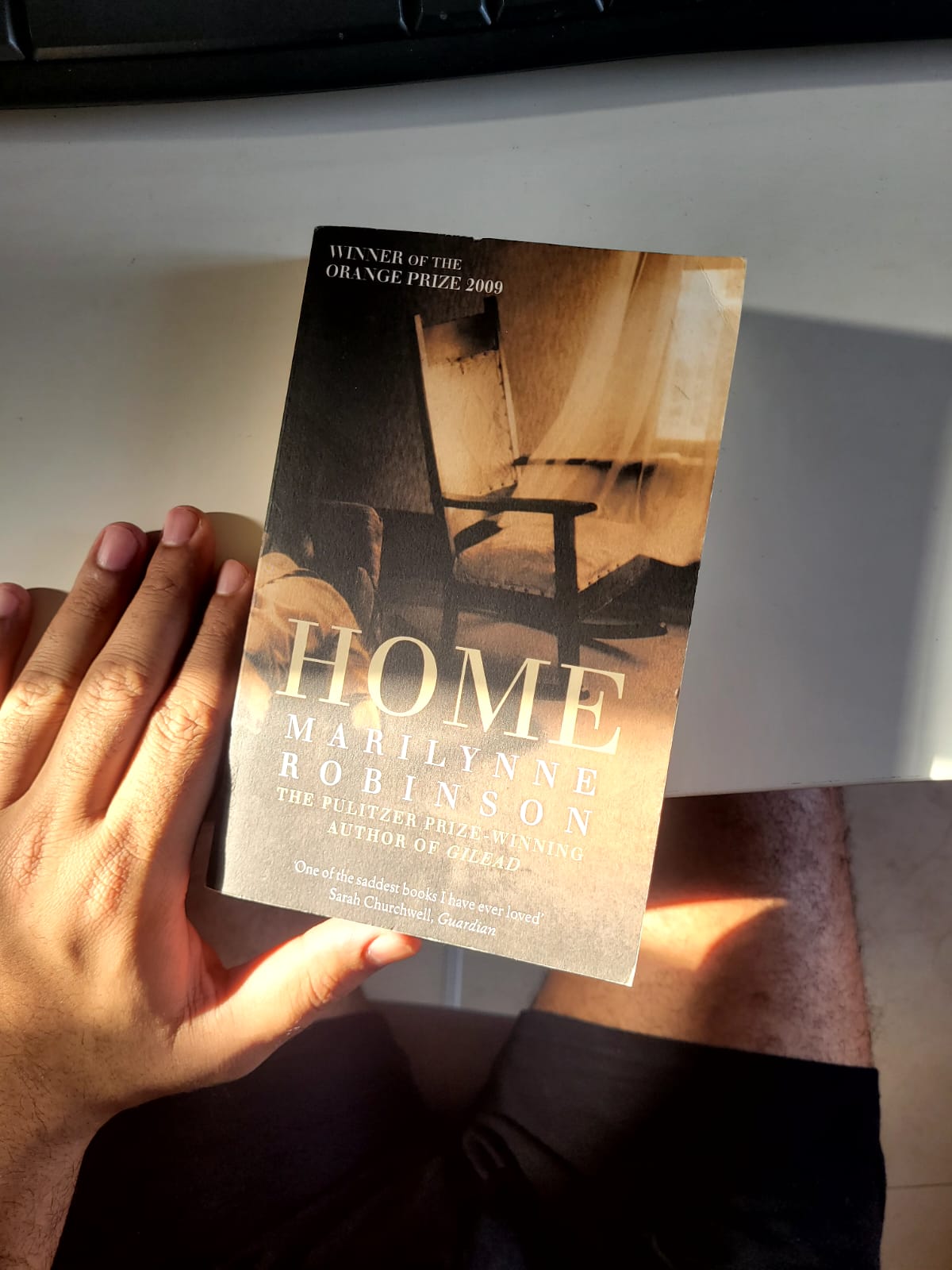
(An essay on Homecoming in Marilynne Robinson’s novel ‘Home’)
More book reviews on https://www.instagram.com/abookishpursuit/
“Home. What kinder place could there be on earth, and why did it seem to them all like exile?”
It may sound silly to say that Marilynne Robinson’s ‘Home‘, the second novel in the Gilead quartet, is about what makes a home and how people experience homecoming but that is the truth of it. The book isn’t a sequel as much as a companion novel to ‘Gilead’, a prism through which the circumstances of the first novel are refracted. Set in the same timeframe, it switches its focus onto the Boughton household and its three inhabitants – Reverend Boughton, and two of his middle-aged children, Glory and Jack.
Rev. Boughton, ailing and in his final years, is delighted to have his home graced by the children’s presence, unaware of the disappointments that have propelled them back. Glory is escaping the embarrassment of being financially duped by her fiancé who was also likely married. Jack has returned after 20 years in self-imposed exile as a struggling alcoholic with a chequered past.
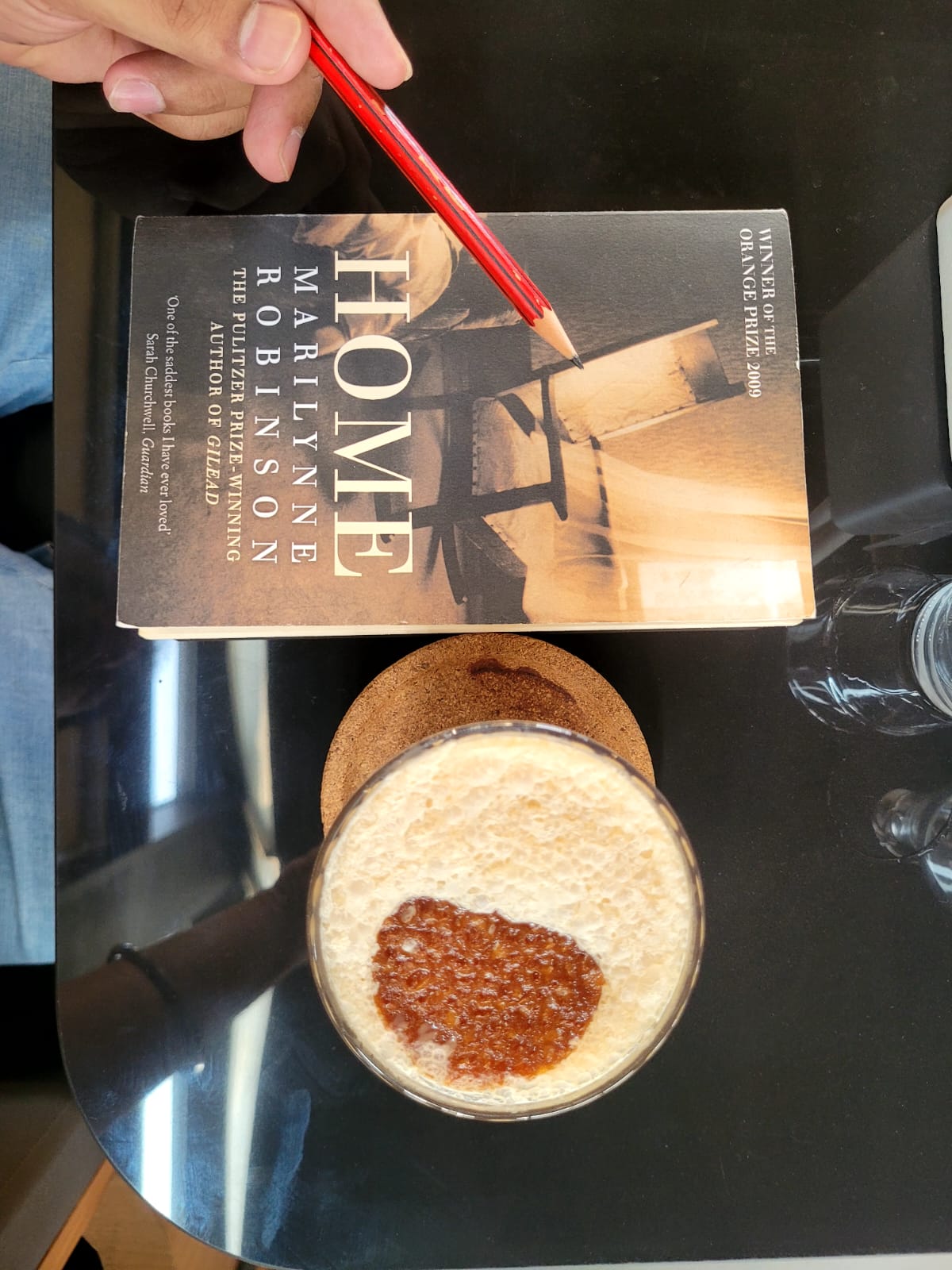
It’s in these circumstances that we find our characters attempting to recreate a miasma of closeness that is more illusion than real. They are tentative and privy to little that goes in the other’s minds and lives. This awkwardness of expressing themselves to their family reminded me of the quote from ‘Forbidden Notebook’ by Alba De Cespedes –
“It seems to me that, although we love each other so much, we protect ourselves from each other like enemies.”
Is home a place where we are seen as the best versions of ourselves, our missteps forgiven, rendered miniscule against the hopes of our loved ones? Or is it where we can’t escape our lesser selves, every wrongdoing magnified, the possibility for salvation erased by the reality of who we are?
‘Home‘ forgoes the idea of a majestic homecoming. Glory is glad to recalibrate her past but can’t shake the feeling that returning, and returning indefinitely, is an abject failure of personhood.
“What an embarrassment that was, being somewhere because there was nowhere else for you to be.”
Jack, having lived a life of petty crime, pathological lying, and wayward adriftness, has returned with the intention to unburden himself of a secret, and to assuage himself of the possibility of spiritual change; to convince himself of the worthiness of transformation against a deep-seated streak of self-destruction.
“There was an aloofness about him more thoroughgoing than modesty or reticence. It was feral, and fragile. It had enforced a particular decorum on them all, even on their mother… He’d smile at them across that distance, and the smile was sad and hard, and it meant estrangement, even when he was with them.”
Jack is the black sheep of the family, notorious since his childhood yet he is the apple of Rev. Boughton’s eyes. What is at the core of this paternal love that swallows and dismisses all of Jack’s antics? What compels him to keep expanding the chasm between who Jack has repeatedly shown himself to be versus who the Rev. wishes Jack to be? While Jack suffers from attention despite his capacity to hurt, Glory is overlooked due to her sense of duty and filial obligation.
“She was good in the fullest and narrowest sense of the word as it applied to female children. And she had blossomed into exactly the sort of adult her childhood predicted.”
Where are the other six siblings? Do they have no responsibility to tend to their ailing father?
With Glory, the question is: at what point does caregiving become a betrayal to oneself? Are you a good person if you want to have aspirations that drive you away from home? I look at the siblings and not the Rev. Who would step up if Glory were to put her needs before her father’s? Perhaps that’s what the siblings know, that her conscience won’t permit her to leave or complain. Better her than us.
Between Glory’s realisation that she is watching her future crumble, Jack’s exile of 20 years, and the conspicuous absence of the siblings (save Teddy), I wonder if we can be who we are meant to be at home? I’m not thinking about oppressive households where circumstances push children to seek freedom elsewhere. I’m talking about stable, loving homes where families get along and children are encouraged. Does one need to leave home and boomerang only after stumbling upon some mythical revelation about oneself or stay away and hover like a satellite, nearby but at a distance? Is solitude the only way to be fully yourself?
What if the sign of the times compels you to leave home to be who you are? That is what Jack comes across when he broaches the subject of racial tensions in the US and headbutts into his father’s outdated notions (the book is set in the years leading up to the Civil Rights movement). No matter the reason, when one leaves home, there is a shadow self that starts to live a different life. That parallel life may not be a secret to your loved ones but what you do in your space, unobserved, calcifies into something between mystery and secrecy, which cannot be fully explained.
I have often felt that there is a tension between being known and being observed. While it feels wonderful to accept others’ knowledge of you as a testament to their affection, it is disconcerting to be constantly seen and heard. It may seem like a ridiculous contradiction. Perhaps the ideal way to be known is under the same roof but separated by walls. In ‘Home‘, even that fails because the sound of Jack’s footsteps alerts Glory and Rev. Boughton. Even sneaking out for a cigarette does not go unnoticed.
What is the recourse to the anxiety of being observed? Naturally, it is to hide or run away. I was reflecting on how easy it used to be to vanish back then without a smartphone in the pocket. Jack leaves for 20 years, and all that the family has to show for it is scattered telegrams, money orders, and unconfirmed whereabouts. Yet the family’s love for their wayward runaway persists. How challenging it is to love someone who is a trained escape artist. There is a Greek myth-esque futility to this – the family, helpless yet determined to love; Jack, deeming himself unworthy but craving that love.
Perhaps these relationships survived because of the gaps between perception and fact that remain unfilled. The family can love Jack because of the fragments they have of him which they can reshape as per their desires. Faced with his reality on a daily basis, they would not be able to deceive themselves. Yet back in those times, beyond the novel too, entire relationships had survived on fleeting scraps of correspondence. It is astonishing to grasp the magnitude of faith required to sustain something as I sit in the day-and-age of ghosting, breadcrumbing, micro-cheating and what not. Maybe exile and estrangement are not as definitive as they used to be though we may feel them more intensely because we can now learn within minutes if the person hiding from us wishes to be known to others.
Marilynne Robinson’s assessment of the ideas that I’ve called out is on the melancholic side. There are unspoken silences between parent and child, between siblings that remain awkward. There is defeat in Jack’s search for his better self. Glory is resigned to a life in Gilead. Yet there are moments that glimmer in between, cracks in the harshness of life when the sun shines, the chicken and dumplings taste divine, a game of checkers lightens the mood, and three people can sit and ponder on the miracle of togetherness that sprouts from a father’s prayer for his children to live good lives, for promises to be kept, and for lost souls to come home when they were missed too much.
“All of them call it home, but they never stay.”
More book reviews on https://www.instagram.com/abookishpursuit/