After the roaring success of her previous singles ‘Swag Wali Topi’ and ‘Daaru Daaru Daaru’ (sigh) ,Dhinchak Pooja has been kind enough to grace all ‘Dhinchakians’ ( a term that she has coined for her followers) with her latest artistic endeavour ‘Selfie Maine Leli Aaj’. The video on her YouTube channel, which has 70,000+ followers, has well over 11 million views. It doesn’t surprise me that the comment section has been disabled. I doubt it has anyone recommending her a good voice coach or lessons on songwriting. Nonetheless, 11 million views is no joke and it makes me wonder about two things – A. What’s so Dhinchak about Pooja? B. Why does everyone love to hate her?

Dhinchak Pooja in one of her videos
To understand the first question, we need to delve into the cult of internet sensations. Within the Indian subcontinent, we’ve seen multiple internet sensations emerge and wither. Of the current lot, the ones that have survived include BB ki Vines, AIB, Shirley Setia, Superwoman, Taher Shah, Balaji Vishwanathan, Nasir Khan Jan and many more. There is an immediately visible disparity in the quality of work they respectively produce in their fields. Yet, they all boast of an insane followership. What’s the reason?
Social Triggers rationalizes the success of viral content by attributing it to high emotional arousal. Any product that can evoke a heightened sense of Awe/Anger/Anxiety/Fear/Lust/Surprise/Joy is already a step ahead of its peer group. A combination of these emotions can only do wonders for the creator. It’s apparent that artists (I use this term very loosely) like Pooja rely on a combination of Anger and Surprise to fetch that elusive popularity that so many desire. And credit where it is due, she got it. In truckloads.
But why is her cringeworthy music something that makes us click on her videos and then forward it to others on our Friend lists? Time for some Neuroscience. Wired.com explains in the appropriately titled article, ’The Science of Bad Music Playlists’, it turns out, the D is to be blamed. Dopamine. Dopamine is triggered everytime you do something immensely pleasurable. This involves listening to music as well. However, dopamine responses are also triggered by an element of uncertainty. This is what viral videos capitalize on. To further add to this, Mic.com elaborates on how pop music in general exploits something akin to a ‘Musical Stockholm syndrome’ via repeated exposure to the tune. Furthermore, they add,
“The context in which you hear a song is often just as important as the qualities of the song itself in communicating meaning, and the more times it’s forced upon us, the more opportunities we have to make positive associations. If someone hears Ariana Grande’s smash hit “Problem” every time they’re out with their friends, they will likely start to associate it with good times and good feelings regardless of the song’s actual lyrics”.
Moving onto the vitriolic hate Pooja has been getting online, try as you may, you cannot blame this on her. For all the nasty comments she has been receiving, the commenters are solely to blame. It is no secret that the internet offers a sense of freedom one doesn’t experience in real life. This ‘Online Disinhibition’ effect not only encourages anonymity, but also fuels an empathy deficit, cyberbullying and deindividuation. No one is accountable for a comment that labels Pooja as a prostitute or mentions her as a promiscuous woman (I’ve mellowed down the actual comments a great deal) and at the same time, there is no reward for a positive, encouraging comment equating her music to the next best thing after Beethoven. There is no regulation! As the psychologists Marco Yzer and Brian Southwell put it, “New communication technologies do not fundamentally alter the theoretical bounds of human interaction; such interaction continues to be governed by basic human tendencies.” So the chances are, that the nasty, vile troll on her YouTube channel is very much a nasty, vile person in life. And he can’t help himself.
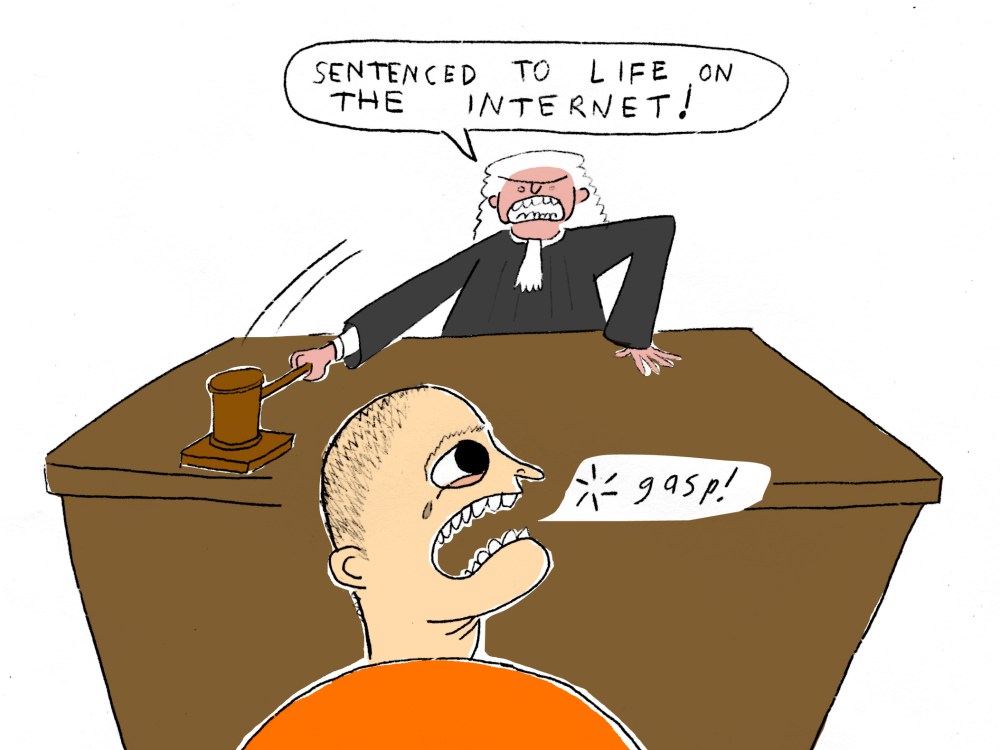
Credits : Pando.com
But that’s just the percentage of people who are angry, bitter and offensive. What about the rest of us? The supposedly emotionally stable, rational and intelligent people? What grudge do we hold against her and her success?(Again, I use success very lightly). As much as we would love to rationalize it by saying that it stems from our (obvious) superiority, in truth, something else is at play. Our righteousness is bolstered because it is easy to admonish the person virtually, and if not the person, then their followers who relish that. Perhaps it’s our own discontent. Discontent at not being able to manage the 15 minutes we all secretly craved. Let’s be honest for a second. How many of us, if given the chance, would actually wish to quote our comment on her video verbatim to Pooja if we get to meet her? Does the idea of saying some of those things make you cringe? Turns out, we aren’t half as self-righteous as we thought we were.
There is no Dhinchak Pooja without the Dhinchakians. It is our collective viewership and discussion about her in the public domain that is keeping her alive in the trends. If history is any indication, she will soon be phased out in favour of someone else garish, tone-deaf and outrageous. But for now, she’s taken more than just a selfie. She has taken the internet by storm. And it would be imprudent to deny her of this.
What do you think? What song/dance sensation do you see taking over the internet next? Who would you personally want to see become an internet sensation? Sound off in the comments below.
 Candid Wallflowers
Very true….
LikeLike
What is your take on her success?
LikeLike
Reblogged this on bps BiTs and commented:
There’s a really popular meme doing the rounds of social media. The beginning of Dhinchak Pooja’s song ‘Dilon Ka Shooter’ will remind you of that meme.
LikeLiked by 1 person
Hello. We are so glad you liked the article and we thank you for reblogging it. We hope you enjoy our other articles as well.
LikeLiked by 1 person