An essay exploring my up-and-down relationship with my mother tongue, Hindi.
Months ago, barely weeks into lockdown, I was having chai with my grandparents in the morning while they regaled me with anecdotes of their childhood. As they took turns describing what life was like in the villages and towns of India on the heels of attaining independence, they peppered their tales with rustic colloquial terms, terms I had never heard before. One was about furniture – a cross between a chaarpai and stool. Another was a technique to separate and chop strands of vermicelli noodles. They had their own tweaks on the words too, spoken differently in their families. They did their best to explain it but I couldn’t visualize it. My mother, the generational bridge between us, wasn’t home. The conversation changed its course like a river charting its own flow and it deposited the silt of those words behind.
The cousins of my grandparents have since either passed on or have no contact with them. The time they talked of has gone. The things they described aren’t here. The words they spoke were so rare that I may not hear them again. Ever.
Where do words go when people stop speaking them?
The words I’ve grown up speaking at home come from three languages – English, Hindi, and Punjabi. Or Punjabi, Hindi, English. Or Hindi, English, Punjabi. The order is beside the point. At times, a thought started in one language streams into another mid-sentence. There is no consensus on replying in the same language. Conversations at home have been a trilingual affair – a yarn of three threads wound so tightly that you’d have to snip one to separate the three.
I find videos on YouTube that build on the richness of a brain fluent in more than one language. I secretly pride myself on the claimed richness the creases and folds my grey matter possesses although I have nothing to show for it except words. But words can fail and pride can stumble.
The other day I couldn’t recall the Hindi word for kidney. I tried to pass it off as a momentary lapse. It was slipping my mind, as the phrase goes. But minutes turned to hours. I started thinking of other organs in Hindi. Repeating them over and over. As though remembering others was enough to excuse this failure. As though I could trick my brain into conjuring what it hadn’t deemed important enough to remember. Like oil that lubricates the rusty chains that hinder the cycle’s motion, I wanted to get my mental gears greased enough to churn up the word. It had indeed slipped my mind. But after slipping, it might as well have fallen off a cliff. Like the Memory Dump in the movie ‘Inside Out’ – the chasm where memories and words and phrases and sentences pass into oblivion.
गुर्दा. That’s kidney in Hindi. I had to call upon Google for help. My pride was shattered in all three languages.
Where do words go when people start forgetting them?
I wish it were a one-off incident that a word in Hindi eluded me. When you stop exercising your muscles, they begin to atrophy. Use it or lose it, as the phrase goes. But it’s not as if I know everything there is to know in English. I slip, slide, and fumble my way through it too. At times, I think of a word like ridiculous and I think and think and think until the spelling stops making sense. My brain has no time for whatever cerebral duel I wish to engage it in.
When my slipping grip begins to concern me, I turn to a book I purchased a few years ago from the Delhi Book Fair. It’s a collection of short stories by Premchand. प्रतिनिधि कहानियाँ. Representative Stories. I turn to them to prove to myself, Look, I can do it. It’s like turning to Shakespeare to validate your English. But I confess to not having read beyond a few pages. The first story is one I had read in my textbook in Class X and I like re-reading it because it reminds me of my class. The book sits on my bookshelf, embarrassingly, the lone Hindi book in a sea of authors from over the world, mocking me. You said you could do it, but did you?
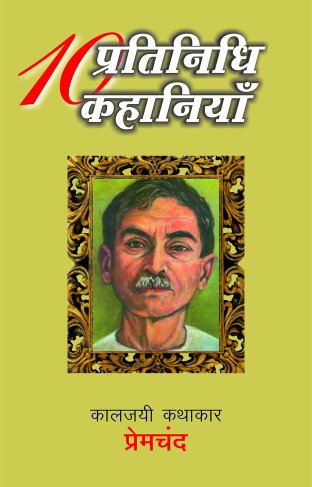
The Albatross on my Bookshelf, as the phrase doesn’t go
I think to myself, I’m just as comfortable articulating in Hindi but on occasions when an app or website switches to Hindi due to some error, I reach for the English button as a reflex. I’ll indulge myself now and then but that’s what it tends to be. An indulgence. A moment given away. Let’s see what this post sounds like in Hindi. Oh, that was fun but it’s enough for today. Hindi pervades my music, movies, conversations, and in moments of frustration, curses. But it hides during my reading, playing second fiddle. Always the bridesmaid, never the bride, as the phrase goes.
Where do words go when people start avoiding them?
When I was in Europe last year, me and my friends spoke a lot in Hindi. More so than I recall doing in the last few months, if not years. It was fun. It was a tether to home. It was conspiratorial. It raised eyebrows. It turned heads. It broke the ice. It froze it further. It was the most rebellious a bunch of law-abiding exchange students could afford to be. Those who believe that language always binds, haven’t been in a land where no one else speaks it.
On a tram in Lille, France, I spotted a woman reading a French translation of Harry Potter. She was at ease with her book, unbothered about challenging the purity of the author’s words in the original language, unperturbed about what may be lost in translation. Why didn’t I ever do it? I grew up watching (some of) the Harry Potter movies in Hindi but even then, among myself and my friends, there was an implicit understanding that this experience was a placeholder until we got access to it in English – ‘the way it is supposed to be’.
Dur-e-Aziz Amna, the author of the award-winning essay, Your Tongue Is Still Yours, writes, “I have the privilege of knowing English and choosing to intermittently reject it, like an on-again off-again lover on speed dial.” Why can’t I?
A lyric in an Annie Lennox song goes, “Language is leaving me”. I feel that now.
My guilt over my Mother Tongue is a wave that drowns and lifts me alternately. Like Holden Caulfield, I must be the Catcher in the Rye and make sure no word falls over the cliff. I have nothing to show for my guilt except words. I have nothing to show of my resolution to erase that guilt but words. They have traced their way from the recesses of my mind onto this prose. What do I hope to achieve with them? It’ll suffice that they are read by you. If not…
Where do words go when people stop reading them?
Dur E Aziz Amna’s essay – Your Tongue Is Still Yours : https://www.ft.com/content/98229c40-079d-11ea-9afa-d9e2401fa7ca


The Best thing I read recently ❤ and believe me I have been reading quite a lot these days!
LikeLiked by 1 person
Wow, thank you so much. Really appreciate it. Please feel free to share it ahead, if you think others will also like it.
LikeLike
बहुत अच्छे!
My fav. Lines
1. Conversations at home have been a trilingual affair – a yarn of three threads wound so tightly that you’d have to snip one to separate the three.
2. It’s like turning to Shakespeare to validate your English.
LikeLike
धन्यवाद!
I’m glad you enjoyed it. Please do share it ahead with your friends too.
LikeLike
I loved it Chaitanya!!
As if you have written what i have been experiencing!
An uncomplicated yet intriguing read.
LikeLiked by 1 person
Thank you so much ma’am! Thank you for the kind words.
LikeLike
That made me nostalgic…of a dialect that i have heard my father conversing in with his sisters…to us kids it was like a secret language between the siblings….its lost now because we never learnt it..
LikeLiked by 1 person
Wow! That’s exactly what it feels like – a secret lost because I didn’t know how to speak it. Thank you for reading it! 🙂
LikeLike
I can sooo relate to this post! Dude, I struggle with Hindi a lot and even with the simplest of simple words, like chaarpai..I didn’t even know what it is and it just gets difficult and embarrassing by time when I’ve to actually visit any of my friend’s houses as all they speak in their homes with their families is Hindi..
LikeLiked by 1 person
Hi Shaunak, thank you for reading! I can empathize with you. Did you grow up with Hindi around you? For me, the guilt comes from the fact that I always had access to Hindi around me but I still don’t have that comfort level in terms of reading it.
LikeLiked by 1 person
Yes, everyone in school and college and now in office to are vocal in Hindi, but yet I too somehow don’t have that comfort level in reading, forget reading I barely speak Hindi..like I get too cautious if I’m asked to say a few lines
LikeLiked by 1 person
It should also be noted that we have learned Hindi as a manner of “picking it up” while growing…..never actually using our active brain learning the nuances and appreciating the beauty of the language.
LikeLiked by 1 person
I’m not sure if I agree with that entirely. I had Hindi until class 10 and by then you are taught the tools of appreciation – how to pick up figures of speech, metaphors, alliteration etc. You even have questions asking you to explain what the writers mean. I feel it’s partly the social acceptability of English based pop culture and lack of mainstream Hindi novels in the 21st century that may be responsible.
LikeLike
I was talking in context of your article, which I believed was written considering the “speaking aspect of Hindi”.
Another analogy “w.r.t the verbal aspect” of the language would be us Indians (in gen) using better grammar than a native westerner….It is because we have used our “active” brains learning the language. English didn’t come as naturally to us as to that someone from the west.
LikeLiked by 1 person
Alright. Yes, I agree with you on that.
LikeLike