[Waking up in Florence]
“It was pleasant to wake up in Florence, to open the eyes upon a bright bare room, with a floor of red tiles which look clean though they are not; with a painted ceiling whereon pink griffins and blue amorini sport in a forest of yellow violins and bassoons. It was pleasant, too, to fling wide the windows, pinching the fingers in unfamiliar fastenings, to lean out into sunshine with beautiful hills and trees and marble churches opposite, and, close below, the Arno, gurgling against the embankment of the road.”
Thus wake up Lucy Honeychurch and Charlotte Bartlett, the characters from E.M Forster’s ‘A room with a view’, in an Italian pension but not without causing a scene at the dinner table that leads them to this serene view. The story, more focused on Lucy, makes the reader see how this excursion to Italy was to forever alter her outlook on life. A couple of weeks away from England, and Lucy returns to find the mores of her social circles stifling. Florence, and by extension Italy now flutters across her mind like a representation of everything that signified independence and romance. Though the story takes a different, a more conventional angle of a romance eventually, this initial section of the novel, ‘Lucy as a tourist’, made me think of the rooms with a view that I had inhabited during my travels.
Although technology has made it possible today to research places that you wish to travel to right down to their location on the street, I still find it satisfying to turn up, fling my luggage, and walk up to a window and stare outside dramatically. That first opening of a hotel or rental apartment is my declaration of having arrived, of risking a transformation, of being lost but not dangerously so in an unknown land.
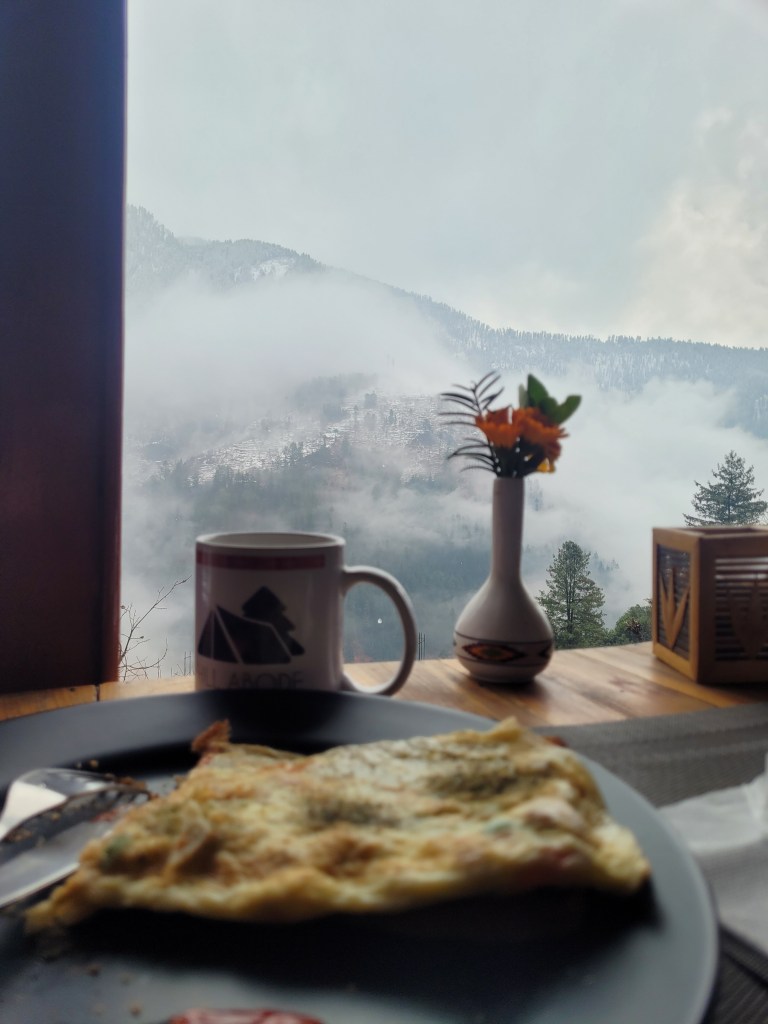
A few months ago, I went for a mountainside staycation with my friends, and their friends. It was the first time that I had decided to travel with people that I didn’t know, and I welcomed the awkwardness of attempting it. I had blindly relied on my friend who had taken the pains to put the entire thing together and I didn’t expect how far from the city we would end up being. The homestay was located in a village of 166 people, as informed to us by the Sarpanch herself. The house, on a flat area of the hill, overlooked the Himalayas which framed them in crisp whites and shiny greens, based on the tug-of-war between the sunlight and snowfall. For hours, the clouds would float through us, leaving just the room and no view. We soon realised that beyond leisurely strolls through the hill upon which we resided, there wasn’t much to do except to speak to each other. And since we were on the hills, the strolls weren’t leisurely but involved a reasonable effort to climb up and down the slippery rocks covered with melted snow causing a few stumbles.
At night, as we played cards and warmed ourselves next to the barely functional heater which had to be shaken now and then for the filament to spark, we regaled each other with stories. Sometime around 1 AM, we saw flicks of white outside the window, and ran to watch fresh snow cover everything in the vicinity. It fell softly and without rush, as though it knew it had nowhere else to be. The next morning, I woke up to blinding white as I pulled the curtains apart. It took my eyes a minute to adjust to the brightness, and stepping out into the snow and clouds, I mused that it was pointless to click it because the gradients that my eyes were observing would be flattened over by my camera. Though I am not someone who is fond of winter and cold, and I barely survive the Delhi winters, I was more than happy to be there and to get to know everyone that I was travelling with.
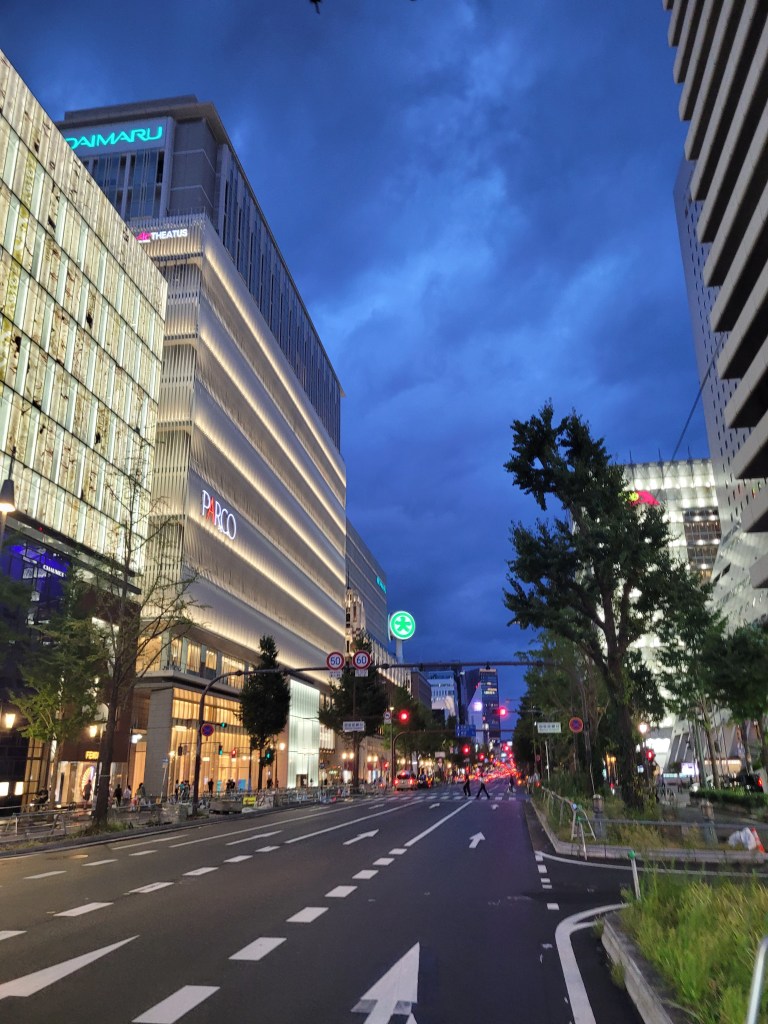
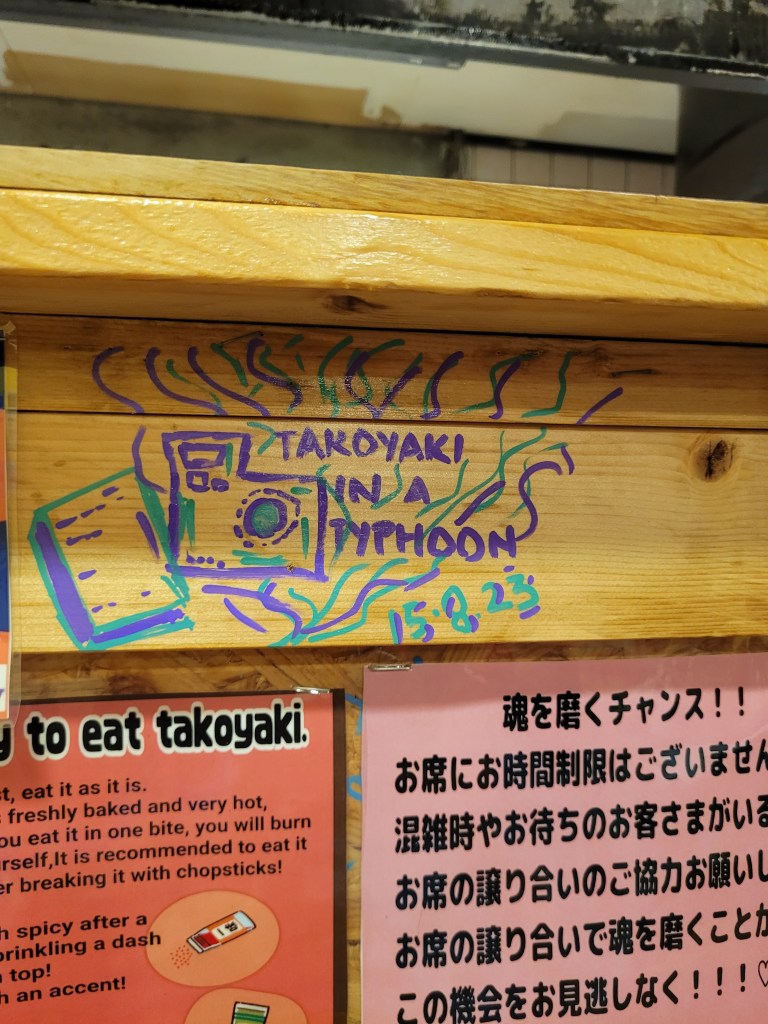
Last year, travelling through Japan, I got stuck in a typhoon. The advisory stated that one should stay indoors until the storm abated. The rental in Osaka which we were using just as a place to sleep and clean ourselves was now going to be our tryst for the day. I hadn’t paid much attention to the balcony before except to dry the clothes next to the AC unit but now I had nothing better to do than to glance outside as rain fell in torrents and a handful of people walked around drenched. I thumbed through Pico Iyer’s ‘The Lady and The Monk’ absent-mindedly, restless from the lack of movement. Nature had humbled us into staying indoors and we did not have much to talk about. Morning turned to noon turned to evening as the rain tried to figure out its rhythm before it petered into a steady trickle around 7 PM and it seemed like life was ready to go on. We stepped out to find that all the malls and eating joints were closed. We walked around trying to find something that was both open and did not require waiting for an hour or so. Eventually, we made our way to a compact, bohemian cafe with a limited menu, where we scribbled on the bench as we ate and debated if this typhoon was going to affect our return (it did). Two days later, we would struggle to find a way out of the town when most trains and flights had stopped running and we would feel Osaka squeezing us between its vise grip. But that evening, hopeful and ignorant, we stepped out in pouring rain, squishing our feet hurriedly against the road as our umbrellas shielded us.
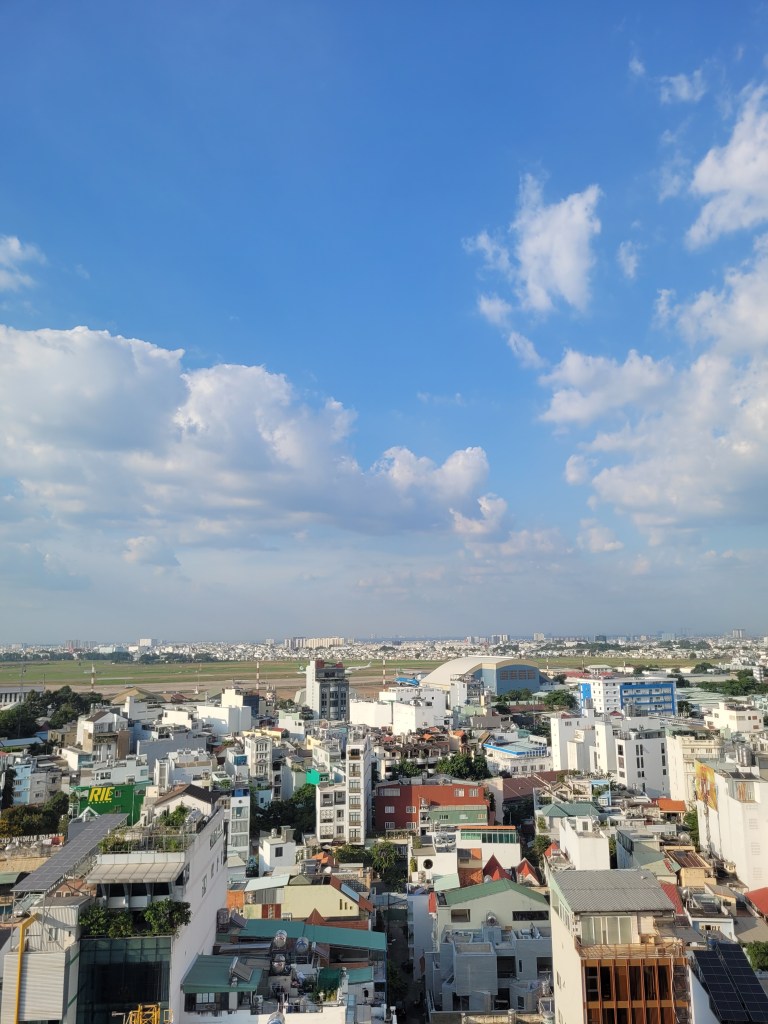
The year before that, I had, in a moment of felicitous fluke, booked an apartment in Ho Chi Minh city that was mere minutes away from the airport and offered us an unobstructed view of the landing strip. Though we stayed indoors for a limited time, we were treated to a snapshot of hundreds of people flying in and out, living out their stories in front of our eyes. I was coming down with a flu that was to cause me trouble later but during those days, I was pushing through, fearing that once I was back, I would regret not squeezing the most out of it. I am someone who loves to overestimate myself when I travel; I would much rather plan for 10 spots and cover 6 than to cover everything I intended to and have idle time on my hands. I prefer planned idleness rather than one that has been forced upon me. This habit has tamed itself over time, and I can recall when I realised that I had to stop stretching myself while travelling.
[Mr. Eager chides the Anglo-Saxton tourist]
“‘Oh, indeed’, said Mr. Eager. ‘If you will not think me rude, we residents sometimes pity you poor tourists not a little – handed about like a parcel of goods from Venice to Florence, from Florence to Rome, living herded together in pensions or hotels, quite unconscious of anything that is outside Baedeker, their anxiety to get “done” or “through” and go on somewhere else. The result is, they mix up towns, rivers, palaces in one inextricable whirl.”
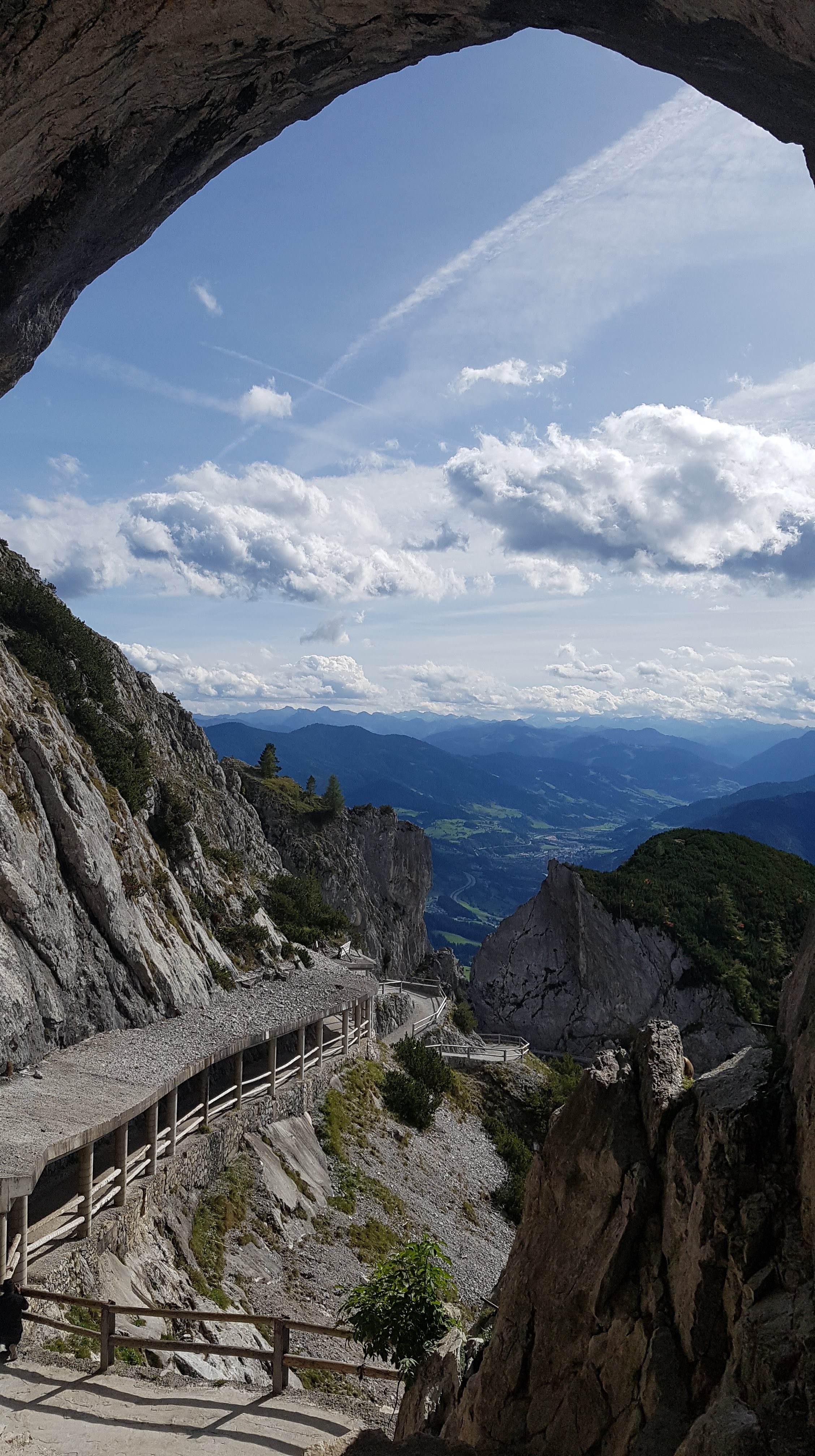
When I had the fortune but not the budget to travel through Europe as an exchange student, six of us were sharing accommodations. The close quarters made for both intimacy and friction. Enthused by a strange competitiveness to cover as much ground and as cheaply as possible, we tested the limits of our youthfulness, and mine cracked first. The relentless schedule of classes and travel, and the lack of ability to sleep in vehicles left me surly and exhausted. I knew things had to change when I was in Switzerland one evening, struggling to find a hostel, and in contrast to my friend who was relishing the aimlessness of the evening, which I ought to have done in hindsight, I could sense my body aching to collapse onto a mattress and be lost in the oblivion of sleep. Such was my fatigue that over the next 48 hours, I was sleeping for at least 30 of them including on trains, much to my own surprise. We had hiked up to the stunning Werfen caves in Austria, and I do not know which superlative captures the expanse of the view that my eyes were privy to. While returning, I was ravenous and felt I could sleep sitting down. Were it not for my journal, there are many moments from that experience that would have been lost to my mind because of the sheer exhaustion.
Eventually, I observed the situation with detachment. I could not see why we were rushing through towns and cities, why we couldn’t lounge and laze. I started to make an effort to rest and feel okay with missing out on things for the sake of my health. One afternoon in Rome, I decided to spend the day walking alone by the Tiber, pausing at a square to observe people. I walked my way to the Colosseum where I was stopped for a “random check” by the police; I was alone, brown, stubbled, and lost in thought; I do not know which was the worst offence.
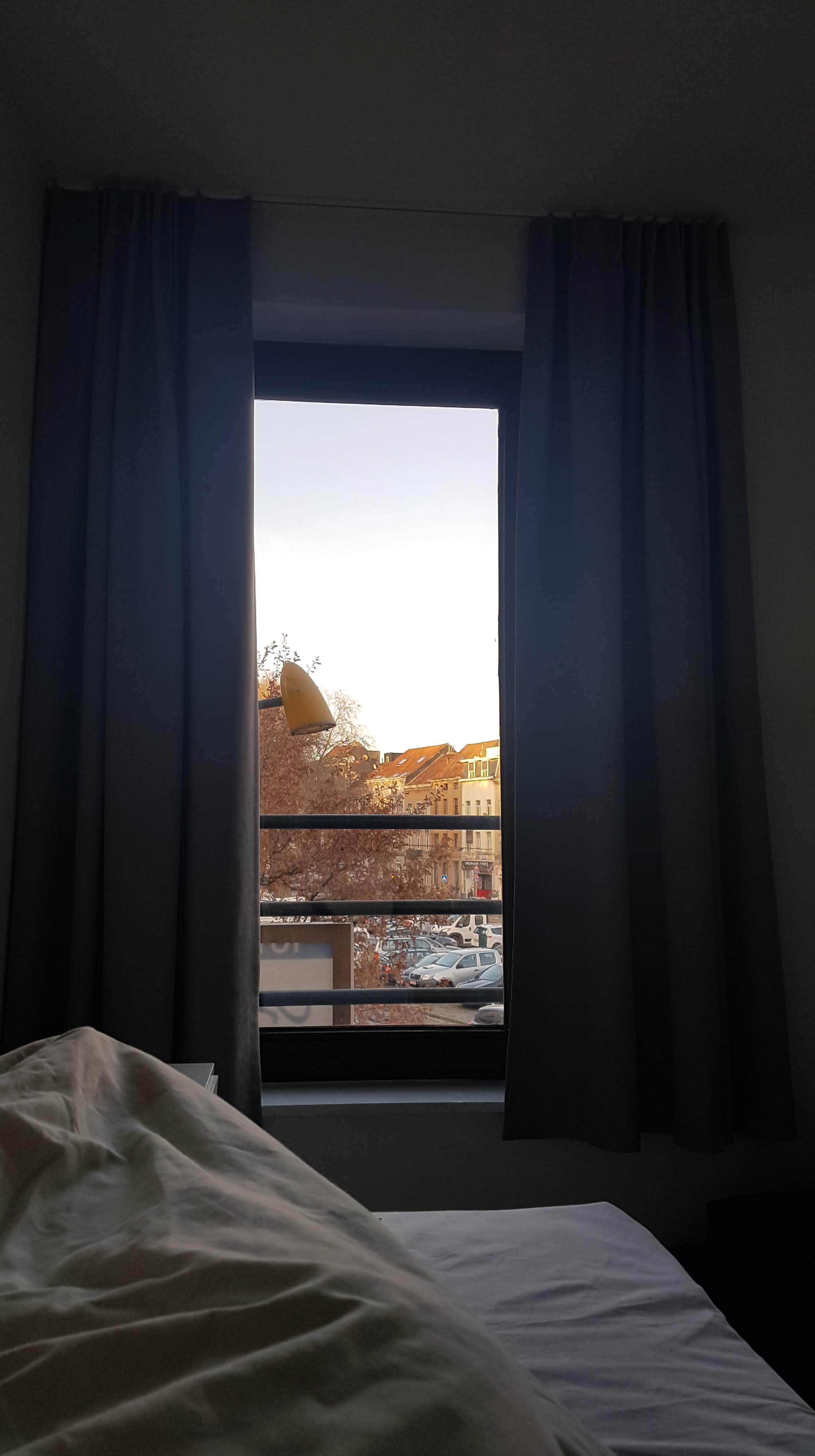
My last week in Europe, I booked myself a studio in Brussels to replenish myself and to experience solitude that I had been deprived of. Three sets of French windows looked out onto a road where a stream of hubbub prevailed. My last day, which I had planned to spend strolling and shopping for souvenirs, it rained and I took it as a cosmic clue to rest. I recall ordering pizza and settling down to watch Sex Education with sunlight showering the tiny space and the rain pattering throughout the day. I spent the night reading my journal and reliving the last few months, nudging myself to absorb all that had happened.
I returned from that trip with a honed sense of my outlook on travel. I knew that quantity was not going to be my thing, that I would rather meander through a town and stop where it pleased me than run from A to B to C. That where I was going to sleep had to offer more than a bed at a reasonable price, and that it was better to time my travel so that I could sleep well. That I needed people around me that would not disagree on basic comforts nor find it a tenet of travel to purposefully inconvenience oneself. And that I shall document everything in words and pictures, even the squabbles.
[The Miss Alans ask for recommendations for their upcoming trip]
“‘A really comfortable pension at Constantinople!’ So they call it out of decency, but in their hearts they want a pension with magic windows opening on the foam of perilous seas in fairylands forlorn! No ordinary view will content the Miss Alans. They want the pension Keats.”
What makes for an ideal room to live in when you travel? Comfort, certainly. A view, to borrow from the title of the novel. Perhaps someone at your beck and call, if you are a person of luxury. Thereafter, things get hard to explain. I desire to stay somewhere that makes it apparent to me that I am not home but there is no term for this. I wish to be in the heart of the city but not inconvenienced by the noise; to be close to all that I wish to see but not so close that it removes the possibility of chance explorations; to be around the locals but not desperate for assimilation. I want both proximity and a vantage point; I want to be the guest that does not intrude.
I have observed that while travelling, a direct resemblance of any element to my hometown evokes unconveyed disappointment. Like the Miss Alans, I desire magic windows in forlorn fairylands. I want to eat new things and have my eyes tired out from observing new things. I do not spring for familiar food; I wish for new spices and flavours to the extent that my palette allows me. My homesickness takes far longer to surface. However, when the typhoon of Osaka forced us to reschedule flights and extend our stay, my friend and I dashed to the Indian restaurant down the street that played Bollywood music, and I sipped on chai while dealing with a helpful Air India agent who spoke in Hindi all through our 40 minute conversation. Just two days ago, I had frowned at the possibility of having a meal there but I found myself understanding the comfort aspect of comfort food when I was stuck. There was an element of poetic irony in being surrounded by all the things that evoked home as I sat and requested to reach back as early as nature would allow. And as far as the new accommodation that we had to arrange, we were only concerned with the possibility of a room. The view had been forgotten.
[George Emerson returns to Italy]
“He strolled to the window, opened it, and leant out. There was the parapet, there the river, there to the left the beginnings of the hills. The cab-driver, who at once saluted him with the hiss of a serpent, might be that very Phaethon who had set this happiness in motion twelve months ago.”
On days when Google reminds me of previous trips, particularly when I am working and it feels like that office life is some Sisyphean ordeal that has no beginning and no end; the weeks ahead seem so far away yet the weeks behind surprise me with how far along we are in the year, I wish to be back to many of those places that I have already seen. I like the idea of returning to see what has changed and by how much. My family would often take such vacations where they would frequent the same stays with the same caretaker and recreate the previous year, and the year before, and the year before. I have revisited places but never with such a dedicated commitment to repeat myself. Even with my uncle’s place which I frequent as a break from my life, I always sneak in something new. At the very least, they ensure that I eat something new. It creates an illusion of novelty when there is none. It’s enough to quell my curiosity.
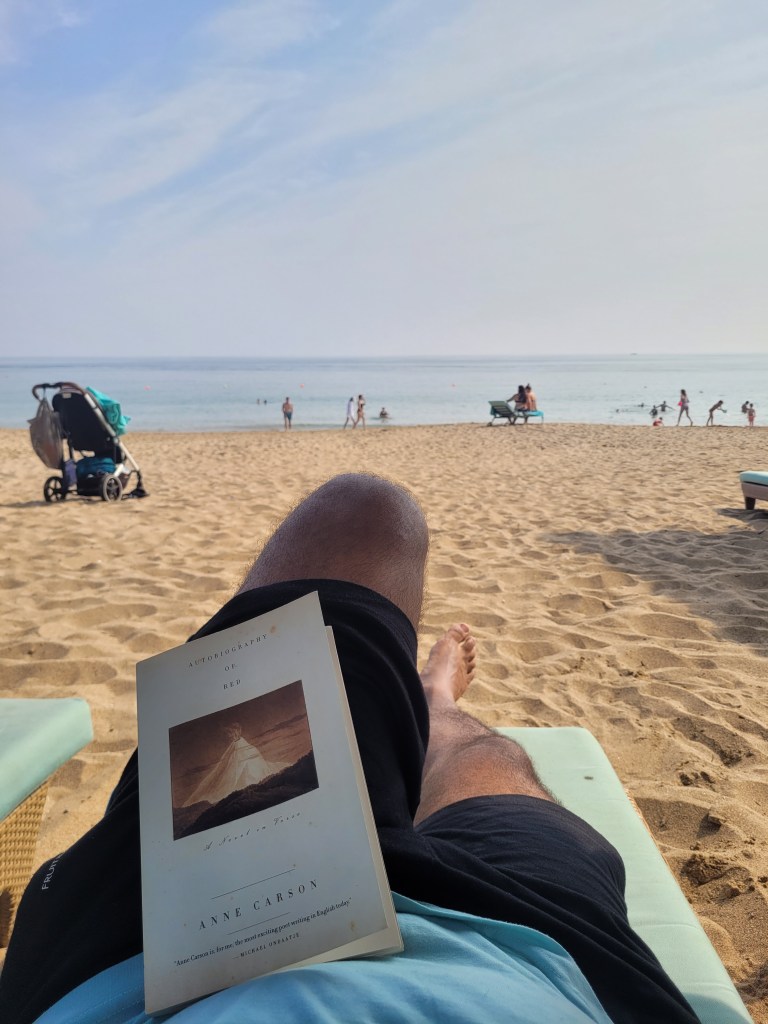
When I reflect on my travels, I am not tempted to recreate them verbatim; I wish to revisit and explore at leisure. A going back conjures visions of walks and strolls and ambles, lazy mornings and pleasant company; I do not see merit in rushing myself. I know that slowness in travel is not a unique concept, and I’m certainly not someone who has stumbled upon it with an enlightened air. Some months ago, I visited a resort that I had previously been to in 2017. I did recreate an afternoon there, lounging by the sea and reading Anne Carson’s ‘Autobiography of Red’. But there was an unmissable difference, the absence of my grandmother.
[A description of Lucy Honeychurch’s English home]
“The drawing-room curtains at Windy Corner had been pulled to meet, for the carpet was new and deserved protection from the August sun. They were heavy curtains, reaching almost to the ground, and the light that filtered through them was subdued and varied. A poet – none was present – might have quoted, ‘Life like a dome of many-coloured glass’.”
Up until recently, the room that I lived in at home was on the ground floor of a building where the only window looked out onto the staircase. There was no view to speak of. I ended up using the sill as a shelf because I ran out of space to keep my books. Consequently, I developed a stronger love for rooms with views, particularly when I was travelling. My first time living away from home for a prolonged period of time happened when I moved outside Delhi for my post-graduation, and found myself in another ground floor room, that of my hostel. The difference, however, was that this faced out to a campus road with the cricket stadium in front, and the west-facing window with almond shaped metal grates pitched sunlit reflections on my almirah until sunset. My second year of the degree, I moved to the second floor in a different area that overlooked the main eating hub of the campus, and the entire year I could hear murmurs of people walking and talking. Regrettably, it had taken me 24 years of life to realise that rooms with views ought not to be a luxury one only relishes during travel.
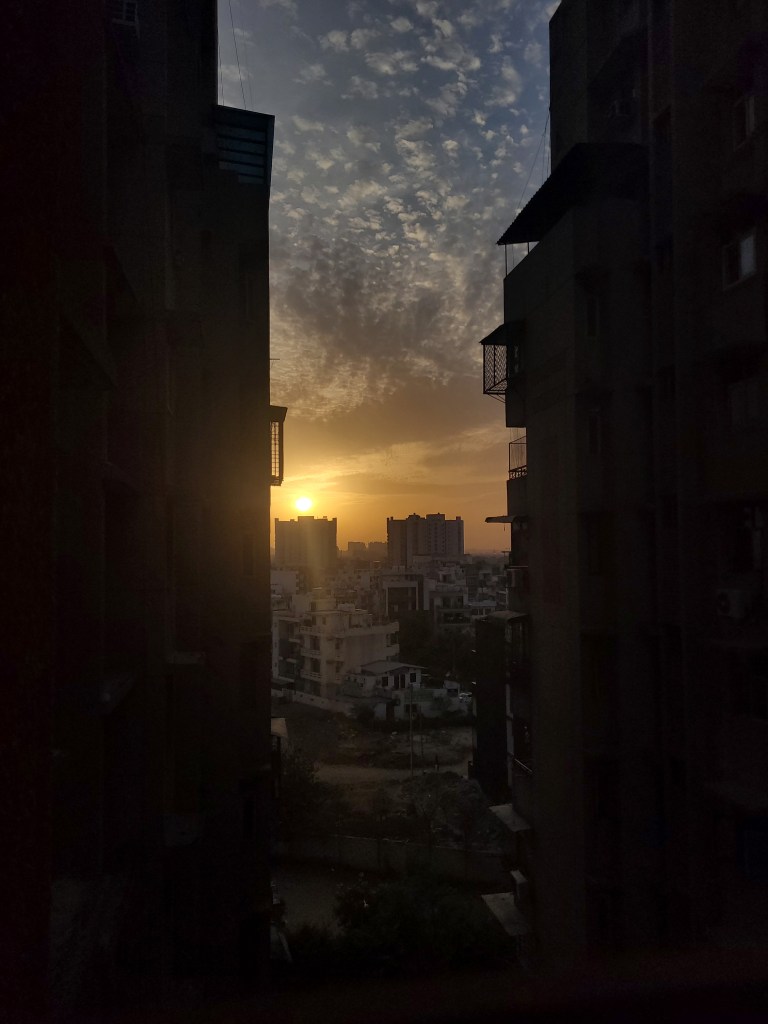
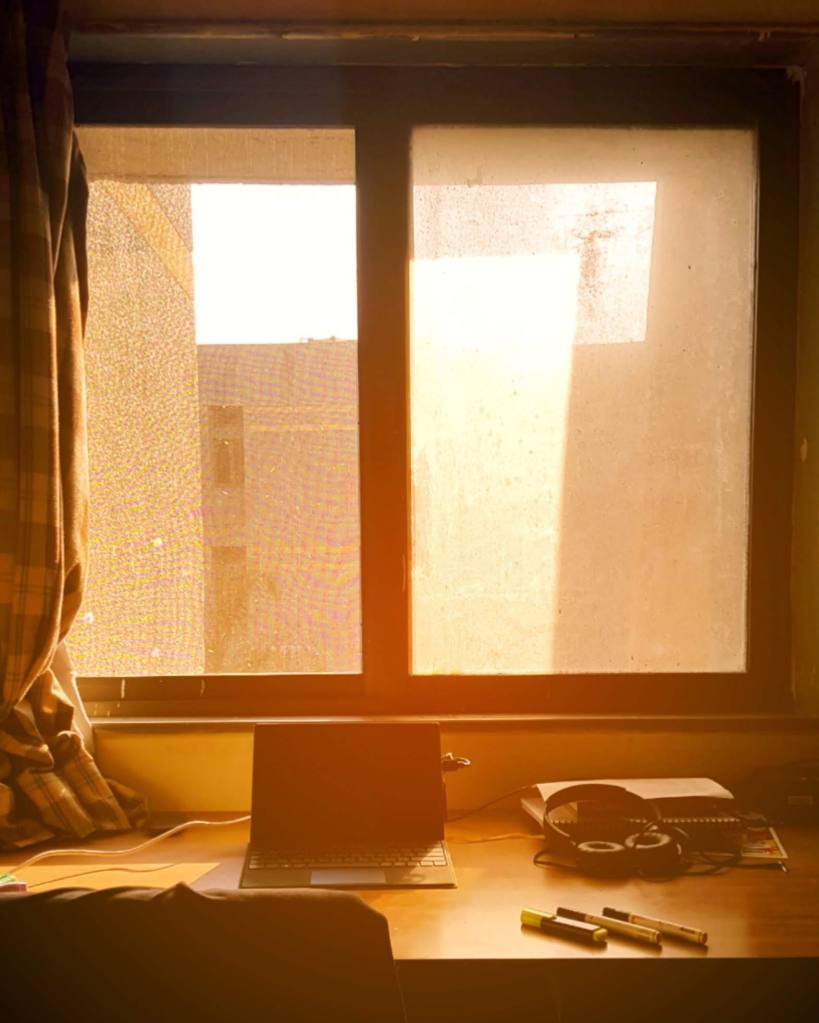
When circumstances made me shift houses, something that I reflected upon here, I shamelessly sprung for the room with the balcony, and asked for clear windows that allowed the maximum possible sunlight to saunter in. I built a routine out of waking up to sharp sunlight resting against my almirah yet again; noticing that this yellow-orange coloured ray was enough to put me in a good mood. I spent many evenings on the balcony, straining my neck to look behind the building where I had a view of the sun slipping into the horizon.
My grandmother, who is no longer here physically, loved to sit by the window side, admiring life beyond her periphery. One of her favourite things to do at my uncle’s home was to sit on a chair in the balcony and keep track of the planes that announced themselves in the sky. She would use the Hindi word “रौनक” which translates to brightness/brilliance, to describe the joy she experienced by this watching of others. As a child, it was beyond my comprehension. That one adores the windowside landscape in trains, flights, and even on the road, made sense for we kept moving ahead and others went back. But this flipped perspective settled in later, once the years had seeped in and I knew how soothing a room with a view could be.
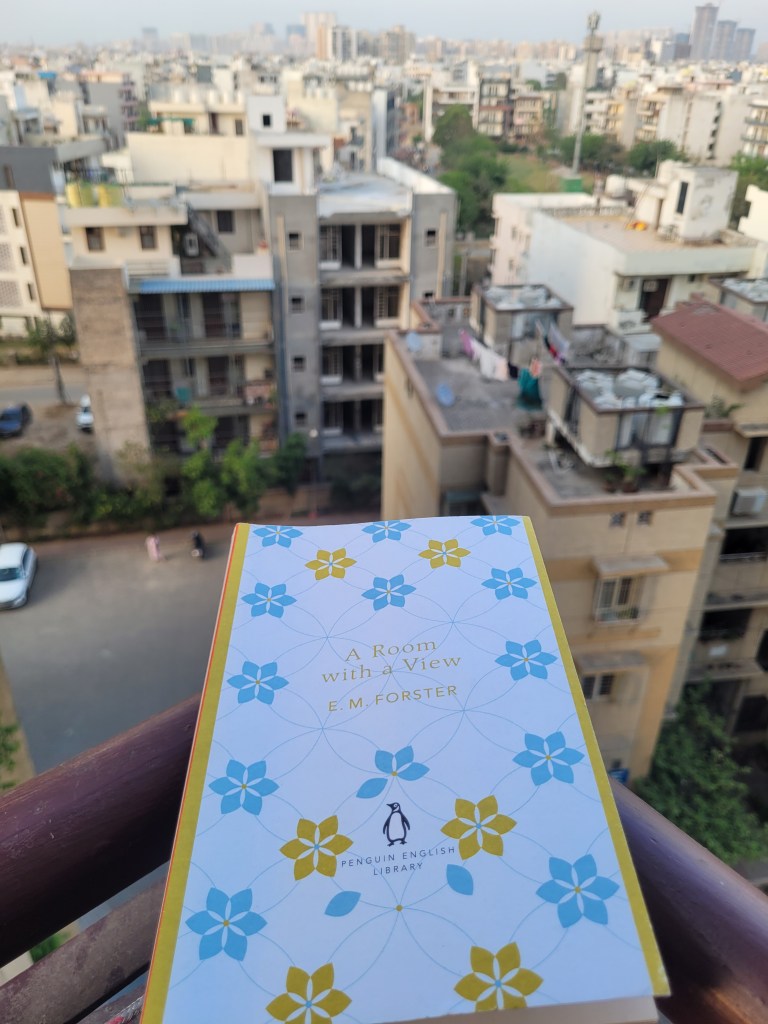
I can picture the entire thing sitting from the desk where I write this; She walks into my present room, steps out on the balcony, sits at an angle that allows her the best view, props up her feet that would get swollen from prolonged standing, and watch outside, momentarily speaking to ask what some of the taller buildings are. I know she would have delighted in the view from my room. And I would have been delighted with an image of that view.


I was waiting for a new article….and now i am going around the world with your article!
LikeLiked by 1 person
I hope you enjoy reading it, Aunty. Hope you are doing well ❤️
LikeLike
I am in awe of your writing! I love the way you paint a picture with your words and a few select word choices. I am bookmarking this because I didn’t get time to finish reading the full article. I eagerly look forward to more 🙂
LikeLiked by 1 person
Thank you so much for reading the essay. I’m so glad that you enjoyed it. I look forward to your feedback once you finish it. 😁
LikeLike
Loved it. Write more Chaitanya! 🙂
LikeLiked by 1 person
Thank you for reading, Pulkit! Means a lot 😁
LikeLike
Always a pleasure to read your articles! More love to you 🙂
LikeLiked by 1 person
Thank you for reading, bhai! Love to you too ❤
LikeLike