A fortnight ago, there was an uproar on Facebook. A website called The Quint had uploaded a video with its team member criticising the viral video ‘Bol Na Aunty Aau Kya’ by (rapper?)OmPrakash. The video by The Quint, was particularly critical of the lyrical content, citing phrases from the song and linking it to sexual harassment, rape threats and sexism and demanded its removal from YouTube. To say that it polarized viewers, would be an understatement. The woman who made the video received a harrowing amount of death and rape threats along with harassment online. The comment section of the video was rife with people divided into three noticeable factions – the ‘pseudo-intellectual libtards and feminists’, ‘misogynistic, patriarchal trolls’ and a bunch of people tagging others to spectate the argumentation. What was clearly a battle of opinions, soon devolved into a battle of ideologies.
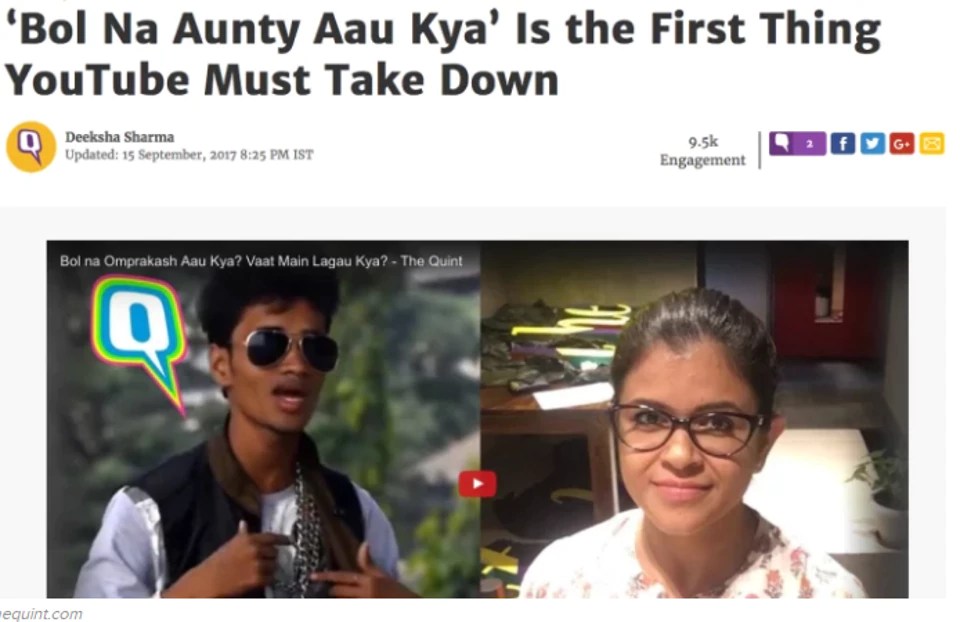
The original article that was uploaded by The Quint. It has since been taken down on account of excessive abuse that the website and the journalist has received.
The Internet was up in arms about ‘misguided’ youth promoting ‘vulgarity’ amongst other things, while fans(?) of the song defended their right to enjoy it. It didn’t make sense to label a critic of the song pseudo-intellectual, neither did it make sense to label its supporters misogynists. This random labelling of people under specific ideologies made me wonder. In today’s time, can an opinion be devoid of political or cultural associations? Can you criticize something without serving a hidden agenda? Can an opinion be….just an opinion?
The tendency to label people based on an action, a brand or an endorsement has really taken up with the boom of social media. There’s been a stark rise in butting of heads and of people being (dare I use that word)’intolerant’ of an opposing view. We may want to deny it but the truth is, it is convenient for us to look at teenagers snapchatting their food and go ‘Ugh! Pretentious millennials’, or to read a comment about a person complimenting the Indian government and call him a ‘Bhakt’. So, can you get a McDonald’s burger or a Starbucks coffee without subscribing to big corporations’ capitalist ideology? Can you listen to Eminem’s raps without being a ‘woman-hater’? Can this reductionist approach of sorting people as walking labels allow you to separate your opinion from your beliefs?
Technically, yes. I’ve resisted the temptation to give technical definitions in my articles so far, but here I shall make an exception. An ideology is “the body of doctrine, myth, belief etc. that guides an individual, social movement, institution, class or large group.” An opinion is “a view or judgement formed about something, not necessarily based on fact or knowledge.” The difference suggests that you may have an opinion without subscribing to its relevant ideology. What is our collective hang up then? An article at Huffington Post suggests that it is far easier to criticize an entity that you reduce to a set of labels, rather than a walking, breathing human being. Dennis says,
“As human beings with prejudices and insecurities (conscious or unconscious), we may be made uncomfortable by one or another of (their) life choices. We may even find them a sign that civilization is crumbling, or that every diverse or otherwise unconventional choice is an assault “

Our inbuilt tendency to immediately label people based on societal conventions. Image Credits : VCE Sociology
There is an inbuilt narrative that we humans create of “Us vs. Them”. And as people pass by, offering their correct/incorrect, informed/uninformed, logical/idiotic views, we simply offer ready-made societal labels and categorize them mentally as allies and enemies for our perusal. And once you’ve built an impression of a person, it becomes surprisingly challenging to disprove it. This is a famous cognitive bias called the Halo effect.
Now, with the understanding of the difference between a person’s ideology and opinion, should one engage in heated online debates? An insightful article called ‘Don’t fight flames with flames’ suggests that it is not worth the headache. Nick Bilton, the author, highlights some pertinent points. He says that an online argument isn’t simply a clash of opinions. It’s a public show. People aren’t debating; they are playing to the crowd. Every single word that is typed is done so under the gaze of thousands of friends and followers. Eventually, the argument breaks down into rude witticisms and stingy barbs and loses all meaning. If you wish to take the high road and leave a trite, ‘Yes, you’re right’, chances are, it’d be mistaken for sarcasm. If you still wish to entertain the opposing viewpoint and continue the discussion on a personal forum, you would miss an essential ingredient in dealing with human conflict: empathy. And try as you may, no DMs or emails can bring empathy to a crisply worded response.
For those of you who still wish to plunge keyboard first into comments sections, I wish I had good advice to offer. I went through multiple articles about debating etiquette and how to argue online. Unfortunately, I couldn’t find any cheatsheet for online argumentation. The moment you stop typing furiously and detach yourself from the situation, you would realize that not only is it laboriously challenging to fight with a stranger online, but also, in most cases, pointless. You would accrue some likes. Your opponent would get his share. Eventually you’d both tire out. Invariably, you’d find comfort in finding your tribe of supporters online, and in their likes and upvotes, you’d feel accomplished. That’s not what you sought out to achieve though. It’s a false triumph.
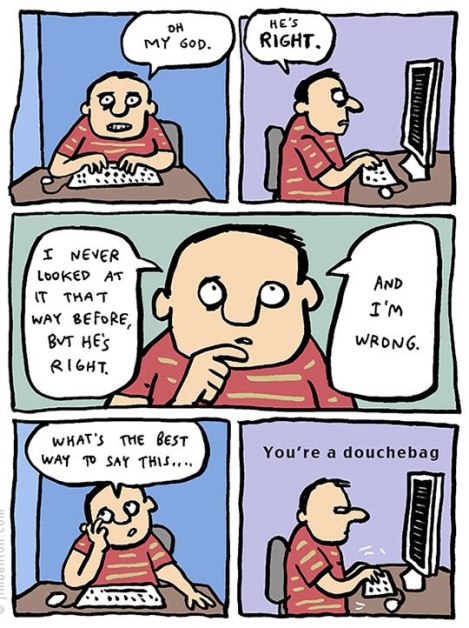
Image Credits : StillCracking.com
Coming back to The Quint debacle, I feel that both sides overreacted. While the journalist had the right to be offended, demanding that YouTube take the video down because she interpreted some lyrics as indecent was quite immature. There is no dearth of good, bad and ugly content on the Internet. There are far worse things to be offended by. In my opinion, it was a misjudged attempt at piggybacking on a trend’s popularity. However, for her to be called a myriad of choice words was outright wrong and shameful. Nobody cared enough to actually put forth an intelligent argument countering her viewpoint. The second the first insult was typed, it just went downhill from there. It was a standard bully’s response- being loud and brash until the other person caved.
I feel I have given enough fodder to people to engage me in a war of words. And part of me looks forward to the discussion. The tricky thing about opinions is not being right or wrong. It’s about expressing them, with the knowledge that you may not find any support. Do you stick to your guns or should you cave? Or should you avoid dipping in the waters altogether and not share what you think? I can’t decide that for you, though I’m sure I’ll have an opinion on the same, uninformed or knowledge-less as it may be. But for now, I’ll join Nick Bilton’s bandwagon and not offer publicly what’s brewing inside my mind. Not unless you ask me to.


Good article! I agree with what you say. It’s wonderful to have opinions. It’s even better if one has the courage and ability to articulate them to others. But without knowing when or how to practice restraint in expressing these opinions, especially keeping in mind the growing ‘intolerance’ these days, one ends up being little more than the target of hateful fellow internet users before either giving up or joining the bandwagon against the next target.
LikeLiked by 1 person
“Libtards and feminists”…
You forgot sickular 😉
Excellent article!
LikeLiked by 2 people
Hahahahaha, thank you.
LikeLike