“I mean, Jesus Christ, I’m burning up inside! Don’t you know? I want to get out! This is all f****d up inside! I can’t stand another night! I just can’t take it anymore!”
-Prisoner 8612, Stanford Prison Experiment [1]
It was the experiment that became a phenomenon in itself. It sparked off movies, a Netflix documentary, became a fixture in every college Psychology course, made its way into bestsellers like Malcolm Gladwell’s ‘The Tipping Point’,and made its creator, Philip Zimbardo, a legend in the psychology community. But after enjoying nearly five decades of notoriety, researchers have dug into archives and it’s not looking good for Zimbardo and his credibility.
For those who don’t know about the Stanford Prison Experiment, here’s the SparkNotes version – In August 1971, Philip Zimbardo staged an experiment in Stanford’s Psychology Lab basement. They got 18 volunteers to simulate the working of a prison. The volunteers, all men, were split into 2 groups (9 guards, 9 prisoners). Zimbardo acted as the warden. The experiment was to go on for 14 days. It ended in 6. When Zimbardo called it off, there had been mental breakdowns of the prisoners, some showed signs of acute depression and anxiety, the guards had resorted to sadistic tactics to dehumanize the prisoners and they abused their powers. Zimbardo’s conclusion? We’re all capable of heinous acts and what happened was a ‘natural’ consequence of being in a ‘guard’s’ uniform. When the results were published, he became an overnight academic star.
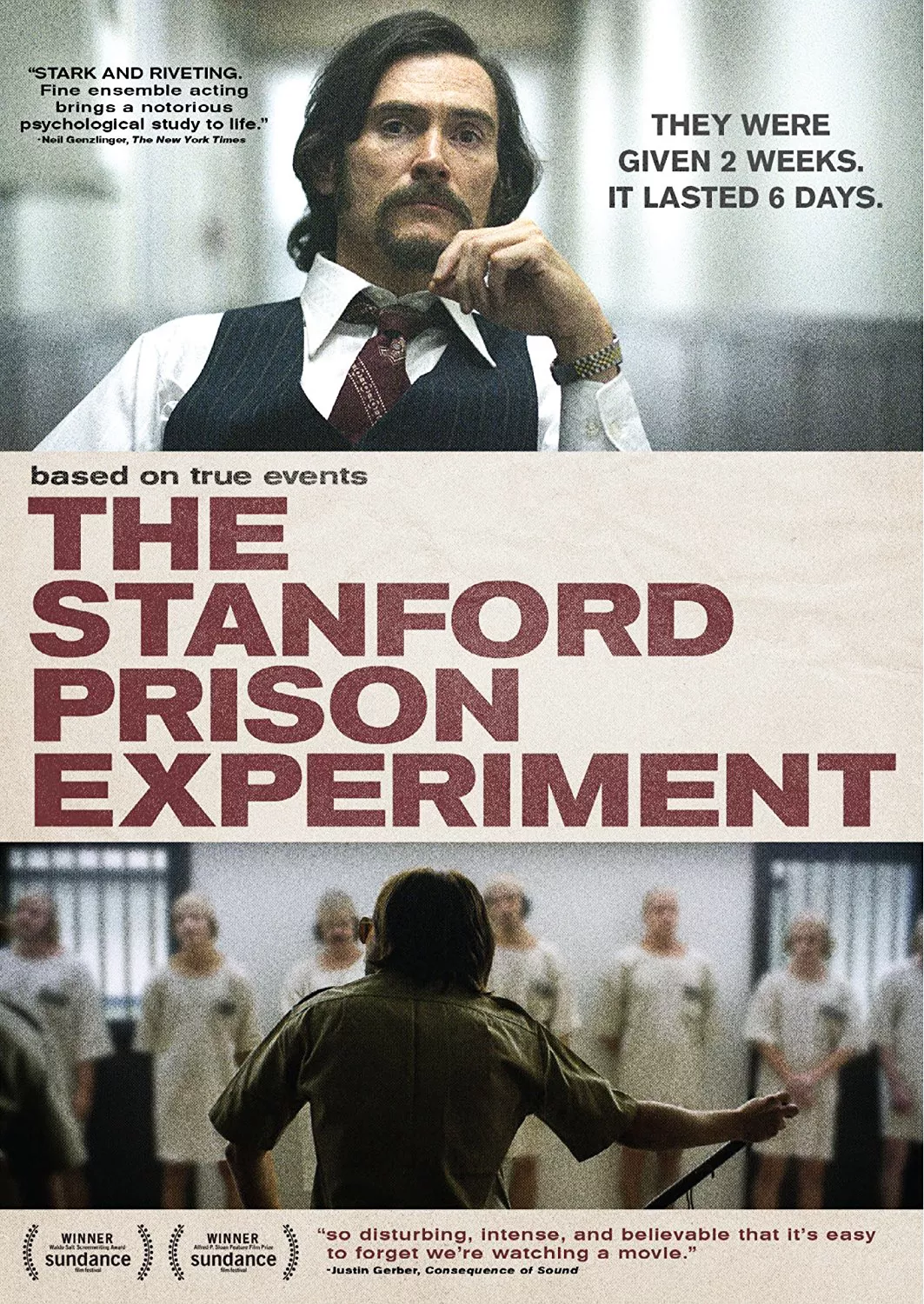
What is to debunk then? The cruelty of humans? The abuse of power? The breakdown of the powerless? Don’t they all seem acceptable ideas? Don’t we have sufficient examples to justify all of them?
Turns out, the most incriminating evidence came from Zimbardo himself. He authored a book called The Lucifer Effect : Understanding how good people turn evil in 2007. On Page 55, he mentions briefing the guards before the experiment –
“We can create a sense of frustration. We can create fear in them […] We’re going to take away their individuality in various ways. They’re going to be wearing uniforms and at no time will anybody call them by name; they will have numbers and be called only by their numbers. In general, what all this should create in them is a sense of powerlessness”.[2]
Aren’t scientists supposed to be independent from their experiment? He publicly admitted to instructing the guards to act a certain way. Moreover, researchers picked up(using audio recordings of the experiment) that Zimbardo was using ‘us’ and ‘we’ to address the guards from the week before. The guards didn’t descend into sadism of their own accord, they were advised to from Day 1 itself! The reason this is problematic is because social scientists use something called ‘demand characteristics’ – these are behaviours that subjects show if they can guess the aim of the experiment. And this experiment was an absolute failure on this account.
In June 2013, French sociologist Thibault Le Texier dug deeper into Stanford’s archives of Zimbardo. Firstly, Zimbardo didn’t conceive the experiment, his undergrad student David Jaffe did, as part of a classroom assignment. Jaffe carried out the trial in May 1971 with 6 guards, 6 inmates, and he himself acted as the warden.
Publicly, Zimbardo mentioned in dozens of interviews that the guards didn’t act on anyone’s instruction. That it was all a product of man’s innate evil. What was conveniently left out was that Jaffe was also a guard in that experiment and Jaffe has gone on record to say that ‘I was asked to suggest tactics based on my previous experience as master sadist.’ [3] The guards ended up working based off 17 rules, 11 of which came from Jaffe. Zimbardo himself interjected with rules that focussed on keeping the prisoners sleep-deprived, waking them up at 2:30 AM and 6:00 AM for role calls, using push-ups as a punishment mechanism, and suggesting solitary confinement for prisoners.
Zimbardo sent footage of the experiment to television stations even before he had analyzed the data. So was this all a desperate plea to gain notoriety? To capitalize on the sensationalism this experiment had the potential to generate?

What about the breakdown I quoted at the beginning of this article? Prisoner 8612, then 22-year-old Douglas Korpi, claims to have staged it. In a 2017 interview[1], Korpi told Blum,
“Anybody who is a clinician would know that I was faking[…]If you listen to the tape, it’s not subtle. I’m not that good at acting. I mean, I think I do a fairly good job, but I’m more hysterical than psychotic.”
The reason for faking it? He wanted out because he wasn’t being allowed to study. Korpi thought they’d have access to textbooks and the experiment would go on per usual but Zimbardo refused to let him out. Zimbardo denied this claim. Korpi was edited out of a documentary on the experiment and Zimbardo refused to talk about this. Blum’s article captures the details of the ‘he-said-she-said’ of this situation and the evidence is incriminating – Zimbardo lied to the public.
Zimbardo went on to achieve great success. He was elected president of the American Psychology Association. In 2012, he was awarded with Lifetime Achievement by the American Psychological Foundation.[4]
In 2018, he was questioned about the questions on his credibility to which he had this to say-
“People can say whatever they want about it. It’s the most famous study in the history of psychology at this point. There’s no study that people talk about fifty years later. Ordinary people know about it[…] it’s got a life of its own now[…] I’m not going to defend it anymore. The defence is its longevity.”
If you ask me, I understand Zimbardo’s steadfast denial. There’s plenty of reason to rip apart his study but it can be hard to admit what you’ve built a career on may be a sham. Science is seen as a clinical, dissociative endeavour in which it is only facts that reign but people have held on to their facts as much as they’ve held on to their beliefs historically. Once you’re convinced of something, you can find facts to back it up. If anything, this fiasco shows that scientific neutrality is an ideal which is hard to come by.
Zimbardo’s 87 now. He’s way past the point of needing to worry about a legacy. He’s made one already. Were he to accept publicly that the study and its findings were flawed, he’d be doing the world of Psychology a favour. Unfortunately for him, were he to stick to his guns, there’s no knowing when the world of Science and facts will cruelly wash him away, leaving him a footnote in the archives of what not to do when conducting an experiment.
If you’re wondering what would’ve happened if the experiment was conducted authentically, in 2001, BBC contacted doctors of psychology Alexander Haslam and Stephen Reicher to replicate it on the level of national TV.[5] They agreed. An ethics committee was established to verify all loopholes and step in at any point they felt was needed. People were set to watch it at home on prime time. Zimbardo was less than enthused, commenting, “Obviously they are doing the study in the hopes that high drama will be created as in my original study”.
When the first episode aired, people were shocked out of their minds when they saw… absolutely nothing. The guards ended up creating a commune with the prisoners. They chatted daily. They shared smokes in the common area. They wanted to go out to a pub for drinks after the experiment ended. In the final episode, all of them hugged each other before leaving. Think Big Brother/Bigg Boss but with no omnipresent voice to inject conflict. Why would ordinary people fight when there’s no reason for them to? The show was a commercial failure but an academic success.
So what’s the takeaway from this article? Why do the shocking results of a flawed experiment weigh so heavily on our collective imaginations? Why is it easier to believe that people are cruel and nasty? Is it because people are all that or that we’re exposed to instances of said behaviour more? What makes for a captivating headline – ‘How to know if your neighbour’s a terrorist’ or ‘How to know if your neighbour needs a hand cleaning his garage’? Would you watch a season of Bigg Boss if it was just 3 months of people sitting and sharing their childhood stories?
I’ll pause here with the litany of questions I posed because I believe you know the answers already. If you’re curious to pursue this chain of thought yourself, I’ve borrowed it from Chapter 7 of Rutger Bregman’s ‘Humankind’. That’d be a good place to start.[6]
References
[1] https://gen.medium.com/the-lifespan-of-a-lie-d869212b1f62
[2] https://www.goodreads.com/book/show/359194.The_Lucifer_Effect
[3] Dave Jaffe, ‘Self-Perception’, Stanford Prison Experiment Archives, No. ST-b09-f40
[4] https://web.archive.org/web/20130116021952/https://psychology.stanford.edu/node/2533
[5] https://www.theguardian.com/education/2001/oct/16/medicalscience.realitytv


Chaitanya…mindblowing. I had no idea of the depth of this (in)famous experiment. It is considered a landmark…and all discussions end there.
LikeLiked by 1 person
Thank you aunty. I had no clue either. I was reading Humankind and only learnt from it. So I thought I should share it ahead.
LikeLike
Good analysis. Now I want to see the movie. Also a sad day when another execution will go ahead in the US despite widespread pleas to stop it.
LikeLike
I am so sorry I didn’t respond sooner. Please do see the movie if you get the chance. I look forward to your review of the same 🙂
LikeLike