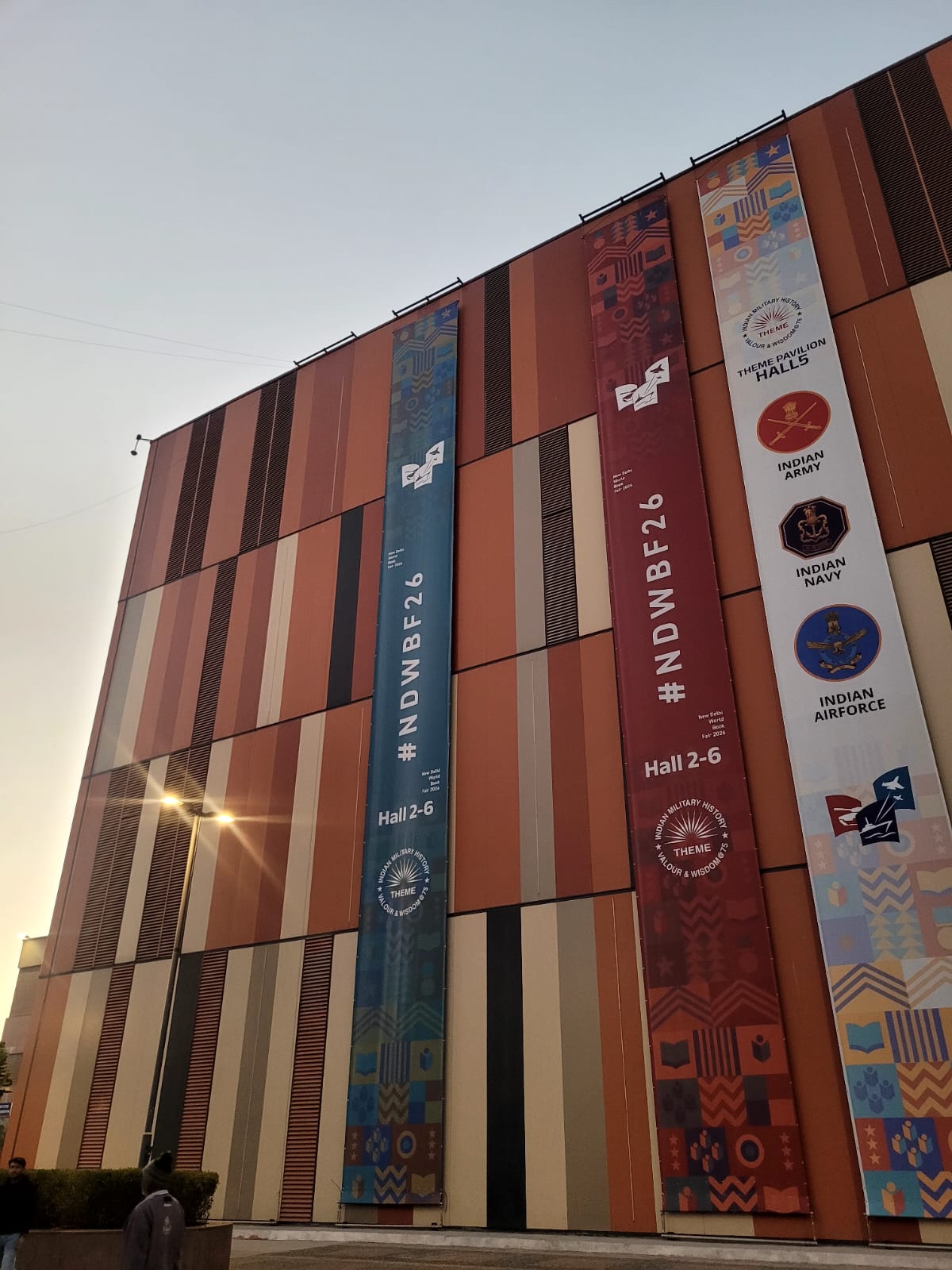
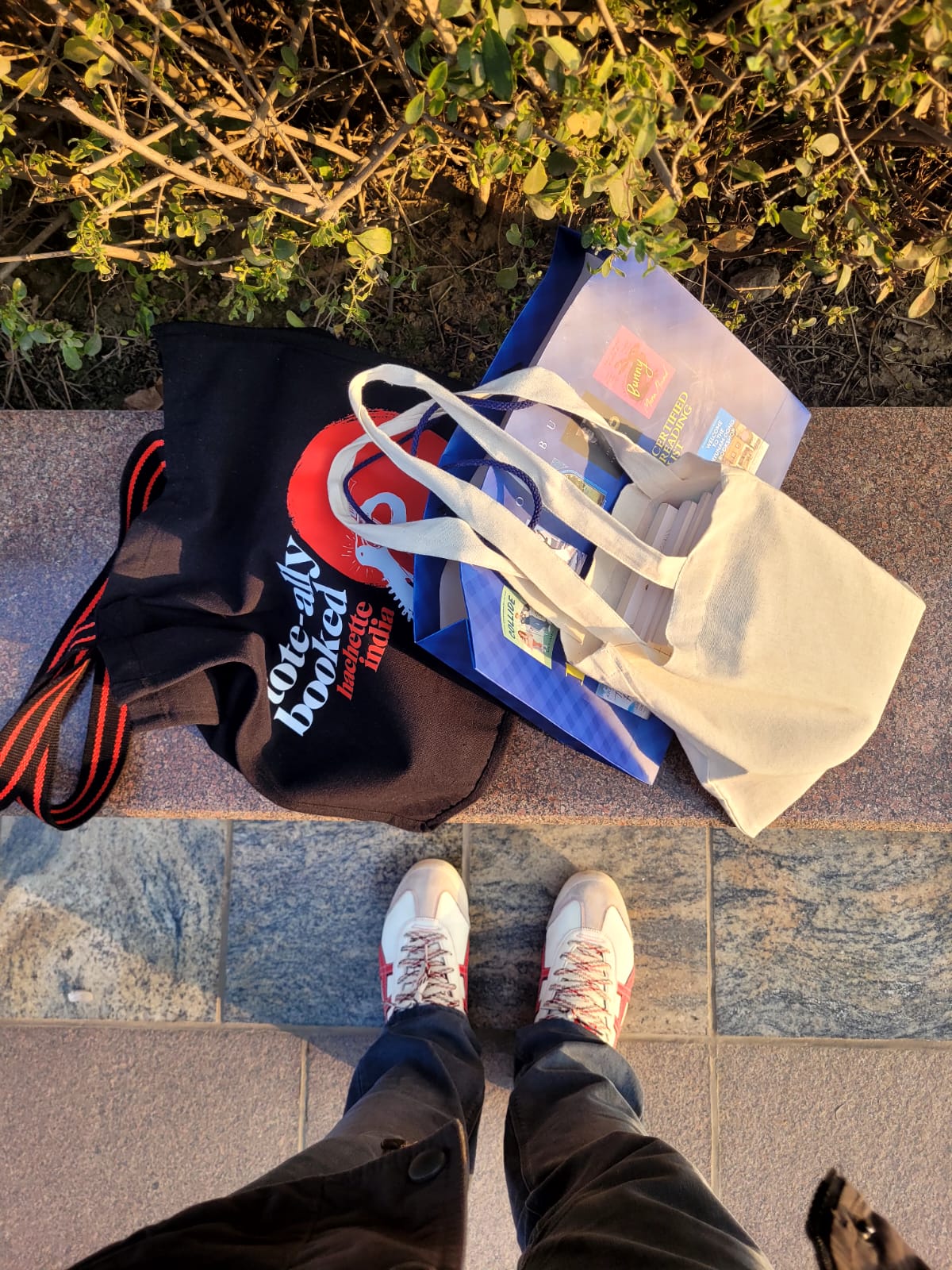
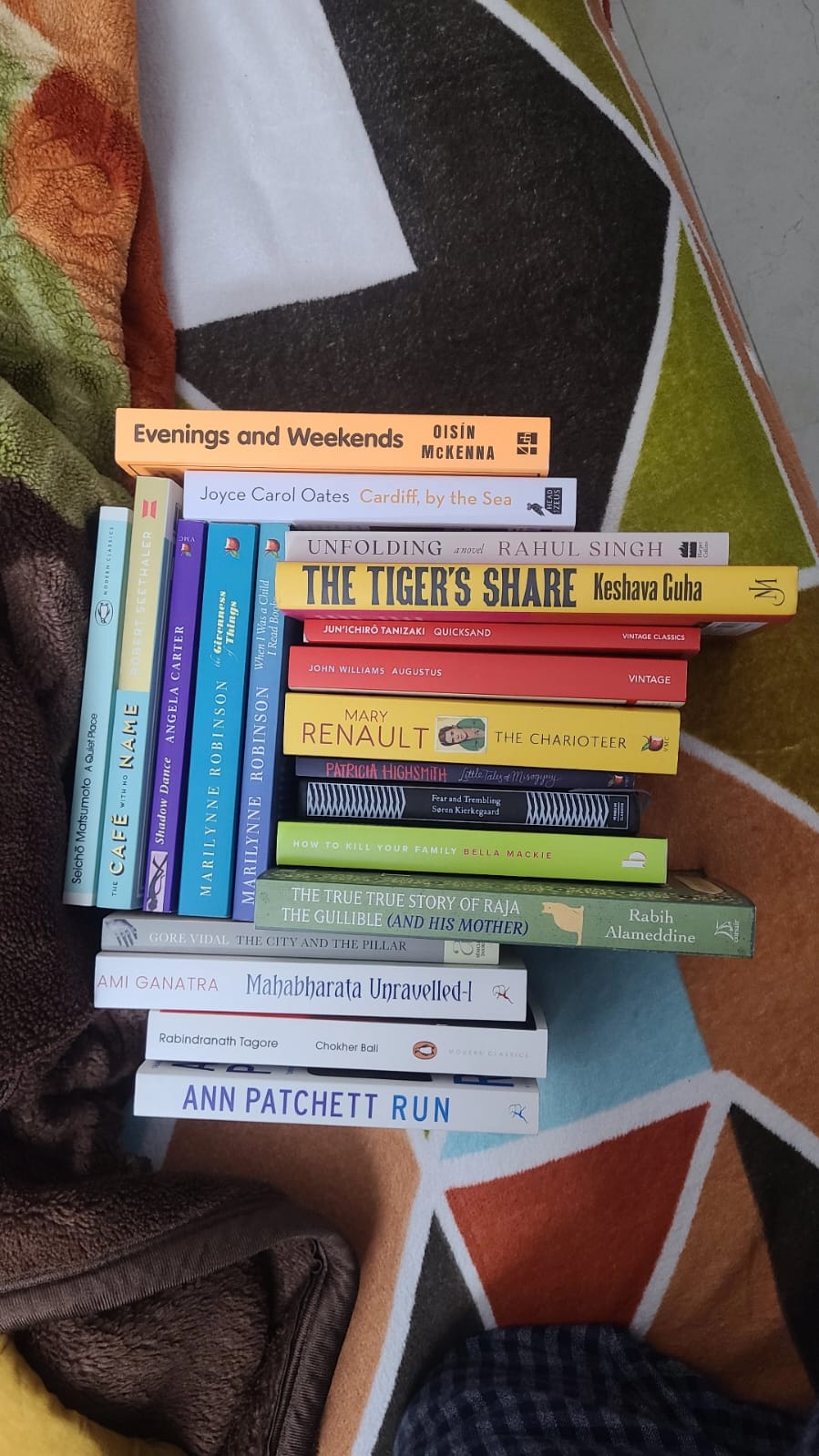
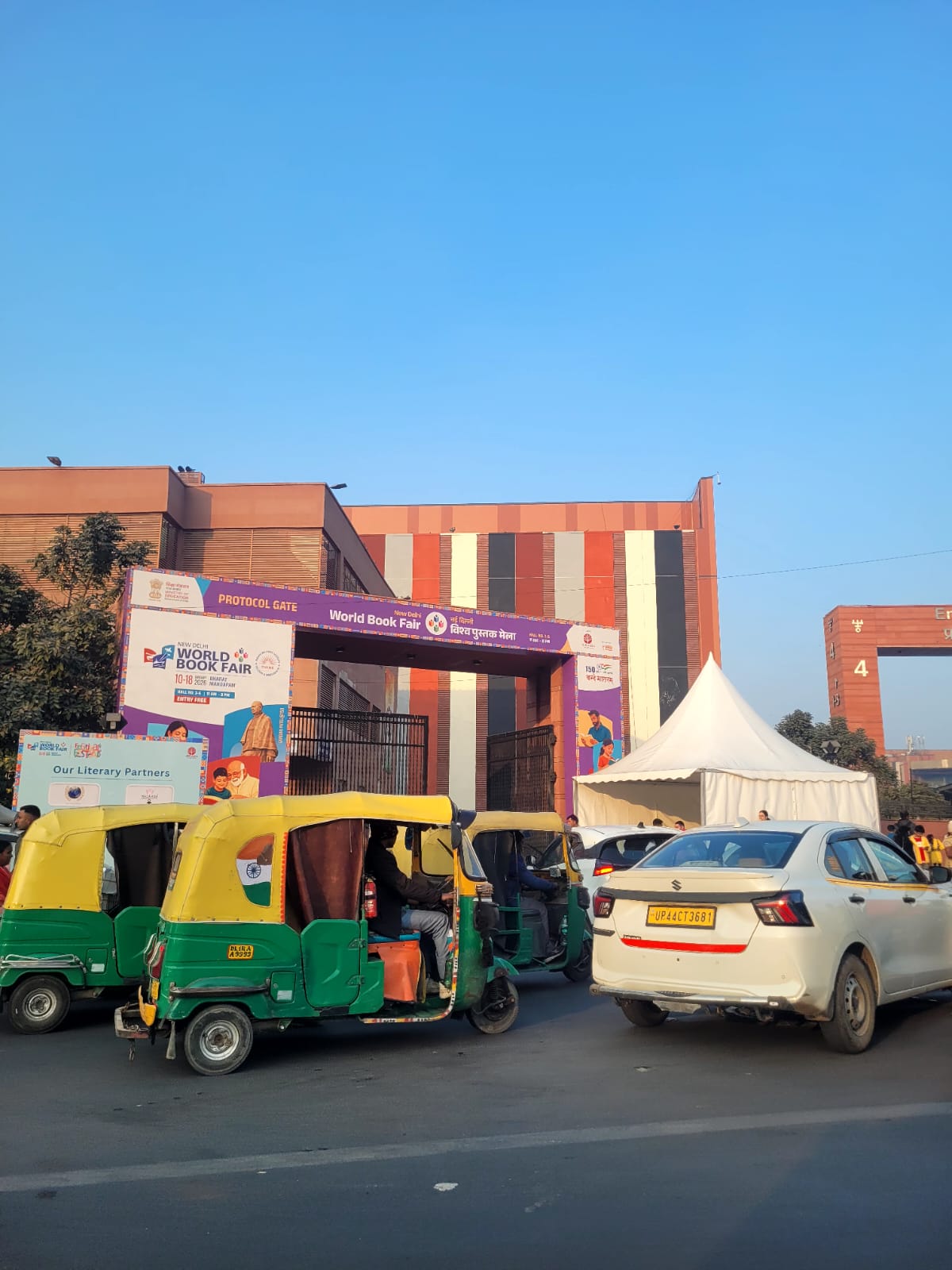
The 2026 edition of the World Book Fair in Delhi saw a footfall of two million. I contributed twice to that falling of the feet. I went twice, not that I hopped twice at the entrance to fudge the count. This is a weird start. The book fair was a success since I purchased a ton of titles and received sturdy tote bags to carry home. I also resisted the urge to eat cold junk food at the stalls by going to Pandara Road and having hot junk food there (#health).
I have gone to the book fair pretty much every year since 2010 yet every year I’m surprised at the strength. I go for the books and when I browse them, I tend to be like Bradley Cooper in ‘Limitless’. But when strangers keep crossing you every two seconds, not only does your focus suffer, you eavesdrop even when you don’t want to. You hear people pick up titles and moan that they could buy it on Amazon (so why’d you come?) or uncles who list all the stories of Chughtai they have read so they only want a book which features the rest or college students collectivizing their wallets and banishing titles five steps away from the billing counter or people on a date discussing their literary tastes (he was a Simon Sinek and self-help dude, she was an Ali Hazelwood and Korean thrillers gal.)
In the days since, a video from the final day of the fair has gone viral. It features a bunch of people jumping, grabbing, and knocking off books from the wall of a publishing house’s stall. The internet is aghast (when is it not) at this lack of civility, so beneath a ‘reader’ – this was one comment, that “real readers” have too much class to pull a stunt like that. What these miniature thinkpieces failed to acknowledge was that the publishing house had announced a giveaway. It wasn’t vandalism, it wasn’t robbery. It was the classic Indian thing of too many people turning up for free stuff. There’s nothing un-readerlike about wanting free books. Granted, the crowd reacted poorly and it was mismanaged. I am not aware if there was an attempt to limit the books per person. What was clearly a well-intentioned attempt at goodwill (and marketing) collapsed because a group of people acted rowdy.
Let’s unpack this a little.
Reading and the reading culture
I have no way of knowing if any of the two million attendees went home and read a single page. Yet by the act of showing up and making a purchase, one can assume that they have now participated in the reading culture. What is a reading culture? I would venture that it’s an environment where you can find things to read, are allowed to read, and can find likeminded people to join you.
We have options when it comes to buying books. You have legacy bookstores, websites, weekend markets, roadside sellers, and some odd side channels even if a chunk of them may be pirated. When I was 8, my Gotham comics supplier was a guy who used to spread a manji (cot) that was half-comics, half-aluminium utensils. How he discovered business synergy between Batman and Pressure cooker only he knows. Even censorship wise, the one famous book that was notoriously banned was also overturned some time ago due to a bizarre clerical oversight (‘The Satanic Verses’, if you’re wondering.) The point is, we can find things to read.
Finding likeminded people has also become easier. I learnt about Bookstagram and joined it because my friend was already running her page on campus. It was my first exposure to a literary crowd that matched my precise taste in books. Many reading clubs have also sprouted. Often they gather to read in silence and then chit-chat and network. I’ve never attended any session but that’s my mental block. Something about having to read on cue in front of an audience makes me hesitate, especially when I’m used to reading sprawled awkwardly at home muttering comments under my breath. Nevertheless, we can find likeminded people to read with.
Our biggest issue is whether we can read freely. When you are a student, there is a brand of reading that the family encourages – academic. Read, give exams, get over 90/100, you know the drill. Anything surplus to the curriculum is a distraction. Even if one has to read for leisure, if one can, incidentally, derive knowledge, it’s preferable. All books are equal but some are more equal than others. Reading fiction is pooh-poohed in many households. It’s dismissed as “just stories” as though we don’t spend our lives trying to understand what ours is, and how it fits into our family’s, our country’s, and the world’s. We should be able to read for fun. Any form of knowledge can be supplemental. This is a gap that needs plugging. This is where the bulbs of culture need to sprout.
In my opinion, cultures can develop bottom-up (family > community > country) or be enforced top-down (government > society > individual). My reading habit was built entirely bottom-up, supported by my family. But where families are restrictive, schools can step in. I think back to my school librarian and how she always had a stack of half-read books on her table. While most kids were happy to find salacious novels and narrate sex scenes to friends (I did it too, it was hilarious), I genuinely enjoyed borrowing books. However, it took me a while to convince her of the same. This one time she refused to lend me a Sidney Sheldon so I had to get my Mom to sign my school diary saying I could read sexual content. My librarian raised an eyebrow but when I returned the book some days later and did not giggle, I was allowed to borrow fresh titles, new stock not yet catalogued. The instruction was to smuggle it home in a newspaper and not be caught reading with the cover on show. It reminded me of this Esquire essay –
“Books should evoke the same feeling as having a cheeky drink or a drunken cigarette. It would be better to describe reading not as a public duty but as a private pleasure, sometimes even a vice, this would be a more effective way to attract young people, and it also happens to be true. When literature was considered transgressive, moralists couldn’t get people to stop buying and reading dangerous books. Now that books are considered virtuous and edifying, moralists can’t persuade anyone to pick one up.”
Some of my friends got into reading simply because their families prevented them from doing it. Assuming that others do not have a supportive family or school or friend circle, can we then expect top-down guidance? Can we look at our leaders to release a year-end list of their favourite titles like Obama does (really boring list, btw. Someone needs to tell him that ex-Presidents can also read Stephen King). I tried to Google ‘Delhi Chief Minister book recommendations’ and I only came across this news article on Kejriwal requesting 3 books while he was in jail. He didn’t update his Goodreads so I don’t know how many stars he gave. Even at the Book Fair, there were so many (really, so many) posters featuring dictums from our Prime Minister extolling the virtues of reading and gifting books yet I did not spot a list of his favourites. A recommendation list from a figure of authority can offer a starting point to budding readers. Governments cannot mandate reading for leisure (my Class 11 & 12 English course enforced ‘Oliver Twist’ and ‘The Hound of the Baskervilles’, two books which thoroughly put off many batchmates from reading) but if you do see public figures read and mention books, it can go a long way. When was the last time you saw an interview with a political leader where they said “I recently read…”?
Book fairs as cultural events
What if endorsing an event like a Book Fair is the government’s way to facilitate engagement at community level? Given that the Book Fair in Delhi is organized twice a year, every year, and its entry is either free or nominal, I believe that they want to encourage a reading culture. Though there is a theme every year, I have never felt that they have tried to sway the curation. You can always find a reliable mix of big publishers, regional presses, small distributors, and a couple of stalls selling wall hangings and magnetic bookmarks (that don’t work!)
From the point of view of a consumer, assuming someone who wants to build this hobby, let’s imagine what this experience can seem like. You enter a massive hall with tons of people who seem to know exactly which title to grab. You overhear others making pointed remarks about writers whose names you haven’t heard. There is no prescribed ‘starter list’ for budding readers. A book fair can be completely overwhelming even if one sits for the writers’ talks and simply buys the bestsellers.
In my experience, seasoned readers know what they want; they blaze in, hit their marks, and leave. Families that come try to enjoy the shared experience. Students tend to stick to a budget dictated list. The two groups actually engaging are the readers who queue up to get their copies signed by the writers (unless you view the desire to have a signed copy as extractive) and the media folks obliged to document the event (and I’m lumping all the Youtubers here.)
You would think that a shared space built around a hobby would establish community but my experience remains dismal. On both the days that I was there, the first I spent just chatting with my friend, and the second by bumping into someone in the last few minutes. The only moments of community I experienced were when I spoke to a gentleman at the billing counter because I frequented his bookstore, and when I was wedged into the Penguin Classics and a guy asked me to spot a Kafka title. But I realised that as a consumer, I am a transitory figure in the spectacle of the Book Fair. Like a travelling circus, the only scope of genuine community building is amongst the circus folks i.e., the people who do the heavy lifting every year – security staff, distributors, publicists et al.
Performative reading/Books as trophies
I read and collect books. They are displayed on my shelves, they occupy my bedside, and are constantly visible once you enter my home. They represent an effort at conveying something about me, or at least what piques my curiosity. Books ARE trophies, tiny intellectual conquerings of ideas, even if I do not make a fuss about what/how much I read. Two things can be true at once – books can be objects to read AND trophies to display.
Which brings us to the performative aspect of reading. No doubt there’s an entire aesthetic around reading. No doubt the book fair had a visible percentage of people who turned up for clout, ones who lifted books, clicked selfies and left. But who would take the charge of gatekeeping this? Will you ask people to name 5 authors before entering the venue?
Reading is mostly a solitary activity where you hallucinate holding the pulp of dead trees glued together. If someone calls me performative for doing it sitting in a cafe or in a park, how does it matter if I do it anyway? Criticising something/someone as performative is an issue of an unwillingness to share an identity marker. Only when you are hell-bent about identifying yourself as a ‘real reader’ do you take umbrage with others wanting to be one when they haven’t read as much or widely or long as you have. But who is the authority certifying a reader?
In the comments of the book fair debacle, the criticism of “real readers not stooping to those shenanigans” felt as if it was cloaked in elitism. Nobody had faulted the literary scene or readers as setting a poor example yet people felt compelled to segregate ‘real readers’ from those that jumped for free books. Others had also commented that keeping an entry fee would account for crowd control. Did anyone check the IT returns of the folks who were grabbing the books?
Building civilized readers
I admit that the incident exposed a lack of civic sense. But that has nothing to do with a free entry to the venue. If I was there, I might have stuck around to see if I could find something to take back too. Back in my MBA, this club was doing a grand opening where they not only offered free pick-up and drop but also free liquor for a certain time. I had a lecture so I couldn’t go but I returned to the hostel to what I can only describe as a vomiting plague. Free things do something to the Indian psyche.
I do not want to write sympathetically towards those who lunged and grabbed those books because it happened not only at the expense of a good gesture but also other people who were unable to get books. But it baffles me that nobody among the organizers foresaw that the experiment was destined to end that way. I have no speculation about the motives of those that took all those free books. Maybe they will read them. Maybe they will sell them for a quick buck. But will reading those books stop them from grabbing a freebie? I doubt that. Entitlement and a disregard for other people is a personality trait if it’s there in some people, but when so many hands shoot up in the air, it might hint at a deep-rooted sense of deprivation to grab what one can, when one can.
Civic sense, much like cultural practices develop with a balance of three 3 things – environment, incentives, and examples. I’m sure there were people in the crowd who went for the free books, saw what was going to transpire, and stepped back. The viral video, showing maybe 50 people out of the two million footfalls, didn’t show the success stories of civility. The failures registered a stronger presence just by jumping. The civic sense project, whether bottom-up or top-down (though I suspect we need a harsher top-down approach) is a long one. I don’t mind if people jump for free books but the spirit of knowledge sharing demands that if they jump a second time, they ought to pass what they have grabbed to someone behind them, preferably one who couldn’t jump. No book can teach you that.


That Animal Farm reference was spot on!
I guess the librarian was issuing the real ‘Satanic Verses’ hahaha.
It was a pleasure to attend this year’s book fair. I saw school kids in large groups with their teachers, probably a planned school visit. But it was nice to see kids getting this exposure, somewhat like the top down approach you talked about.
Always a joy to read your posts, happy writing! 🙂
LikeLiked by 1 person
Thank you for spotting the Orwell reference!
Haha, well said!
Yes, I had also incidentally come across a school group on a visit. I don’t think we ever got a chance like that. It was a good thing to see.
Thank you for reading and always leaving an encouraging note! 🙂
LikeLiked by 1 person