An article exploring the themes running through books and movies on pandemics
“…Eyes are also needed to see this picture, a woman laden with plastic bags, going along a rain drenched street, amidst rotting litter and human and animal excrement, cars and trucks abandoned any old way, blocking the main thoroughfare, some of the vehicles with their tyres already surrounded by grass, and the blind, the blind, open-mouthed and staring up at the white sky, it seems incredible that rain should fall from such a sky.”
– José Saramago
In José Saramago’s Blindness, an unexplained epidemic leaves an entire country plagued with blindness. Within days, the entire social order collapses, as people struggle to manage even the most basic tasks for survival. Seen through the eyes of ‘The Doctor’s Wife’, the only person left untouched by the disease, what is presented is a dismal picture. A world where the blind lead the blind literally.
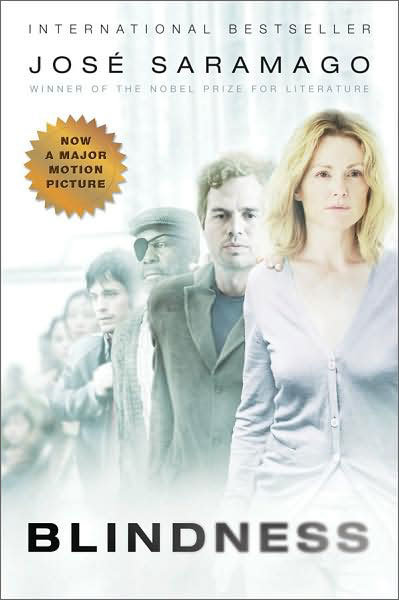
Credits : npr.org
Pandemic stories have been around for some time. They’ve made for some of the most popular entertainment material. When the Covid-19 pandemic hit, the 2011 movie Contagion witnessed a renewed popularity. In the video ‘Outbreak Movies – Explained’, the creators point out how these movies mirror our collective fears and concerns as a society. Movies like Contagion, 28 Days Later, The Andromeda Strain, I Am Legend etc. take different aspects of the pandemic – the spread, the search for cure, the upturn, the upheaval, and the survival, and ask relevant questions. Questions like –
-
- Does a single disease stand between us and a collapse of society?
- What does it mean to live life as a human?
- Between the binary of life and death, is it worth struggling for survival when such pandemics hit?
- Do situations like these bring out the worst in people? Is the worst in people actually who they truly are?
- What if you’re the only one who survives? How do you cope?
Although most stories start by treating the pathogen as the ‘villain’ of the story, often it ends up being the catalyst that sets the wheel of destruction in motion. The actual acts are committed by humans only – whether intentionally or under the virus’ spell. It’s interesting to note that most protagonists who act as the moral compass for the readers/viewers are people who have eluded the disease. It’s almost as if the chaos that is depicted can only be interpreted by one who hasn’t given in – the person who is still holding on to his/her humanity. The Matt Damon character in Contagion is an example of this phenomena. Besides acting as a lens on how pandemics impact people at the smallest level, he is shown as someone who does not lose his civility in an increasingly panicking world. When people take over the truck distributing the rations, his first instinct is to help the woman who was pushed down. When he investigates his neighbour’s house, he doesn’t look for food he can stock but just the gun to protect his child, given the increase in crime. The Doctor’s Wife in Blindness is also such a character, albeit more complex.

Credits : Wikipedia
While it may seem like these movies prey on our insecurities and fears, diseases have also shaped the world as we see today. Wisecrack’s ‘How Pandemics Change Society’ explores how the outbreak of tuberculosis and bubonic plague has been responsible for a lot of things we see today – public healthcare system, the practice of quarantine, and governmental surveillance. Empires have fallen and revolutions berthed because microbial organisms interjected themselves in the grand plans of conquerors, an entropic externality no one anticipated.
It’s too early to tell the impact Covid-19 is likely to have. The concerns surrounding it have been an echo of those shared in the books and movies above. Some feel that the momentary improvement in the environment suggests that humans are to blame entirely for its destruction, some suggest that the virus is a bioweapon with a hidden political agenda, some worry that the cure is being delayed for profiteering, and some think that for all our worries, this virus will assimilate and wither into indifference over time. Will it form the zeitgeist of the year/decade/century? Even though we’re living through it, with the way things have been in the past, decades from now, it may just end up being a chapter in some textbook, a plot point for a movie, a case study for a student, or a footnote in the fabric of humanity. Only time will tell.


Keep it up Chaitanya.
LikeLiked by 1 person
Thank you so much! 😀
LikeLike
Nicely Expressed !!!
LikeLiked by 1 person
Thank you so much! 😀
LikeLike