Post Number 60 : Things School Could’ve Taught Us – Gambling & Probability

An article exploring the genesis of probability from socially frowned-upon gambling

“So surely as I was inordinately addicted to the chess board and the dicing table, I know that I must rather be considering deserving of the severest censure.” – Girolamo Cardano

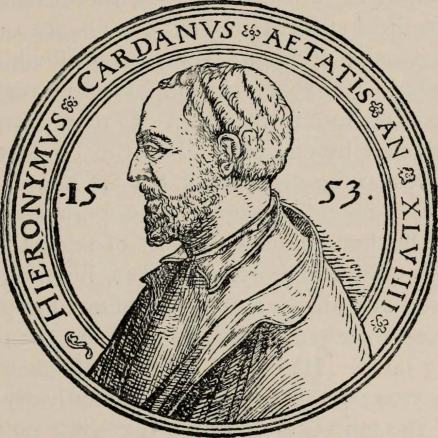
In ‘Alex’s Adventures in Numberland’, the writer Alex calls the Italian Girolamo Cardanoprobably history’s most colourful mathematician of significance”. Cardano (1501-1576) lived quite the life – professionally a doctor, he published over 100 books in his lifetime, once travelled to Scotland to treat the archbishop’s asthma, was an astrologer, claimed to determine one’s character by interpreting the irregularities on one’s face, and whose book Consolation is rumoured to be the book Hamlet reads during his ‘To be or not to be’ soliloquy. Cardano was also a controversial figure, notoriously temperamental, had a scandalous personal life – his oldest son murdered his wife, his daughter, working as a prostitute, died of syphilis, he himself was jailed for calculating Christ’s birth-chart, and was an addict & gambler. And it was his gambling that gave birth to the first scientific treatise on probability, ‘Book on Games of Chance’.

girolamo-cardano

Girolamo Cordano – Source : Britannica

Read More

Post Number 59 : Things School Could’ve Taught Us – Chaos Theory

An article exploring nature’s complexity being brought out through Chaos Theory

Think about water dripping from a tap. When you turn it on slowly, it drops in an aesthetically pleasing rhythm – an aggregate of hydrogen and oxygen coalescing into a bulbous shape, pulled by gravity, falling into the sink, followed soon by similar drops coalescing behind it. Turn up the pressure gradually and this pattern dissolves, the tip, tap, tip, tap giving way to an erratic stream that suggests that the rhythmic pattern may have been an error. Think of the smoke rising from a lit cigarette. Wisps of grey-black soot escaping from the stub and immediately dissipating into unknowable shapes in front of your eyes, never to be repeated again. How can such simple system birth such unpredictability?

Read More

Post Number 58 : Things School Could’ve Taught Us – Nikola Tesla

An article exploring Tesla’s struggle with bureaucracy, frustration with finances, and society’s vindication coming too late for most innovators.

“This letter will never get to you, Mother. I don’t know why I write it to you when you cannot read it…rest in peace Mother and please forgive me for choosing paths that had led me away from you. I cannot even be there for your funeral. I read the telegram that informed me of your death and despise people who weren’t ready to understand two years ago that electricity can be transferred without wires. Now, they have seen it but they won’t use it for centuries to come because someone burned my downtown laboratory to the ground, with all of my formulas and writings in it.”

-Fragment of Tesla’s Last Letter to His Mother

Were it not for the title of this article, could you have guessed that this grieving son writing to his then-deceased mother, was the man behind revolutionary ideas like Alternating Current, Radio, Microwaves, Radar, Computing, Robotics and scores more? It’s easy to think of ‘eccentric geniuses’ as people absorbed in their work to a fault, and there’s ample evidence that Tesla was both – eccentric and genius. His notable eccentricities included – “obsessive compulsive disorder, only inhabiting a hotel room that was divisible by the number three, pigeons, and an aversion to women wearing earrings”. Nevertheless, it’s important not to let the odd traits be the sole markers of his identity. So here’s an attempt to humanize Nikola Tesla. Read More

Post Number 57 : Where Do Words Go?

An essay exploring my up-and-down relationship with my mother tongue, Hindi.

Months ago, barely weeks into lockdown, I was having chai with my grandparents in the morning while they regaled me with anecdotes of their childhood. As they took turns describing what life was like in the villages and towns of India on the heels of attaining independence, they peppered their tales with rustic colloquial terms, terms I had never heard before. One was about furniture – a cross between a chaarpai and stool. Another was a technique to separate and chop strands of vermicelli noodles. They had their own tweaks on the words too, spoken differently in their families. They did their best to explain it but I couldn’t visualize it. My mother, the generational bridge between us, wasn’t home. The conversation changed its course like a river charting its own flow and it deposited the silt of those words behind.

The cousins of my grandparents have since either passed on or have no contact with them. The time they talked of has gone. The things they described aren’t here. The words they spoke were so rare that I may not hear them again. Ever.

Where do words go when people stop speaking them?


Read More

Post Number 56 : Not so home, away from home

Before coming to the US, on multiple occasions my family had reminded me not to try replicate my life in India here. I hadn’t really paid much attention to them at the time. It seemed so silly. Of course, I wouldn’t. Between my classes and keeping myself alive everyday, I doubt I would ever have the time to replicate my old home in my soon to be new home. Yes, I was scared of living alone for the first time. I was decidedly not looking forward to cooking because I wasn’t sure if I would survive my cooking. However, the idea of living alone, like an adult and having independent adventures over shone any of those worries. 

Read More

Post Number 55 : Things School Could’ve Taught Us – Pythagoras

An article exploring Pythagoras, the person – cult leader, eccentric vegetarian, philosopher, and curiously…murderer?

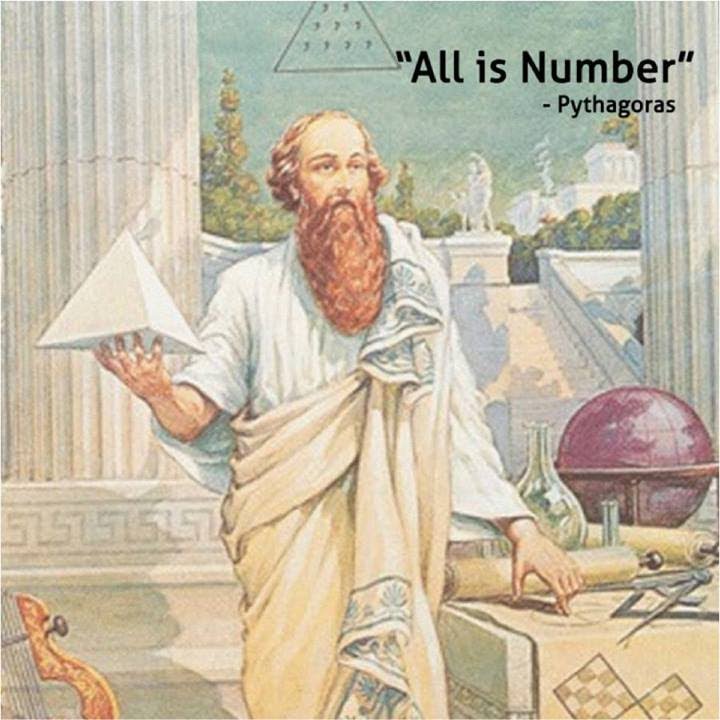
Think about Pythagoras in your head and you’re sure to have a Pavlovian response of muttering ‘a2+b2=c2’ under your breath. Him and his theorem are so ubiquitous with Mathematics globally that it is next to impossible to study the subject and NOT come across him. But did you know that beyond his work, he was an eccentric vegetarian, a cult-leader, a presumed incarnation of God, and most shockingly, a potential murderer?

maxresdefault

Read More

Post Number 54 : Things School Could’ve Taught Us – Johannes Kepler

An article exploring Kepler, the person – sci-fi novelist, dedicated son, and astute scientist.

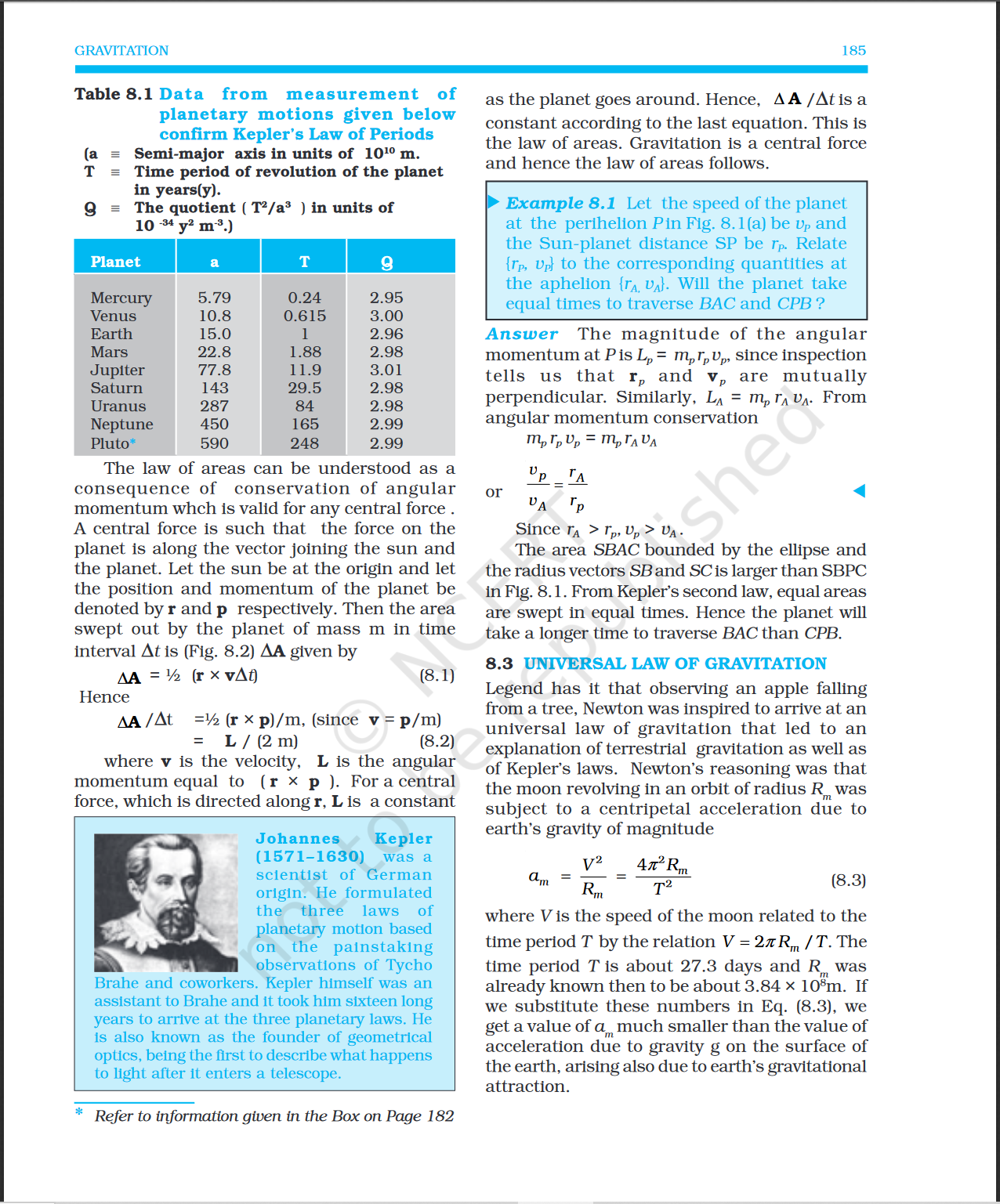
Do you remember Johannes Kepler? For those of you who had Physics in Class XI, this scientific bad boy made a cameo in the chapter on Gravitation, mentioned a page after the one which carried his three laws of planetary motion. Do you remember the laws? (Hint : Law of Orbits, Law of Areas, Law of Periods). Do you know anything else about his life? If you know next to nothing, don’t fret. I didn’t know squat either. Truth be told, I didn’t even remember the laws. But I read about him in Maria Popova’s Figuring, and she gave this visionary a backstory, a personality, a rich, vivid life, enough to make me wonder why my textbook didn’t carry any vestige of the same, and how many fascinating people and events never made it to those pages; forever hidden behind the sole accomplishment that was ascribed to their identity. So here’s an attempt to deconstruct the earthly man behind the planetary laws.

Kepler Full

Sadly, this was all the space that Kepler was given. Credits: ncert.nic.in

Read More

Post Number 53 : Around Europe in 100 Days – Nous Voyageons aux Hollande

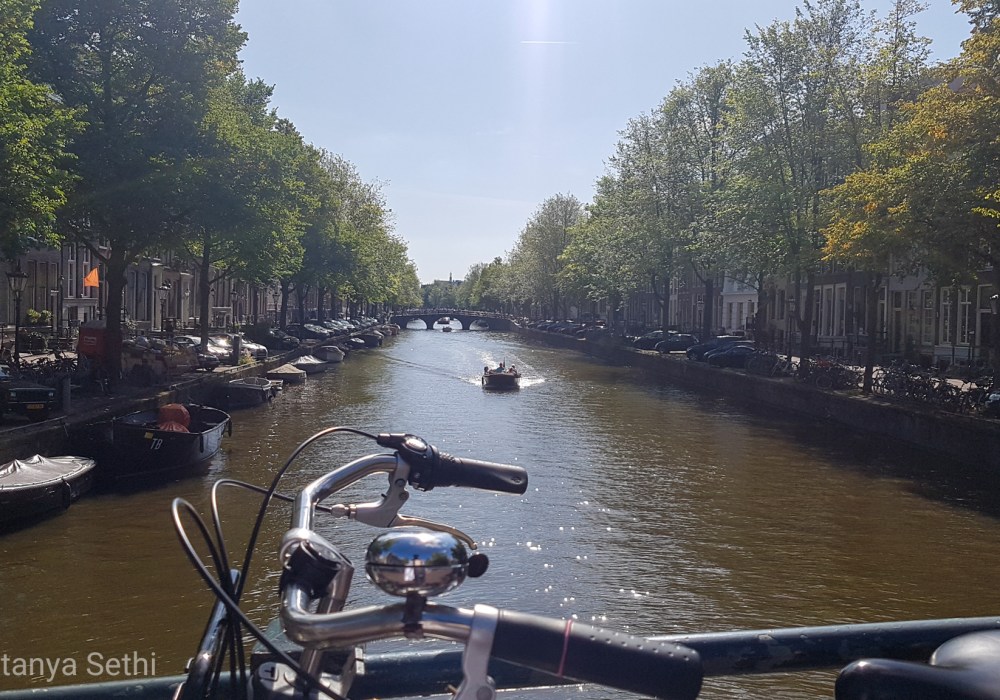
A travelogue capturing the experiences of Amsterdam – delays, canals, Red Light district, and fries.

DAY 1

Having explored Brussels and Bruges, we set out early for Netherlands. It was to be a 3-hour journey so we were confident of making it there by noon and were already planning what all we could cover within the day. But if there’s anything we learnt in these 100 days, it’s that plans go down the drain quicker than gelato down our throats. Due to some construction work, all trains to Netherlands were delayed indefinitely. We sat on the station for close to 90 mins as train after train got delayed and/or cancelled. Finally, frustrated, we jumped on a random train to Antwerp just to go somewhere.

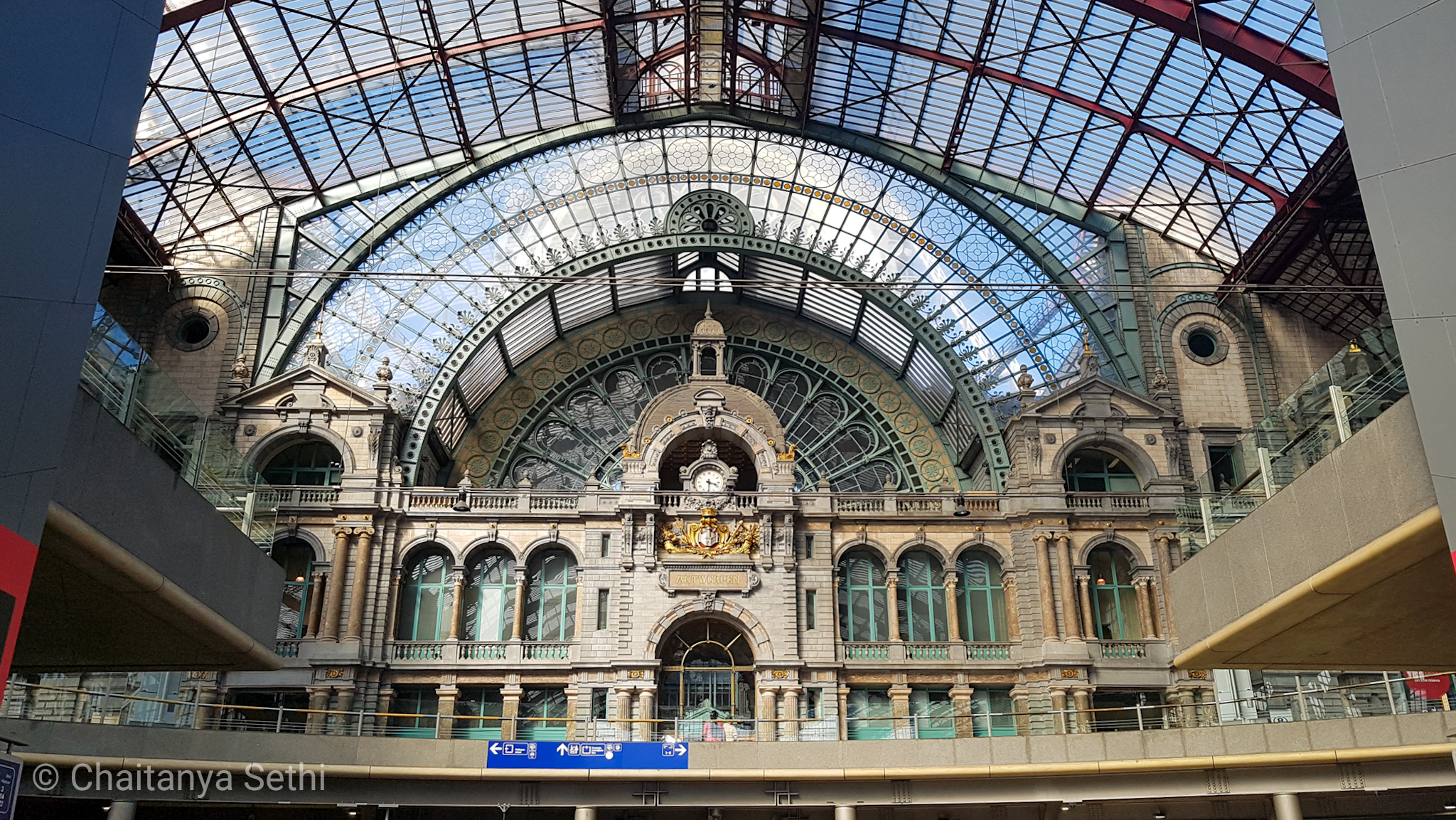
Antwerp

The Antwerp Station is an Architectural Beauty

Read More

Post Number 23 : Grief in the Digital Age

Candid Wallflowers's avatarCandid Wallflowers

In the last few days, grief and loss were a recurring theme in most of the things I read. I read Paul Kalanithi’s memoir, ‘When Breath Becomes Air’. Paul was a neurosurgeon who was diagnosed with a life-threatening lung tumour which unfortunately claimed his life in 2015. His memoir shares his desire to leave behind a legacy, in the form of this book. The book deals with man’s never-ending quest to find purpose in life, particularly when faced with mortality. His wife, Lucy, shares how she struggles to make sense of her and her daughter’s life after this tragic setback. It was a sombre read and one that makes you realize how our perspectives and wishes change as we realize that the years we once thought we had, are now mere months or weeks. You can find more about this book here.

View original post 1,129 more words

Post Number 52 : A Case For Re-Reading(And Re-Everything Basically)

An essay exploring the need to re-visit old books, and more.

Today marks a full-circle moment for me as a reader, 6+ years in the making. A sub-conscious itch has been scratched. I’ve re-read ‘The Reluctant Fundamentalist’ by Mohsin Hamid and can now claim not only to have understood it but to have liked it too. But why should you, kind reader of the blog, care? Well, you shouldn’t, to be fair. But I hope you empathize with my sentiment of achievement. Because this book ‘launched’ my ambition of reading diversely, fuelled equally by unbridled curiosity and a bruised ego.

71r0pd6zfxl

Courtesy: Amazon.in

22nd March 2014 was my last Board Exam. A rite-of-passage had been…passage-d? I came home in a mental state that was common to me then – happiness at having written the exam, with sudden pangs of panic that I’d made an error, my percentage would drop, no college, no future – the usual overthinking spiral. A string of stress inducing entrance exams were a fortnight away and nearly two years of analyzing sin θ equations, monkeys hanging from pulleys, and seeing how Cyclohexa-1,3,5-triene reacts(that’s benzene, if you recall), were to (hopefully) bear fruit. But that night I put that aside and picked up this book, having refrained from reading for recreation all this while.

Read More