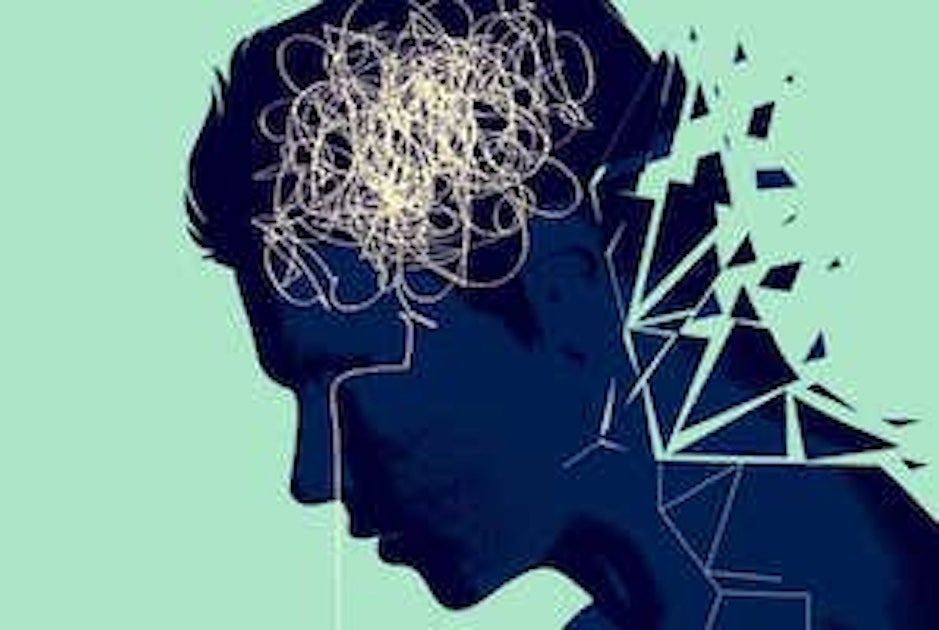
Post Number 70: As my throat closes up

See the source image
Image Courtesy: Splice Today

This time, instead of melting my emotions in a cauldron of cute animal videos, I decided to write. Like always, I am going to regret ever writing this yet if I never take these rare breaks from my mental block, I might as well stop buying pens and notebooks to write.

It is strange how sadness is often more visceral than happiness. There have been at times, these moments of absolute clarity that seem like a storm’s eye. During this short period, the mental glass has nary a speck of dust or fog on it. If timed well, I have sometimes had my most productive spurts of writing during these moments. I hope, the following will feel like a creation of one such time when I read it in the future. You are welcome to judge it.

Trigger Warning: Not sure if this needs it. If you feel intense imageries of negative emotions affect you, you may want to stay away from this one. My sadness is not for public validation, obviously, but I still feel like I want you to know it. For those who decide to read it, thank you.

As my throat closes up
I recount everything
Parsing through each moment
To see what went wrong
What is happening?
What am I doing here?
Why am I here?

As my stomach twists over itself
I tell myself to be reasonable
It cannot be this dramatic
I am seeing a mountain
Where there is a molehill
And I cannot be the ant
Who sees no difference between the two

I pace through the room
Hands in fists on the side
Every muscle tensed up
Asking, pleading, forcing
Each molecule to loosen up
I am here, this is my space
Reminding myself that I have a choice

My limbs relax
I see yet I don’t
Nothing heard
In the deafening silence
I am empty
I am drained
I am blank.

Post Number 69: Memory is a thing with feathers

On a cloudy morning you wake up. As your warm feet touch the cold floor, a sensation of loss jolts you. It’s the feeling of having a word on the tip of your tongue but knowing you won’t remember it. You’re haunted by something profound. How do you mourn a nameless and shapeless loss?

This is the world of Yōko Ogawa’s The Memory Police; an island where a mysterious organization keeps erasing objects from public consciousness. One day books are outlawed and the town sets about starting skyscraper-height bonfires, condemning centuries of knowledge to ash and dust that turn the sky black. People wake up the next day unaware of what a book is and how it looks and feels. Another day it is birds that have been outlawed. Repeated excommunications turn people into hollow shells, cut adrift from the materiality of objects, buoyant sentient islands no longer anchored to reality or to each other. 

Read More

Post Number 68: Unsettled

Of late I have been regularly wondering if I am doing what I am meant to do with my life. Am I happy? Am I settling in mediocrity? I know what I am doing is not mediocre by any definition and just saying this reeks of privilege that stinks to high heavens. Yet, despite having all the support growing up, the possibility that I may not be fulfilling my “full potential” terrifies me.

We are told to study well and hustle for opportunities so we can stand on our own two feet and support ourselves. I have a job now, I earn enough to support myself, then why do I still feel less than I am? Is it me personally seeking something more in life or is it just the world around my childhood self, telling me that I need to keep doing more?

I wish I could say here that I’ve found the answer but sadly not. I worry that I may never find the answer. I wish I could be like all those Instagram people making their daily self affirmations and popping in new health supplement pills that sponsor them, but I am not. I suspect that they aren’t either, but you will never know watching them. 

I am going to keep it shorter than my already short articles. However, I do want to know if you have ever felt the same and what you tell yourself when you have these thoughts.

Post Number 67 : It’s not so easy writing about nothing…

“It’s not so easy writing about nothing”…

Thus begins Patti Smith’s memoir, M Train, a 275 page odyssey that takes us through the world – through the graves of literary legends like Plath and Genet, to ice-covered Japan, rocky Iceland, and sunny Casa Azul, the boardwalk shacks of New York, and importantly, the most expansive and fascinating of them all, the inner working of an artist’s mind. And thus shall begin my musing, by shamelessly borrowing her line, lazy plagiarism in the guise of adulation. 

Read More

Post Number 66 : The Art Of Quitting A Book

For the second time in a year, I attempted to read Rachel Carson’s iconic book Silent Spring. For the second time in a year, I stopped at page 115, unable to rein in my brain from branching off to its Lala-land as Carson wrote passionately about pesticides endangering all the facets of nature. For the second time in a year, I felt the pinch that I wasn’t properly taught to deal with as a kid, the pinch of quitting something.

Out of an infinitely large collection of books and texts, what was it about this harbinger of the modern ecological movement that gnawed at me?

Read More

Post Number 65 : So…People Aren’t Inherently Nasty? Debunking The Stanford Prison Experiment

“I mean, Jesus Christ, I’m burning up inside! Don’t you know? I want to get out! This is all f****d up inside! I can’t stand another night! I just can’t take it anymore!”

-Prisoner 8612, Stanford Prison Experiment [1]

It was the experiment that became a phenomenon in itself. It sparked off movies, a Netflix documentary, became a fixture in every college Psychology course, made its way into bestsellers like Malcolm Gladwell’s ‘The Tipping Point’,and made its creator, Philip Zimbardo, a legend in the psychology community. But after enjoying nearly five decades of notoriety, researchers have dug into archives and it’s not looking good for Zimbardo and his credibility.

Read More

Post Number 64 : Why Do We Complicate Language So Much?

I was on LinkedIn this morning, clearing my notifications, scrolling with no aim in mind, reading (questionable) stories of inspiration, success, failure, life-lessons, ‘expert’ commentary, and everything in between. What struck me was not how disingenuous some of the posts seemed but how people had taken an entirely different language to express themselves there – ‘business talk’, full of legalese, buzzwords, and thesaurus-esque contraptions which complicated basic ideas. It seemed almost dystopian, this way of talking, turning nouns to verbs and verbs to nouns & making sure the only words in a sentence having less than 2 syllables were articles. Why do we think complicated language is a signal of intelligence? Rather, why do we disregard clear expression as oversimplified?

The other day I sat in front of an Indian news channel after ages. The discussion, in between all the screaming and shouting, was dismal at best but my family felt the anchor was doing a great job because she could turn a clever phrase. In that moment they were so impressed with her vocabulary that the fact that it lacked substance was beside the point. They are not alone. Think back to your school, college, and work years and see how we have been taught collectively to reward the smart talker, the juggler of jargon. My point is not to disregard flourish of language but to question the correlation we assume between breadth of vocabulary and depth of ideas.

Read More

Post Number 63 : Why Is It So Hard To Care About Climate Change?

As I was writing this article, I was aware that most wouldn’t even click the link to read it. Some of those who did won’t make it past the first paragraph. I tried to think of ‘angles’ to pique interest, witty ways to rephrase our collective denial and failure when it comes to climate but couldn’t conjure any. So here’s a straightforward musing on a topic that elicits little banter and social currency – Climate Change.

This month I set out a task, to read more about environmentalism and climate change. I went through six books in total – Small Is Beautiful by E.F Schumacher, Animal Liberation by Peter Singer, Timeless Simplicity by John Lane, The Great Derangement by Amitav Ghosh, The Ecology of Commerce by Paul Hawken, and Walden by Henry David Thoreau. Between them, respectively, they covered aspects like reimagining economics as beyond profiteering and growing into larger entities, reconsidering our attitudes towards animals as food and research material in labs, rethinking our need to invest in materialism to derive self-worth, recognizing that our literature, history, and politics all played a role in downplaying the magnitude of the problem, realizing that unless businesses wake up to climate change, no amount of 3R’s at household level will do much, and that reconnecting with nature is an inherent need for all of us.

Read More

Post Number 62 : Things School Could’ve Taught Us – Shakuntala Devi

An article exploring the legacy of Mrs. Shakuntala Devi and the questions raised by women pioneers

“Human memory is not merely the repository of information in the brain. It is much more than this, and something that a machine can never be: a power, a force by which we mentally reproduce not just information but also our experiences, by which we shape our perceptions, introspect, interpret and analyse the direction our life has taken.”

Mrs. Shakuntala Devi, Super Memory: It Can Be Yours

I watched the biopic on Mrs. Shakuntala Devi, starring Vidya Balan yesterday. The movie was a good albeit overdramatic attempt at exploring the woman who was called The Human Computer. Every biopic has a narrator or point of view that serves as the ‘in’ for the story – the lens through which we are introduced to the subject. Mrs. Devi’s was her daughter and their flawed dynamic. While I liked the idea of portraying her as a complicated figure – a genius par excellence, a feminist ahead of her time, an overbearing mother, a stubborn trailblazer, I was left wondering about this emphasis on domesticity. A review on Deccan Chronicle captures my thoughts.

1594888832_untitled-design-2020-07-16t141013.700

The biopic on Mrs. Devi. Source : News18.com

Read More

Post Number 61 : For Those Who Hate Reading But Love Having Read

An essay on feeling comfortable with whatever you read, and being okay with not enjoying reading too

Surfing on YouTube, I came across channels which catered to reading. One was of an astrophysicist who recommended books that shaped his scientific temperament (which is how I found about Alex’s Adventures in Numberland, a book I’ve raved about – those who follow me on Instagram and Twitter may know), another was a literature student who check-listed 100 books he read in the previous year (mostly from his curriculum), and finally one from Timothy Ferriss, the guy behind the 4-Hour Workweek, in which he gave tips to speed-read by engaging your peripheral vision. It’s this video that struck me most, not because I flinched when he physically drew lines on the paper with a pen to delineate the periphery of focus, but because in a span of 10 minutes, he had turned my hobby, my leisurely activity into a mechanically optimized task.

A friend told me whenever he suggests books to his colleagues, he gets radio silence, not so on other topics. There’s a Dorothy Parker quote that goes, “I don’t like writing. I like having written.” I suspect it’s the same here. People love ‘having read’ but abhor the effort that goes into reading. That’s where people like Timothy Ferris come in to make the process quicker, sharper, cleaner. Why read a line when your brain can take half of the sentence and fill-up the rest based on heuristics? Why read a book when you can skim through half and let your mind make up the rest? Why even read when you can see the title and let your imagination run wild?

pile of covered books

Photo by Pixabay on Pexels.com

Read More