Post Number 69: Memory is a thing with feathers

On a cloudy morning you wake up. As your warm feet touch the cold floor, a sensation of loss jolts you. It’s the feeling of having a word on the tip of your tongue but knowing you won’t remember it. You’re haunted by something profound. How do you mourn a nameless and shapeless loss?

This is the world of Yōko Ogawa’s The Memory Police; an island where a mysterious organization keeps erasing objects from public consciousness. One day books are outlawed and the town sets about starting skyscraper-height bonfires, condemning centuries of knowledge to ash and dust that turn the sky black. People wake up the next day unaware of what a book is and how it looks and feels. Another day it is birds that have been outlawed. Repeated excommunications turn people into hollow shells, cut adrift from the materiality of objects, buoyant sentient islands no longer anchored to reality or to each other. 

Read More

Post Number 66 : The Art Of Quitting A Book

For the second time in a year, I attempted to read Rachel Carson’s iconic book Silent Spring. For the second time in a year, I stopped at page 115, unable to rein in my brain from branching off to its Lala-land as Carson wrote passionately about pesticides endangering all the facets of nature. For the second time in a year, I felt the pinch that I wasn’t properly taught to deal with as a kid, the pinch of quitting something.

Out of an infinitely large collection of books and texts, what was it about this harbinger of the modern ecological movement that gnawed at me?

Read More

Post Number 65 : So…People Aren’t Inherently Nasty? Debunking The Stanford Prison Experiment

“I mean, Jesus Christ, I’m burning up inside! Don’t you know? I want to get out! This is all f****d up inside! I can’t stand another night! I just can’t take it anymore!”

-Prisoner 8612, Stanford Prison Experiment [1]

It was the experiment that became a phenomenon in itself. It sparked off movies, a Netflix documentary, became a fixture in every college Psychology course, made its way into bestsellers like Malcolm Gladwell’s ‘The Tipping Point’,and made its creator, Philip Zimbardo, a legend in the psychology community. But after enjoying nearly five decades of notoriety, researchers have dug into archives and it’s not looking good for Zimbardo and his credibility.

Read More

Post Number 63 : Why Is It So Hard To Care About Climate Change?

As I was writing this article, I was aware that most wouldn’t even click the link to read it. Some of those who did won’t make it past the first paragraph. I tried to think of ‘angles’ to pique interest, witty ways to rephrase our collective denial and failure when it comes to climate but couldn’t conjure any. So here’s a straightforward musing on a topic that elicits little banter and social currency – Climate Change.

This month I set out a task, to read more about environmentalism and climate change. I went through six books in total – Small Is Beautiful by E.F Schumacher, Animal Liberation by Peter Singer, Timeless Simplicity by John Lane, The Great Derangement by Amitav Ghosh, The Ecology of Commerce by Paul Hawken, and Walden by Henry David Thoreau. Between them, respectively, they covered aspects like reimagining economics as beyond profiteering and growing into larger entities, reconsidering our attitudes towards animals as food and research material in labs, rethinking our need to invest in materialism to derive self-worth, recognizing that our literature, history, and politics all played a role in downplaying the magnitude of the problem, realizing that unless businesses wake up to climate change, no amount of 3R’s at household level will do much, and that reconnecting with nature is an inherent need for all of us.

Read More

Post Number 61 : For Those Who Hate Reading But Love Having Read

An essay on feeling comfortable with whatever you read, and being okay with not enjoying reading too

Surfing on YouTube, I came across channels which catered to reading. One was of an astrophysicist who recommended books that shaped his scientific temperament (which is how I found about Alex’s Adventures in Numberland, a book I’ve raved about – those who follow me on Instagram and Twitter may know), another was a literature student who check-listed 100 books he read in the previous year (mostly from his curriculum), and finally one from Timothy Ferriss, the guy behind the 4-Hour Workweek, in which he gave tips to speed-read by engaging your peripheral vision. It’s this video that struck me most, not because I flinched when he physically drew lines on the paper with a pen to delineate the periphery of focus, but because in a span of 10 minutes, he had turned my hobby, my leisurely activity into a mechanically optimized task.

A friend told me whenever he suggests books to his colleagues, he gets radio silence, not so on other topics. There’s a Dorothy Parker quote that goes, “I don’t like writing. I like having written.” I suspect it’s the same here. People love ‘having read’ but abhor the effort that goes into reading. That’s where people like Timothy Ferris come in to make the process quicker, sharper, cleaner. Why read a line when your brain can take half of the sentence and fill-up the rest based on heuristics? Why read a book when you can skim through half and let your mind make up the rest? Why even read when you can see the title and let your imagination run wild?

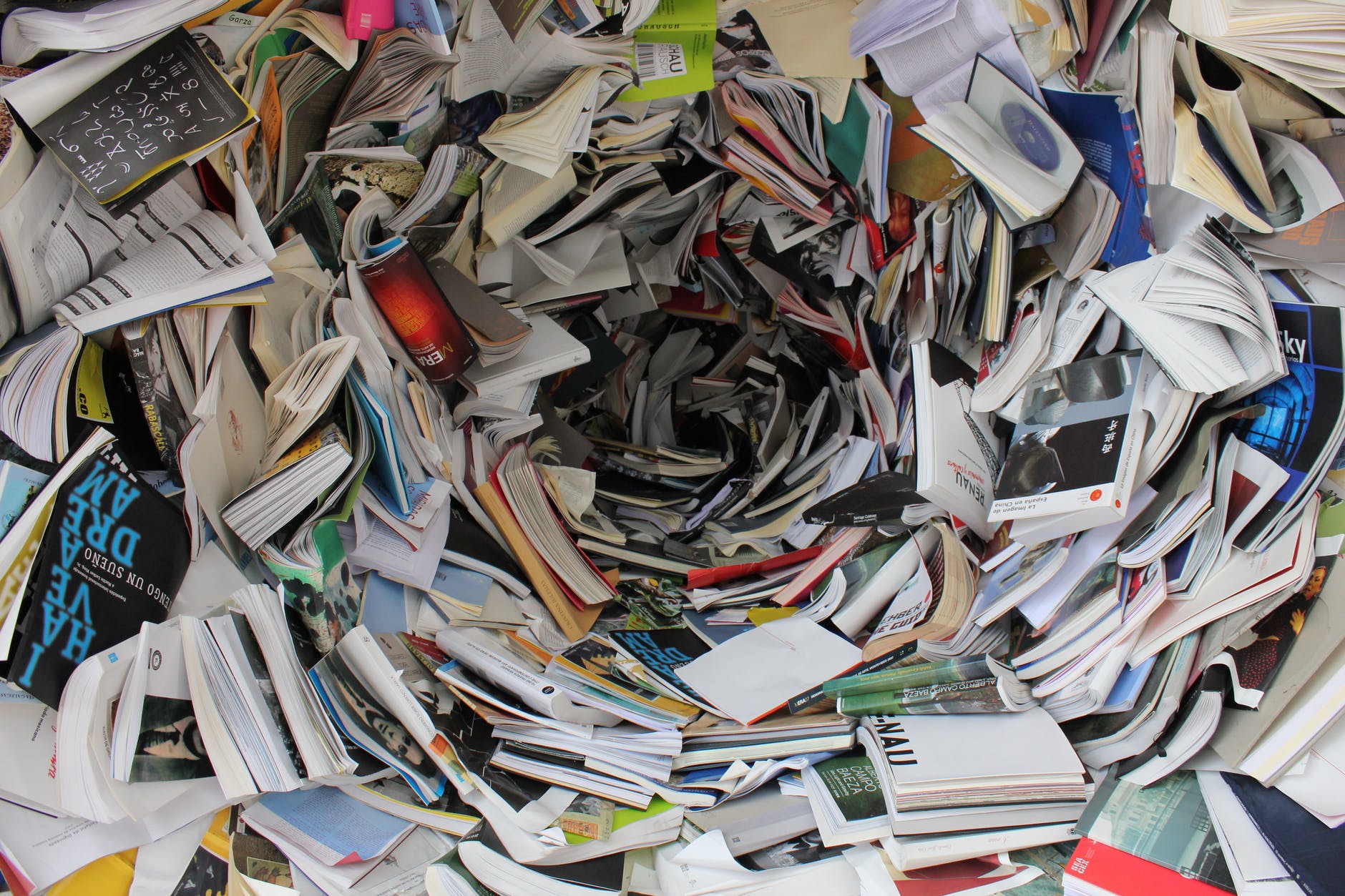
pile of covered books

Photo by Pixabay on Pexels.com

Read More

Post Number 52 : A Case For Re-Reading(And Re-Everything Basically)

An essay exploring the need to re-visit old books, and more.

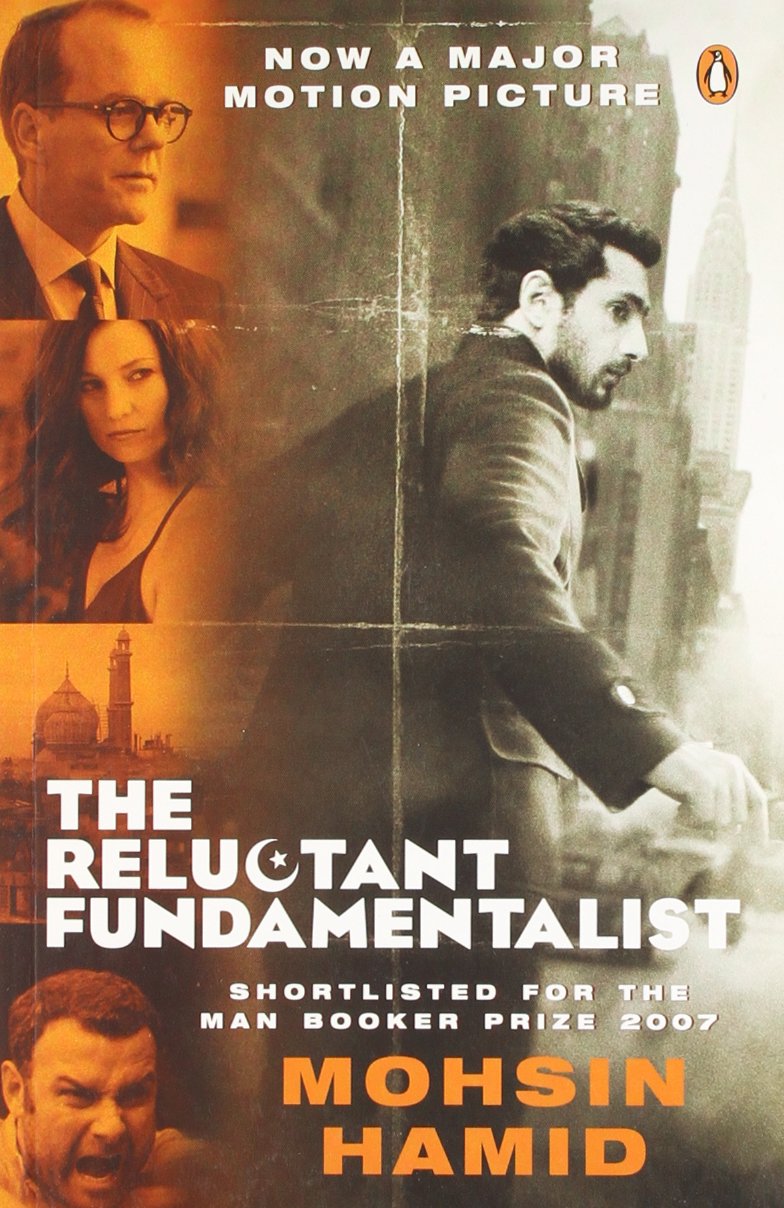
Today marks a full-circle moment for me as a reader, 6+ years in the making. A sub-conscious itch has been scratched. I’ve re-read ‘The Reluctant Fundamentalist’ by Mohsin Hamid and can now claim not only to have understood it but to have liked it too. But why should you, kind reader of the blog, care? Well, you shouldn’t, to be fair. But I hope you empathize with my sentiment of achievement. Because this book ‘launched’ my ambition of reading diversely, fuelled equally by unbridled curiosity and a bruised ego.

71r0pd6zfxl

Courtesy: Amazon.in

22nd March 2014 was my last Board Exam. A rite-of-passage had been…passage-d? I came home in a mental state that was common to me then – happiness at having written the exam, with sudden pangs of panic that I’d made an error, my percentage would drop, no college, no future – the usual overthinking spiral. A string of stress inducing entrance exams were a fortnight away and nearly two years of analyzing sin θ equations, monkeys hanging from pulleys, and seeing how Cyclohexa-1,3,5-triene reacts(that’s benzene, if you recall), were to (hopefully) bear fruit. But that night I put that aside and picked up this book, having refrained from reading for recreation all this while.

Read More

Post Number 45 : Figuring – Maria Popova

An article reviewing the titular book by the famed blogger and writer, Ms. Popova

“Lives interweave with other lives, and out of the tapestry arise hints at answers to questions that raze to the bone of life: What are the building blocks of character, of contentment, of lasting achievement? How does a person come into self-possession and sovereignty of mind against the tide of convention and unreasoning collectivism? Does genius suffice for happiness, does distinction, does love?”

Read More

Post Number 42 : The Importance of Telling Different Stories

An essay exploring the need to read and write diverse narratives

I read ‘Beloved’ recently. Beloved is the Pulitzer winning novel by the African-American author, Toni Morrison. Toni’s novels have all focussed on life as an African American. Her characters have always been unapologetically ‘ethnic’ in their thoughts, actions, and beliefs. She was once asked in an interview if she’d consider writing about white people substantially, to which she had responded –

I have had reviews in the past that have accused me of not writing about White people…as though our lives have no meaning and no depth without the White gaze. And I’ve spent my entire writing life trying to make sure that the White gaze was not the dominant one in any of my White books.

Read More

Post Number 37 : Reconnecting with Reading

I used to go to school in a yellow-green DTC bus that roared and wheezed as if it was seconds away from a breakdown. And many a time it did. But what I remember most from that time was the unadulterated joy I would get from reading on the 45-minute journey. The light breeze, muted chatters, and (mostly) sleeping kids made for an interesting reading environment. I would either read my textbooks or if I felt fancy, a novel that I’d take with me. It didn’t matter what others thought or said. If my eyes were in my book, chances were, my other senses were oblivious to the world outside.

Read More