Post Number 64 : Why Do We Complicate Language So Much?

I was on LinkedIn this morning, clearing my notifications, scrolling with no aim in mind, reading (questionable) stories of inspiration, success, failure, life-lessons, ‘expert’ commentary, and everything in between. What struck me was not how disingenuous some of the posts seemed but how people had taken an entirely different language to express themselves there – ‘business talk’, full of legalese, buzzwords, and thesaurus-esque contraptions which complicated basic ideas. It seemed almost dystopian, this way of talking, turning nouns to verbs and verbs to nouns & making sure the only words in a sentence having less than 2 syllables were articles. Why do we think complicated language is a signal of intelligence? Rather, why do we disregard clear expression as oversimplified?

The other day I sat in front of an Indian news channel after ages. The discussion, in between all the screaming and shouting, was dismal at best but my family felt the anchor was doing a great job because she could turn a clever phrase. In that moment they were so impressed with her vocabulary that the fact that it lacked substance was beside the point. They are not alone. Think back to your school, college, and work years and see how we have been taught collectively to reward the smart talker, the juggler of jargon. My point is not to disregard flourish of language but to question the correlation we assume between breadth of vocabulary and depth of ideas.

Read More
Post Number 63 : Why Is It So Hard To Care About Climate Change?

As I was writing this article, I was aware that most wouldn’t even click the link to read it. Some of those who did won’t make it past the first paragraph. I tried to think of ‘angles’ to pique interest, witty ways to rephrase our collective denial and failure when it comes to climate but couldn’t conjure any. So here’s a straightforward musing on a topic that elicits little banter and social currency – Climate Change.

This month I set out a task, to read more about environmentalism and climate change. I went through six books in total – Small Is Beautiful by E.F Schumacher, Animal Liberation by Peter Singer, Timeless Simplicity by John Lane, The Great Derangement by Amitav Ghosh, The Ecology of Commerce by Paul Hawken, and Walden by Henry David Thoreau. Between them, respectively, they covered aspects like reimagining economics as beyond profiteering and growing into larger entities, reconsidering our attitudes towards animals as food and research material in labs, rethinking our need to invest in materialism to derive self-worth, recognizing that our literature, history, and politics all played a role in downplaying the magnitude of the problem, realizing that unless businesses wake up to climate change, no amount of 3R’s at household level will do much, and that reconnecting with nature is an inherent need for all of us.

Read More

Post Number 57 : Where Do Words Go?

An essay exploring my up-and-down relationship with my mother tongue, Hindi.

Months ago, barely weeks into lockdown, I was having chai with my grandparents in the morning while they regaled me with anecdotes of their childhood. As they took turns describing what life was like in the villages and towns of India on the heels of attaining independence, they peppered their tales with rustic colloquial terms, terms I had never heard before. One was about furniture – a cross between a chaarpai and stool. Another was a technique to separate and chop strands of vermicelli noodles. They had their own tweaks on the words too, spoken differently in their families. They did their best to explain it but I couldn’t visualize it. My mother, the generational bridge between us, wasn’t home. The conversation changed its course like a river charting its own flow and it deposited the silt of those words behind.

The cousins of my grandparents have since either passed on or have no contact with them. The time they talked of has gone. The things they described aren’t here. The words they spoke were so rare that I may not hear them again. Ever.

Where do words go when people stop speaking them?


Read More

Post Number 52 : A Case For Re-Reading(And Re-Everything Basically)

An essay exploring the need to re-visit old books, and more.

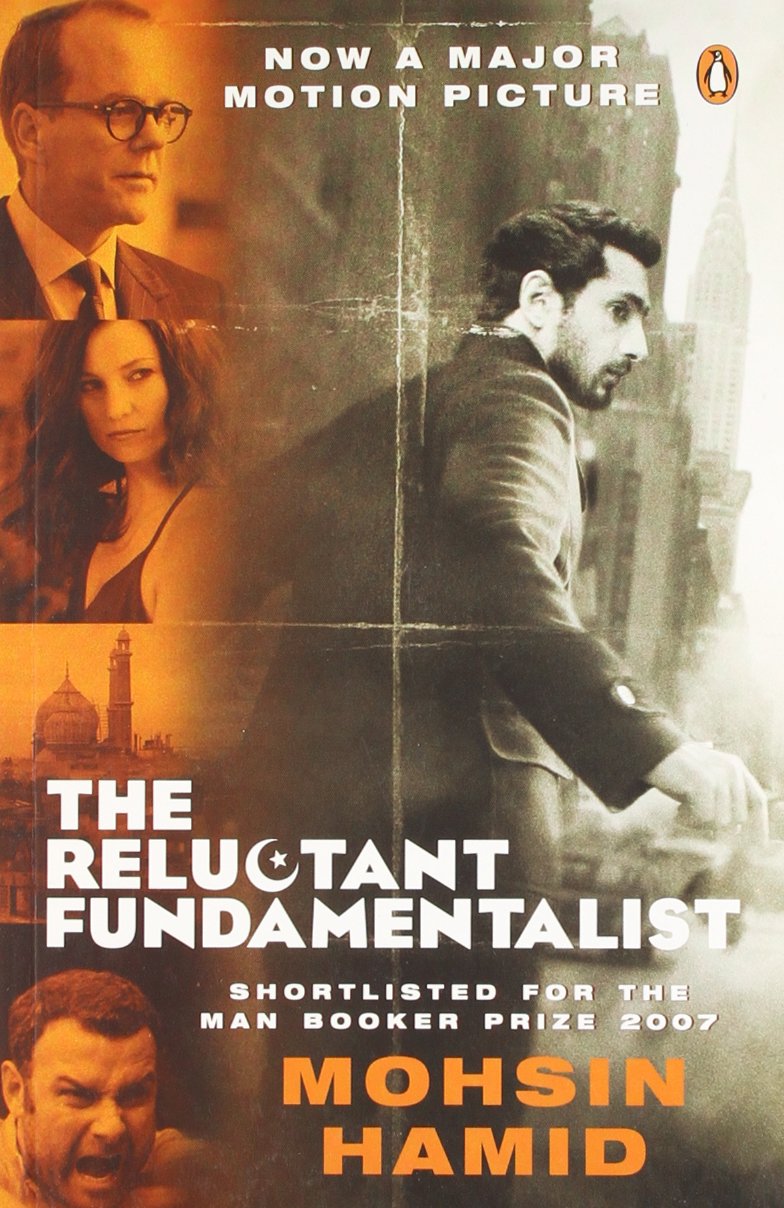
Today marks a full-circle moment for me as a reader, 6+ years in the making. A sub-conscious itch has been scratched. I’ve re-read ‘The Reluctant Fundamentalist’ by Mohsin Hamid and can now claim not only to have understood it but to have liked it too. But why should you, kind reader of the blog, care? Well, you shouldn’t, to be fair. But I hope you empathize with my sentiment of achievement. Because this book ‘launched’ my ambition of reading diversely, fuelled equally by unbridled curiosity and a bruised ego.

71r0pd6zfxl

Courtesy: Amazon.in

22nd March 2014 was my last Board Exam. A rite-of-passage had been…passage-d? I came home in a mental state that was common to me then – happiness at having written the exam, with sudden pangs of panic that I’d made an error, my percentage would drop, no college, no future – the usual overthinking spiral. A string of stress inducing entrance exams were a fortnight away and nearly two years of analyzing sin θ equations, monkeys hanging from pulleys, and seeing how Cyclohexa-1,3,5-triene reacts(that’s benzene, if you recall), were to (hopefully) bear fruit. But that night I put that aside and picked up this book, having refrained from reading for recreation all this while.

Read More

Post Number 47 : The Fault In Our Stars

An essay exploring the modern culture of celebrity worship.

*Slight Spoilers for Watchmen, HBO Series*

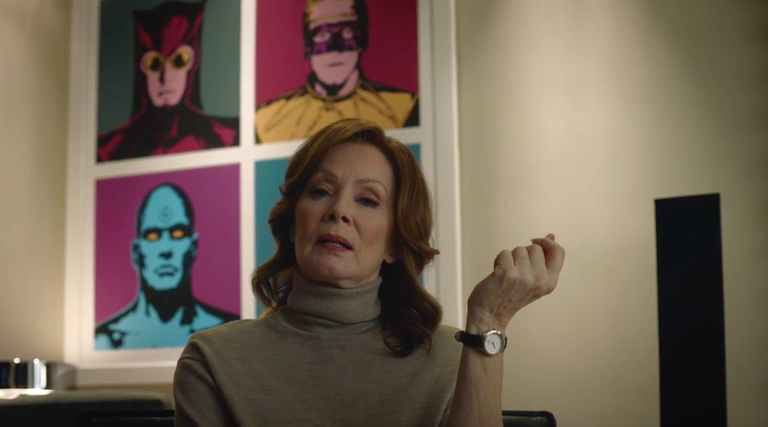
Last week, I wrapped up my binge of the HBO series, Watchmen. The show (which is excellent, if a little convoluted) had many complex characters. My favourite was FBI agent Laurie Blake, member of the Anti-Vigilante Task Force. Laurie was someone who had lived her life as, with, and around heroes. She embodied layers of paradoxes – she was the younger Silk Spectre, daughter of two superheroes, ex-girlfriend to Dr. Manhattan but she had abandoned her vigilante days to work with the FBI to catch them instead. Despite her disillusionment, she went to those blue phonebooths to leave resentful but hope-filled messages to Dr. Manhattan. The country was full of phonebooths where people voiced their deepest prayers to an omnipotent blue being who’d left for Mars. Holding out for a hero.screen-shot-2019-11-01-at-4-58-41-pm-1572642227

Read More

Post Number 46 : What Do Pandemic Stories Tell Us?

An article exploring the themes running through books and movies on pandemics

…Eyes are also needed to see this picture, a woman laden with plastic bags, going along a rain drenched street, amidst rotting litter and human and animal excrement, cars and trucks abandoned any old way, blocking the main thoroughfare, some of the vehicles with their tyres already surrounded by grass, and the blind, the blind, open-mouthed and staring up at the white sky, it seems incredible that rain should fall from such a sky.”

 – José Saramago

Read More

Post Number 45 : Figuring – Maria Popova

An article reviewing the titular book by the famed blogger and writer, Ms. Popova

“Lives interweave with other lives, and out of the tapestry arise hints at answers to questions that raze to the bone of life: What are the building blocks of character, of contentment, of lasting achievement? How does a person come into self-possession and sovereignty of mind against the tide of convention and unreasoning collectivism? Does genius suffice for happiness, does distinction, does love?”

Read More

Post Number 44 : A Millennial’s (Existential) Brush With A Global Pandemic

An essay capturing the thoughts upon being quarantined at home due to the pandemic

It wasn’t in my plan to be under a semi-quarantined state upon coming home because of a global pandemic. I suppose it wasn’t in anyone’s plan but here we all are. 2020 has turned out to be quite the year, hasn’t it? Coronavirus has brought the flurry of commotion around the world to a surprising standstill. And thus began my first brush with a global pandemic.

Read More

Post Number 43: A Semi-Nomadic Take On The Idea Of Home

An essay exploring the meaning of home, after a life lived on traveling for a while

Some weeks ago in Lisbon, I was asked to fill out a form where I had to write my address. In between countries, as I was then, I asked the receptionist if I had to write my Indian address, my campus address (because of which I was travelling), or the French place where I was living for the past few months. She shrugged nonchalantly and went back to chewing her gum. I scribbled something and returned the form but in that moment I was already thinking about this – about home.

Read More

Post Number 42 : The Importance of Telling Different Stories

An essay exploring the need to read and write diverse narratives

I read ‘Beloved’ recently. Beloved is the Pulitzer winning novel by the African-American author, Toni Morrison. Toni’s novels have all focussed on life as an African American. Her characters have always been unapologetically ‘ethnic’ in their thoughts, actions, and beliefs. She was once asked in an interview if she’d consider writing about white people substantially, to which she had responded –

I have had reviews in the past that have accused me of not writing about White people…as though our lives have no meaning and no depth without the White gaze. And I’ve spent my entire writing life trying to make sure that the White gaze was not the dominant one in any of my White books.

Read More